Hyperbolas describe celestial paths. A body approaching a planet might have a hyperbolic trajectory.
Understanding Hyperbola: A Simple Guide
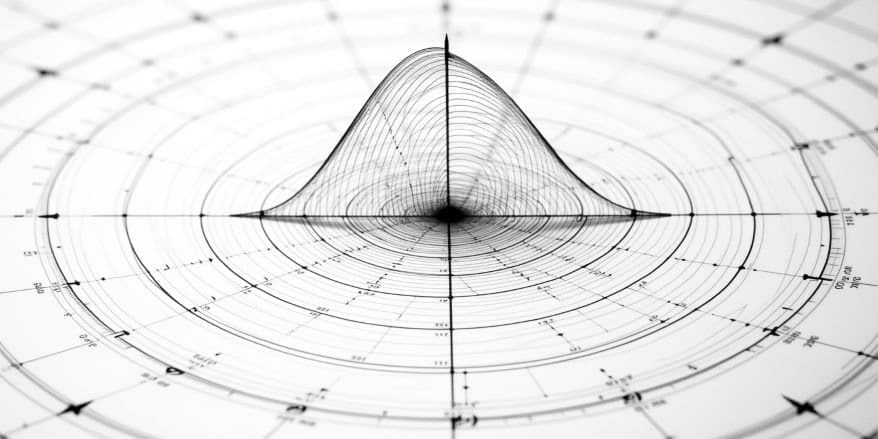
Hyperbola is a fascinating and unique shape in geometry. Its properties and applications make it essential in multiple fields. Understanding its basics can enhance your grasp of mathematics and its real-world implications.
What is a Hyperbola?
Basic Definition
A hyperbola is one of the conic sections. It forms when a plane intersects both halves of a double cone. This intersection leads to two mirror-image curves. Each curve is called a branch. The branches extend indefinitely and never meet. The term “hyperbola” has Greek origins, meaning “excess.”

The Mathematics Behind Hyperbolas
Standard Equation of hyperbola
The standard equation of a hyperbola is crucial. For horizontal orientation, it appears as:
![\[\frac{(x - h)^2}{a^2} - \frac{(y - k)^2}{b^2} = 1\]](https://b3411452.smushcdn.com/3411452/wp-content/ql-cache/quicklatex.com-af4cba1b355b404f976d8e8728122b7a_l3.png?lossy=2&strip=1&webp=1 "Rendered by QuickLaTeX.com")
For vertical orientation:
![\[\frac{(y - k)^2}{a^2} - \frac{(x - h)^2}{b^2} = 1\]](https://b3411452.smushcdn.com/3411452/wp-content/ql-cache/quicklatex.com-7555f740ade4033584234290df917445_l3.png?lossy=2&strip=1&webp=1 "Rendered by QuickLaTeX.com")
In these equations:
- ( h ) and ( k ) represent the center.
- ( a ) denotes the distance from center to vertices.
- ( b ) represents the distance from center to co-vertices.
Important Features
Hyperbolas showcase several key features. The foci are two fixed points. The difference in distances to these points remains constant. Asymptotes are lines that the hyperbola approaches but never touches. These define the slope. Vertices are points where the curve is closest to the center.
Parts of a Hyperbola
In the study of conic sections, a hyperbola can be defined as the locus of points such that the difference of the distances from two fixed points, known as foci, is constant. The equation of the hyperbola in standard form typically involves the transverse axis and the conjugate axis. The vertices lie on the transverse axis, while the center of the serves as the midpoint between the vertices. The asymptotes of the hyperbola are straight lines that intersect the transverse axis and are crucial in understanding the behavior of the curve as it extends to infinity. The eccentricity of the hyperbola is greater than one, indicating that it is an open curve, unlike an ellipse or parabola.
Real-World Applications of Hyperbola
Everyday Examples
Hyperbolas appear in ordinary life. Imagine satellite dishes or reflective telescopes. These devices rely on hyperbolic shapes to focus signals or light precisely.
Astronomy Uses Hyperbola
In astronomy, hyperbolas describe celestial paths. A body approaching a planet might have a hyperbolic trajectory. This means it will not get pulled into orbit. The tangent to the hyperbola at any point gives insight into the direction of motion, while the line joining the two foci can be critical for understanding gravitational influences. Hyperbolas are also involved in the calculation of orbital mechanics where the hyperbola is symmetric in relation to its axes. Given its equation, astronomers can predict the paths of objects in space, providing numerous examples of its application in astrophysics and navigation. The intricate relationships defined by the distances from two foci and the axis of the hyperbola allow for precise predictions in dynamic celestial environments.

Radio Technology
Radio technology employs hyperbolas for triangulation. This helps determine the location of a transmitter. By harnessing hyperbolic curves, precise pinpointing becomes feasible.
Drawing Hyperbolas
Tools Needed
To draw a hyperbola, gather these essential tools:
- Graph paper for accuracy
- Ruler for straight lines
- Compass for plotting points
- Pencil to define curves
Step-by-Step Process
- Identify the center point using ( h ) and ( k ).
- Measure and mark points a and b from the center.
- Use a ruler to draw asymptotes through these points.
- Plot the vertices on the graph.
- Using these points as a guide, sketch the hyperbola.
Why Study Hyperbolas?
Benefits of Learning
Studying hyperbolas enhances problem-solving skills. It improves spatial understanding by visualizing complex shapes and dimensions.
Interdisciplinary Connections
Hyperbolas bridge geometry, physics, and engineering. They are essential in understanding planetary motion and electronic signal processing.
Conclusion
Hyperbolas play a significant role in mathematics. Their unique properties and real-world applications make them intriguing. Understanding these curves leads to practical insights.
FAQ
What distinguishes a hyperbola from an ellipse?
- A hyperbola has two separate branches, while an ellipse is closed.
Why are hyperbolas useful in technology?
- They help in designing efficient antennas and telescopes.
What is the definition of a hyperbola?
- It is defined as the set of all points in a plane where the absolute difference of the distances from two fixed points, known as the foci, is constant. It is one of the conic sections formed by the intersection of a plane with a double cone. A hyperbola consists of two disconnected curves called branches, and it is characterized by its symmetric nature with respect to both its transverse axis and conjugate axis.
What is the standard form of the equation of a hyperbola?
- The standard equation can be expressed in two forms, depending on the orientation of its branches. For a hyperbola centered at the origin, the equations are: 1. Horizontal hyperbola:
.![\[\frac{x^2}{a^2} - \frac{y^2}{b^2} = 1 \)2\]](data:image/svg+xml;base64,PHN2ZyB3aWR0aD0iMSIgaGVpZ2h0PSIxIiB4bWxucz0iaHR0cDovL3d3dy53My5vcmcvMjAwMC9zdmciPjwvc3ZnPg== "Rendered by QuickLaTeX.com")
- Vertical hyperbola:
Here, and represent the distances from the center to the vertices along the transverse axis and conjugate axis, respectively.
![\[\frac{x^2}{a^2} - \frac{y^2}{b^2} = 1 \)2\]](https://b3411452.smushcdn.com/3411452/wp-content/ql-cache/quicklatex.com-731d9353793c4b538aacc39bb84f03af_l3.png?lossy=2&strip=1&webp=1 "Rendered by QuickLaTeX.com")
![\[\( \frac{y^2}{a^2} - \frac{x^2}{b^2} = 1\]](https://b3411452.smushcdn.com/3411452/wp-content/ql-cache/quicklatex.com-c019101dd36b821b24a03140d36c944b_l3.png?lossy=2&strip=1&webp=1 "Rendered by QuickLaTeX.com")
 and
and  represent the distances from the center to the vertices along the transverse axis and conjugate axis, respectively.
Additionally, to stay updated with the latest developments in STEM research, visit ENTECH Online. Basically, this is our digital magazine for science, technology, engineering, and mathematics. Furthermore, at ENTECH Online, you’ll find a wealth of information.
References
- Rajagopal, C. T. (1951). On the Intersections of a Central Conic and its Principal Hyperbolas. In The Mathematical Gazette (Vol. 35, Issue 312, pp. 97–104). Cambridge University Press (CUP). https://doi.org/10.2307/3609332
- Deans, J. (1944). 1753. The asymptotes of the hyperbola x2/a2-y2/b2=1. In The Mathematical Gazette (Vol. 28, Issue 282, pp. 185–185). Cambridge University Press (CUP). https://doi.org/10.2307/3609556
- Anwar, Y. R., Tasman, H., & Hariadi, N. (2021). Determining implicit equation of conic section from quadratic rational Bézier curve using Gröbner basis. In Journal of Physics: Conference Series (Vol. 2106, Issue 1, p. 012017). IOP Publishing. https://doi.org/10.1088/1742-6596/2106/1/012017