The OpenAI o4-mini model, designed for utilities and financial risk assessment, was released to all users on April 16, 2025..
Large Language Models for Organic Chemistry Synthesis
Large Language Model
Innovation in science is moving away from the old “guess and check” method in the lab. Instead, scientists are now using Large Language Models (LLMs)—the same technology behind smart chatbots—to act as the “brains” of the laboratory. By teaching these AI models to read chemical data like a language, the AI can actually reason through complex problems and plan experiments on its own. This means instead of a human spending months testing chemicals, an autonomous agent can scan thousands of research papers, plan the perfect experiment, and even tell robotic arms how to mix the ingredients. It turns AI into a central orchestrator that speeds up discovery in medicine and chemistry with very little human help.
Large Language Model Transitions
- Chemical Data as Language:
AI doesn’t see chemicals as just liquids in a jar; it sees them as SMILES strings (a text-based way to describe molecules). Because LLMs are experts at language, they can “read” these strings to predict how chemicals will react, allowing them to solve problems they weren’t even specifically programmed for. - Autonomous Agents (CACTUS and Beyond):
Specialized agents like CACTUS are more than just chatbots; they are autonomous agents that integrate with cheminformatics tools. They can perform “paper scraping”—reading thousands of scientific journals in seconds—to find the best way to synthesize a new drug or material. - The Role of Specialized Frameworks:
To ensure these AI models are actually safe and accurate, researchers developed Chem Bench. This is a system designed to evaluate AI against human expertise, ensuring the AI’s “reasoning” is as reliable as a PhD-level scientist. - Advanced Reasoning Models:
The release of models like o4-mini by OpenAI has brought enhanced decision-making to the table. These models are built to think through steps logically, which is critical for high-stakes fields like healthcare and finance, where a single mistake can have major consequences. - The Robotic Laboratory:
The ultimate goal of this innovation is a fully automated loop. The AI acts as the central orchestrator, planning the synthesis and guiding robotic laboratories to physically conduct the experiments. This allows for 24/7 scientific discovery without the risk of human fatigue or error.
Practical Usage of Large Language Models
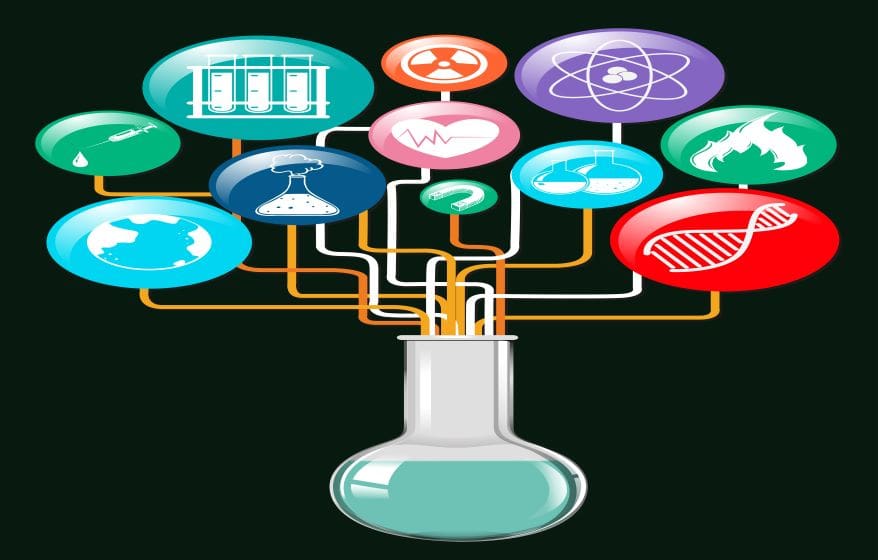
Practical usage areas in day-to-day life are rapidly expanding, particularly in education, healthcare, and materials science. In education, LLMs act as virtual tutors, providing students with mechanistic insights and real-time support for undergraduate chemistry curricula. In healthcare, models like o4-mini assist in the extraction and interpretation of medical records and diagnostics.
For broader society, this technology accelerates the discovery of safe therapeutic candidates, cleaner catalysts, and renewable materials. Eventually, shortening the lead times for commercializing life-saving drugs.
Additionally, Organa reduce the physical workload in laboratories by automating routine tasks such as pH measurement and solubility assessment.
Also Read: Simplified Organic Chemistry
Commercialization
Regarding commercial purposing, many aspects of this innovation are already available or in the final stages of deployment.
The OpenAI o4-mini model, designed for utilities and financial risk assessment, was released to all users on April 16, 2025.
In the industrial sphere, Merck’s Smart Opt and IBM’s Robo RXN are utilizing to optimize Heck coupling reactions and automate the synthesis of non-ribosomal peptides.
While many advanced autonomous agents remain in the research phase, Synth Link suggests that these tools are becoming commercially accessible to laboratories worldwide as of 2025.
Career Guide
For students looking toward the future, several research areas offer promising career paths LLM is making things easier in fields like education, healthcare, and materials science. In education, LLMs act as virtual tutors, providing students with mechanistic insights and real-time support for undergraduate chemistry curricula. In healthcare, models like o4-mini assist in the extraction and interpretation of medical records and diagnostics.
Cheminformatics and Automated Discovery
Developing and managing the digital frameworks that store, analyse, and manipulate chemical data.
AI Ethics, Safety, and Regulation
Building “safety gates” and compliance filters, such as Guardian-LLM to prevent the dual-use of AI for designing toxic molecules or regulated substances.
Multi-modal AI Development
Researching models that can integrate diverse data types, including text, images, and spectral data like NMR or mass spectrometry.
Green Chemistry Optimization
Using AI to minimize environmental impact by selecting biodegradable solvents and reducing waste through metrics like the E-factor.
Human-AI Collaboration
Designing intuitive interfaces that allow human experts to intervene in AI decision-making loops, ensuring experimental integrity and transparency.
As a result, the next generation of scientists can bridge the gap between algorithmic advances and real-world chemical innovation.
Additionally, to stay updated with the latest developments in STEM research, visit ENTECH Online.
Reference:
Alampara, N., Aneesh, A., Ríos-García, M., Mirza, A., Schilling-Wilhelmi, M., Aghajani, A. A., Sun, M., Prastalo, G., & Jablonka, K. M. (2026). General-purpose models for the chemical sciences: LLMs and beyond. Chemical Reviews. https://doi.org/10.1021/acs.chemrev.5c00583
- Author
- Latest Posts

I am an inspirational writer and emerging science blogger with a background in chemistry. I completed my BSc in Chemistry from AKI’s Poona College of Arts, Commerce and Science, and my journey through science has shaped the way I think, observe, and express myself.
I’ve always believed that knowledge becomes powerful when it’s shared in a way people can truly connect with. That’s why I combine my love for science with my passion for inspiring others through writing. Whether I’m breaking down scientific concepts or crafting motivational content, my goal is to make information clear, engaging, and meaningful.