The tutorial hell of robotics is mostly over now. AI is useful from day one. But it's not just AI, the whole ecosystem has improved.
The New Era of Robotics: Why Beginners Have It Better Than I Ever Did
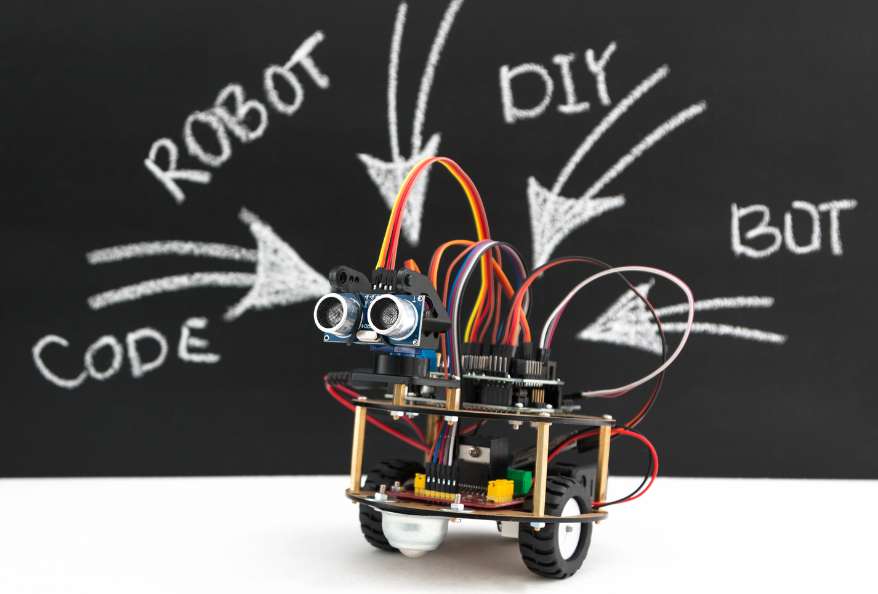
I spent 12 hours debugging a rover that wouldn’t move. Checked the code a hundred times, swapped motors, rewired everything, and nothing worked.
Then, mostly out of frustration, I described the problem to Claude AI. Two minutes later it asked if my logic level shifter had a pull-up resistor, it didn’t, and twelve hours of my life were gone to something an AI diagnosed in seconds. It was a humbling, high-speed lesson in robotics for beginners: sometimes the smallest hardware detail is the biggest hurdle.
That was Project Valkyrie, a disaster relief rover I built at 15 designed to help rescue crews survey disaster sites remotely. It had offroad capabilities and unlimited control range over the internet. Growing up hearing about the Bhopal gas tragedy made me want to build something that could help in situations like that, where sending humans in first is too dangerous.
I’m 17 now, just graduated high school. I’ve spent nearly half my life building robots the hard way. But if you’re starting today, you won’t have to go through what I did. In this article, lets take a look how robotics for beginners is changing with AI, and what should learner do.
Robotics for Beginners: It Started With Breaking Things
I was one of those kids who couldn’t leave things alone. I’d get a new toy and immediately want to see what’s inside. My parents would hand me a remote control car and within a day it would be in pieces on my bedroom floor. I never understood how any of it worked, I just wanted to see what made the wheels spin.
By eight, I stopped just breaking things and started building. My first creation was a bottle boat. A Sprite bottle with a hole cut in the back, a motor, a propeller, a battery, and a switch. I tested it in a bucket in my backyard and it jittered around like it was dying, bouncing off the sides, but it moved. I’d made something that did what I wanted, and that feeling got me hooked. That is how i developed interest in robotics.
The Hard Years of Robotics (That You Can Now Skip!)
Those early days in robotics were brutal. No AI tools, no easy answers, and learning anything meant hours on YouTube, pausing and rewinding the same tutorial fifteen times, trying to figure out why my version wasn’t working when I did exactly what the video showed.
I found my people online. Michael Reeves built robots that were completely useless but taught me more about problem-solving than any textbook ever could. He made a robot that screams when it sees you, and watching how he approached problems, how he debugged, how he laughed when things failed shaped how I think about building.
But even with good teachers on YouTube, everything took forever. Want to interface a sensor? Spend three hours reading documentation written for people who already know everything. Code not compiling? Post on a forum, wait days for a reply that might not even help. Need a specific component? I once spent a month waiting for a motor driver that got lost in shipping.
Then COVID hit when I was 13 and I couldn’t buy components anymore. But lockdown gave me something unexpected. Time and space to explore without pressure. I dove into software, learned how systems connect, built websites for local businesses running on Raspberry Pis in my house. When I came back to hardware at 15, I understood how the pieces fit together in a way I hadn’t before.
Through years of trial and error I figured out the trick. Break everything down. Don’t picture the finished rover, picture the motor spinning. Get that working, add a sensor, get that working, then connect them. This approach saved me, but I had to discover it myself after dozens of failed projects.
Robotics for Beginners: What’s Changed Now
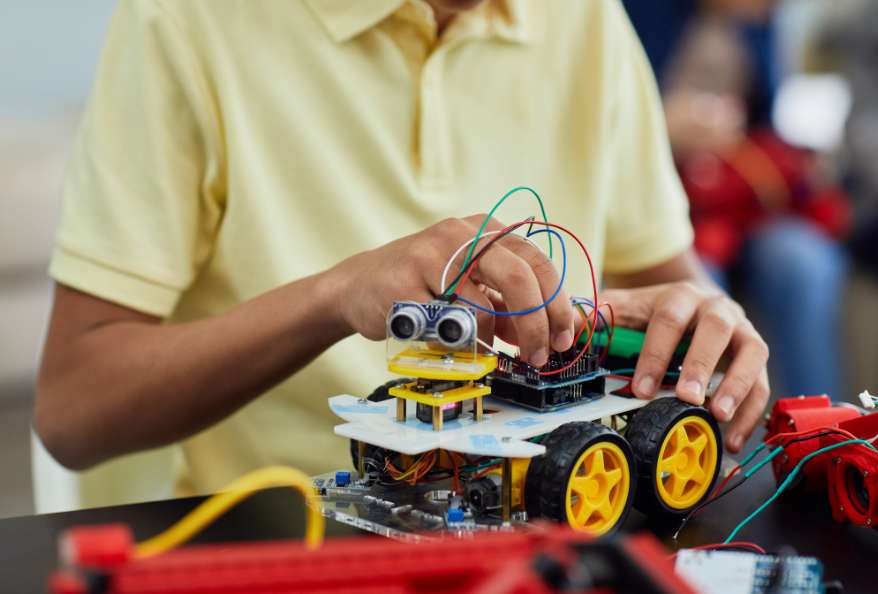
The tutorial hell I went through is mostly over now.
AI is useful from day one. Describe what you want to build and get a parts list, wiring plan, and starter code in minutes. When you’re stuck, you get real help instantly instead of digging through forum posts from 2014 that may or may not apply to your situation.
But it’s not just AI, the whole ecosystem has improved. Sites like robu.in made sourcing components easy. When I started, finding parts meant hunting through sketchy suppliers or convincing my parents to order from websites they’d never heard of. Now you get components at your door in days with proper documentation.
This changes how robotics is handled by beginners. Before, you needed a patient mentor, expensive classes, or stubborn persistence. Now all you need is an Arduino kit and ChatGPT.
Beyond Just Learning: Robotics for Beginners
The combination of AI and hardware (robotics) opens up possibilities that didn’t exist before. Traditional robots only handle scenarios you’ve explicitly programmed and the randomness of the real world breaks rigid if-then rules. But with large language models (LLMs), you can build systems that actually adapt to complexity instead of failing when something unexpected happens.
The future of robotics is a world where hardware is mostly solved. The real challenges are software.
The next breakthrough won’t be better motors or stronger materials, it’ll be smart robotics. Robots that generalize across tasks and learn from demonstration.
Robotics for Beginners: How to Actually Start? Where to Start?
Get an Arduino kit, make an LED blink, make a motor spin.
Then pair this with an AI chatbot as your tutor and it’ll explain the same concept ten different ways until something clicks.
Break everything into modules. Build useless things to learn fundamentals like a robot that runs away when you approach it or a light that turns on when it gets dark. Join communities like Hack Club, Discord servers, and maker spaces. Robotics people love helping beginners.
The Payoff
After I fixed that pull-up resistor issue, Project Valkyrie finally worked. My dad took it to a park half a kilometer away while I sat at home with my laptop, pressed forward on my keyboard, and watched on a video stream as the rover moved across rough terrain. I was 15, sitting in my bedroom, controlling a disaster relief rover over the internet.
Nine years of struggle led to that moment, but you don’t need nine years because the tools exist now. I’m working on a micro manufacturing unit these days, still breaking things, still figuring it out, and that part never changes.
Someone reading this will build something that changes robotics, it might be you, but only if you start.
Additionally, to stay updated with the latest developments in STEM research, visit ENTECH Online. Basically, this is our digital magazine for science, technology, engineering, and mathematics. Further, at ENTECH Online, you’ll find a wealth of information.
- Author
- Latest Posts

I’m Harish Ashok, a 17 yo hardware builder from Chennai, India. I’m the founder of Zenith, and I’m currently on a gap year to work on it full-time.
I’ve been building robots since I was eight. It started with breaking open toys to see how they worked, taking components, and making janky RC cars and bottle boats. During the lockdown, when I couldn’t get hardware parts, I pivoted to software and ran a web hosting service for local businesses on a Kubernetes cluster of Raspberry Pis. I was 13. It was overkill, but it was fun.
After the lockdown, I went back to hardware and built a disaster relief rover, a GPS tracking beacon, a long-range communication system without cellular infrastructure, and an ethical hacking USB tool, among other projects.
Zenith started from frustration. I was working on a motor one night, hands covered in grease, and I couldn’t touch my laptop without messing it up. Software engineers have amazing tools like Cursor and Copilot, but hardware builders have nothing. We’re constantly switching between laptops and circuits, uploading code, checking pinouts, googling errors. It breaks your flow and gets lonely fast.
So I built what I wished I had: a voice-first hardware assistant that sits on your workbench. It could generate circuit diagrams, write and upload code, debug through voice, and document projects automatically. The vision was simple: make building hardware as frictionless as writing software.
I shipped three prototypes and learned a lot. But as I went deeper, I realized the real bottleneck wasn’t just prototyping. It was everything after. Getting from a working prototype to actual production is brutal for indie builders and small teams. The infrastructure doesn’t exist for small-batch manufacturing in an accessible way.
That’s why I’m pivoting. I’m now building a micro manufacturing unit that lets individuals and small teams go from prototype to product without needing factory connections or massive capital. The goal remains the same: reduce friction and make it possible for more people to build real things.
I’ve been fortunate to receive grants from Emergent Ventures and the Bagel Fund, and I was a fellow at the Localhost hackerhouse in Bangalore. Currently tackling one challenge at a time.