Learn how probability and statistics in daily life help us predict weather, win games, and understand data. A beginner-friendly guide for students.
Probability and Statistics: Understanding Uncertainty in Games, Weather and Daily Life
Probability and statistics in daily life: Introduction
Sometimes you might wonder why forecasts are not accurate, or how games predict winning chances in real time. This is where Probability and Statistics in Daily Life come into play. They are the essential tools used to evaluate uncertainty and make smart decisions based on possible outcomes.
In this case, we will simplify these concepts and topics for students. Our objective is to demonstrate how, even without needing advanced university-level mathematics, these principles are applied every day in technology, healthcare, and future career paths.
PROBABILITY AND STATISTICS: MAKING SENSE OF UNCERTAINTY
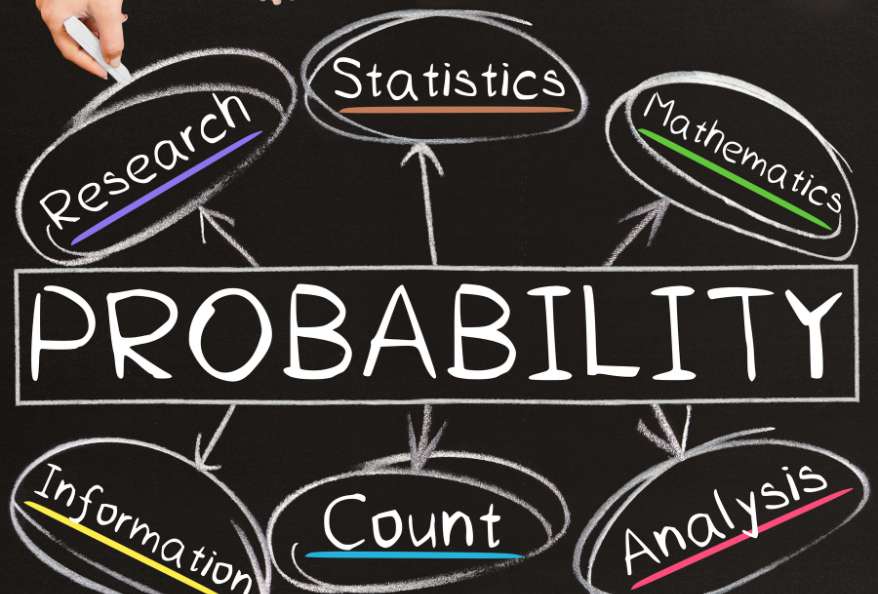
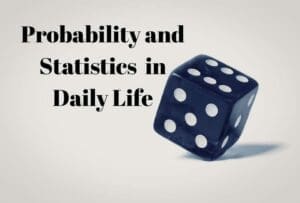
The certainty that something will occur is measured using probability. What kind of probability is it, for example, that I will toss a coin and get heads? Tomorrow, will it rain? These are all theories that have answers based on probability. The values of probability can be given a range between 0 and 1, where 0 indicates that an event will never happen and 1 indicates that it will for sure occur. For instance, you will have a one in six chance of rolling a 3 on a standard 6 sided die.
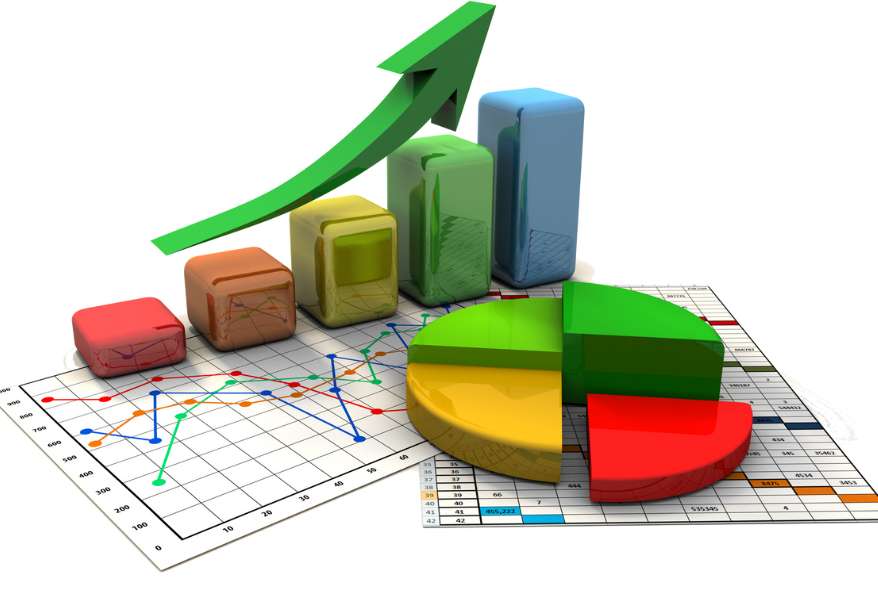
Statistics involves the gathering, structuring and comprehension of data. Data may be quantifiable, be in the form of metrics, or be purely subjective. Examples include a student’s score on a test, daily weather readings, and the tally of goals in a sports game. Stats find trends using means, medians, and visual data representations(graphs).
In order to place bets, players must know what their chances of winning are. Probability is used to create rules for board games, online games, and card games in order for them to be enjoyable and balanced. Scientists look at weather history and apply probability to make predictions about future weather events. Forecasts say things like “75% chance of rain,” and those are based on scientific probability.
Statistics are used in data science to assist businesses in analyzing user behavior, such as which products sell better or which videos people enjoy. Probability is used in risk analysis to predict loss, whether it be due to accidents, floods, or finances. All of the things listed above help us make decisions with less risk.
Educational Opportunities in Probability and Statistics
In school, students learn about basic elements of probability and statistic which include fractions, percentages, data management, and graphing. Mini polls, strategic games, and puzzles can pique interest and help students recognize probability and statistics in daily life. Knowledge of spreadsheets and basic calculators is also useful.
At the undergraduate level, Probability and Statistics are incorporated in teaching Mathematical and Statistical concepts as well as in Computer Science, Economics, Data Science, and Engineering. These are 3 to 4-year programs, and include Data Analysis, Probability Theory, and Applied Statistics. Assessments are done through exams, assignments, and practical and mini project-based tasks.
There are also a lot of free and paid online courses available on NPTEL, Coursera, and edX on these topics. Participating in activity-based internships is also a great way to learn Data. Other useful activities to enhance Logical and Statistical skills include data based Science Fairs, Math Clubs, Data Coding Contests, and Problem Solving Activities.
Probability and Statistics: Career Path

Having knowledge of probability and statistics opens up many opportunities in various professions. Starting jobs can be as a data analyst, a quality analyst, a market research analyst, or a junior statistician.
These positions involve studying data and providing insights to organizations. With more experience and education, students can further their careers as data scientists, statisticians, risk analysts, or researchers.
Almost all industries rely on probability and statistics. These fields include, but are not limited to, sports analytics, finance, healthcare, weather forecasting, AI, and government planning. There are many positions available in technology companies, research organizations, and public institutions that need data analysis skills.
Probability and Statistics in daily life: Conclusion
Students who are interested in statistics and probability may begin to consider the chances and patterns of routine actions. Basic math books, logic puzzles, and data-related problems are good practice. Fun activities include making and analyzing surveys, sports score investigations, and weather predictions. Engaging in these DIY activities helps students appreciate the role of probability and statistics in daily life.
Attending workshops, math Olympiads, scientific fairs, and online competitions can further increase confidence. Probability and statistics can turn uncertainty into knowledge and open doors to jobs in statistics that are essential in today’s world, with persistent interest and practice.
Additionally, to stay updated with the latest developments in STEM research, visit ENTECH Online. Basically, this is our digital magazine for science, technology, engineering, and mathematics. Further, at ENTECH Online, you’ll find a wealth of information.
Reference:
- Loucks, D.P., van Beek, E. (2017). An Introduction to Probability, Statistics, and Uncertainty. In: Water Resource Systems Planning and Management. Springer, Cham. https://doi.org/10.1007/978-3-319-44234-1_6
- Author
- Latest Posts

With a solid foundation in mathematics and a passion for making complex ideas simple, I create educational content that helps learners build clarity and confidence. I started my journey with one-on-one teaching, where I learned the value of clear communication and personalized support. This led me to content development, where I’ve worked on creating curriculum-aligned materials, assessments, and step-by-step solutions tailored for diverse learning needs. Currently, I’m a Subject Matter Expert at Hurix Digital, where I focus on turning abstract mathematical concepts into accessible, engaging content for global EdTech clients. My work spans topics like algebra, calculus, and data interpretation, always intending to make learning easier and more enjoyable. ‘Making math clear and building confidence’—that’s at the heart of everything I do.