Aerokinesis turns human gestures into digital commands, making drone control a seamless extension of ourselves.
Aerokinesis: The Future of Flight is in Your Hands
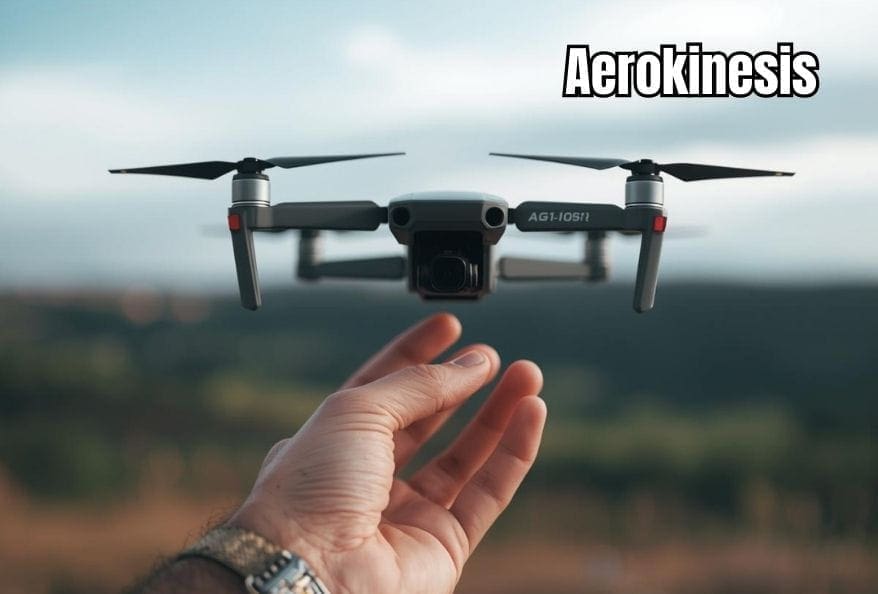
Imagine standing in an open field, raising your hand, and watching a drone mimic your every move. Without the need for bulky controllers or complex joysticks, you experience a seamless, near-telepathic connection between human intent and machine action. Indeed, this reality comes alive through Aerokinesis, a cutting-edge IoT-based vision-driven gesture control system. Moreover, developers built it using Deep Learning and ROS2 (Robot Operating System 2), thereby redefining how we navigate quadcopters. Consequently, let’s explore the details of this breakthrough and its implications for the future of technology.
Kondratev, S., Dyrchenkova, Y., Nikitin, G., Voskov, L., Pikalov, V., & Meshcheryakov, V. (2026) conducted this research and published it under the title “Aerokinesis: An IoT‑based vision‑driven gesture control system for quadcopter navigation using deep learning and ROS2“ in January 2026.
ENTECH STEM Magazine has included this research in its list of Top 10 STEM Discoveries and Innovations of January 2026.
How Aerokinesis Works
At its core, Aerokinesis allows users to control drones using 3D hand gestures captured via a depth camera. While gesture control existed in simpler forms, Aerokinesis introduces several key technological leaps:
Vision-Driven Precision: Unlike older systems that rely on wearable gloves or physical sensors, Aerokinesis tracks 21 distinct hand landmarks in real-time using MediaPipe, a deep learning framework.
Continuous & Discrete Control: The system recognizes more than just “stop” or “go.” It maps the 3D orientation of your hand—roll, pitch, yaw, and throttle—to the drone’s flight velocity. For instance, tilting your hand forward makes the drone fly forward, while raising your palm increases altitude.
ROS2 Integration: ROS2 ensures low-latency communication and modularity. Consequently, Aerokinesis works with a wide range of hardware and complex IoT ecosystems.
Signal Smoothing: To prevent shaky flight, the system applies advanced exponential smoothing algorithms. As a result, it filters out natural hand jitters and delivers a stable flight experience.
The Minds Behind Aerokinesis
A team of robotics and computer science experts spearheads Aerokinesis. The MDPI publication credits S. Kondratev, Y. Dyrchenkova, G. Nikitin, L. Voskov, V. Pikalov, and V. Meshcheryakov. These researchers focus on advancing Intelligent Systems and IoT while designing intuitive Human-Machine Interfaces (HMI) that bridge complex robotics and everyday users.
Commercial Launch Timeline
Currently, Aerokinesis exists as a high-fidelity research prototype. Researchers have successfully tested it in both simulated environments and real-world setups using Tello drones.
Developers estimate a full-scale commercial rollout within 2 to 4 years. Before reaching consumers, they aim to:
- Optimize for Variable Lighting: Ensure the vision system works in direct sunlight or low-light conditions.
- Extend Range Limitations: Improve the distance at which the camera accurately reads hand signals.
- Miniaturize Onboard Processing: Integrate high-power processors, like NVIDIA Jetson, onto smaller consumer drones.
Practical Usage Areas in Day-to-Day Life
Aerokinesis has transformative potential across multiple sectors:
- Search and Rescue: Rescue workers can navigate drones intuitively in tight or hazardous spaces, allowing them to focus on surroundings rather than a screen.
- Photography and Content Creation: Solo creators can position drones for the perfect shot using hand gestures, without a second operator or handheld remote.
- Industrial Inspection: Technicians inspecting power lines or bridges can guide drones to precise spots with natural pointing gestures.
- Accessibility: Individuals with limited fine motor skills gain an easier way to control drones.
- Smart Warehousing: Workers can direct delivery drones to pick up or drop off items by simply gesturing toward a shelf or bay.
Research Areas for Future Careers
For students inspired by Aerokinesis, the field of Natural User Interfaces offers exciting opportunities:
- Computer Vision & Edge AI: Develop faster, lighter deep learning models that run on tiny drone chips without laptops.
- Human-Robot Interaction (HRI): Study how humans interact with machines to design more intuitive gesture languages.
- Swarm Intelligence: Explore ROS2 integration for controlling multiple drones through gestures.
- Sensor Fusion: Combine vision with sensors like LiDAR or ultrasonic for safer drones.
- Embedded Systems Engineering: Design hardware for high-speed data processing with minimal battery consumption.
Final Thoughts on Aerokinesis
Building on these innovations, Aerokinesis further advances drone control by transforming it into a seamless collaboration between humans and machines. Specifically, by converting natural body language into digital commands, it effectively brings us closer to a world where technology becomes an invisible extension of ourselves.
Additionally, to stay updated with the latest developments in STEM research, visit ENTECH Online. Basically, this is our digital magazine for science, technology, engineering, and mathematics. Also, at ENTECH Online, you’ll find a wealth of information.
Reference
Kondratev, S., Dyrchenkova, Y., Nikitin, G., Voskov, L., Pikalov, V., & Meshcheryakov, V. (2026). Aerokinesis: An IoT‑based vision‑driven gesture control system for quadcopter navigation using deep learning and ROS2. Technologies, 14(1), 69. https://doi.org/10.3390/technologies14010069
- Author
- Latest Posts

Kottauppari Venkat Raghava
I am a technology-driven IT graduate with a strong passion for science and innovation. I am fascinated by how innovations like artificial intelligence, robotics, and emerging technologies are shaping our world. I specialize in analyzing complex scientific and technological research and presenting it in a clear, accessible way. My goal is to make science and technology understandable and engaging for students, tech enthusiasts, and professionals alike. By breaking down advanced concepts into simple, insightful narratives, I strive to inspire curiosity, learning, and innovation, helping readers stay informed about the breakthroughs that are shaping the future.