Leaves show many features that scientists measure. These include leaf size, thickness, and vein patterns.
Phylogenetic Patterns in the Integration of Leaf Traits across the Fabaceae
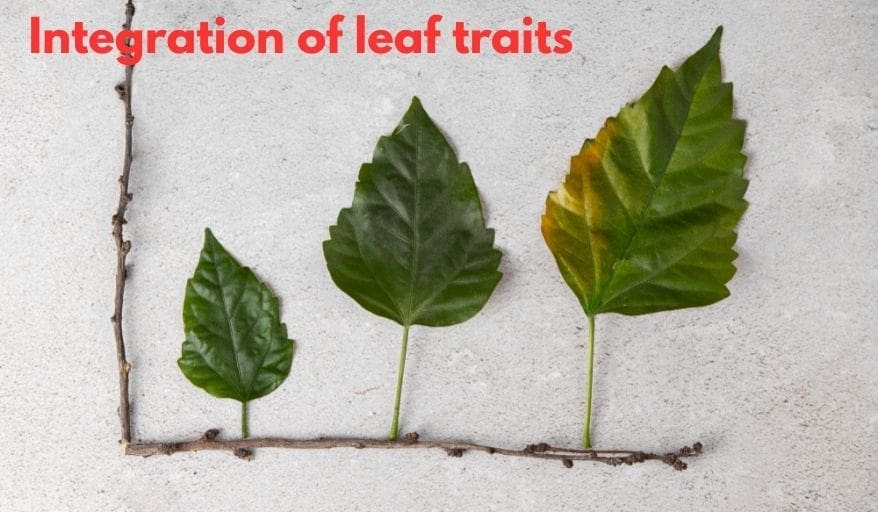
Integration of leaf traits helps scientists understand how plants survive and adapt. Plants shape life on Earth. They provide food, oxygen, and materials. At this time, researchers closely examine leaves. They want to explain survival through the integration of leaf traits.
A new study in PhytoKeys highlights the integration of leaf traits in the Fabaceae family. You may know Fabaceae as legumes. This group includes beans and peas. The researchers focus on how the integration of leaf traits influences plant function and evolution.
The study, published in PhytoKeys, investigates whether the integration of leaf traits follows clear evolutionary patterns. It examines how different traits connect and operate together. The team asks a key question. Does the integration of leaf traits drive coordinated evolution, or do traits change independently?
Above all, understanding the integration of leaf traits supports evolutionary biology. It also strengthens research in ecology and climate science.
What Is Leaf Trait Integration?
Understanding Leaf Traits
Leaves show many features that scientists measure. These include leaf size, thickness, and vein patterns. They also include chemical properties. The integration of leaf traits helps explain how these features work together.
To illustrate, a thick leaf may store more water. A thin leaf may grow faster. Through the integration of leaf traits, these characteristics often connect like parts of a machine. One change can influence another.
The integration of leaf traits means traits do not act alone. They shift together over time. This coordinated pattern defines the integration of leaf traits in plant biology. To put it differently, one trait affects another within a linked system.
Why Focus on Fabaceae?
The Fabaceae family is huge. It is one of the largest flowering plant families. It grows in many climates. Take the case of dry forests. Some legumes survive harsh heat. Others thrive in wet tropics. Because of this diversity, Fabaceae offers a strong test case. Scientists can compare many species. They can see patterns clearly.
What the Study Found
The authors studied different species in Fabaceae. They measured several leaf traits. After that, they analyzed how traits correlate. In general, they found that many traits are linked. Some traits showed strong integration. Others varied more freely. This means leaves do not evolve randomly. Traits often change together. As a result, evolution may follow certain paths.
Another key point involves adaptation. When climate shifts, integrated traits may shift together. This can help or limit survival. In contrast, loosely linked traits may change independently. That gives plants more flexibility. At the same time, integration can improve efficiency. For example, thicker leaves may pair with stronger veins. That boosts support and water transport.
All in all, the study shows structured patterns. Evolution appears coordinated in many cases.
Why This Matters for Climate and Ecosystems
At the present time, climate change affects ecosystems worldwide. Plants must adapt quickly. Scientists want to predict which species will survive. Leaf traits influence photosynthesis, water use, and growth. If traits are tightly integrated, adaptation may be slower. On one hand, integration improves performance under stable conditions. On the other hand, it may reduce flexibility.
In light of this, understanding integration helps conservation planning. It also helps agriculture. For instance, plant breeders can select useful trait combinations. They can improve crops so that yields increase. As can be seen, this research connects basic science to real life.
How This Connects to STEM Careers
You may ask, why should teens care? First, plant science links to many STEM paths. These include botany, environmental engineering, and data science. Scientists use statistics to test trait correlations. They also use software for phylogenetic analysis. That means coding skills matter.
If you enjoy biology and math, this field fits well. You could study plant ecology in college. You can explore STEM pathways on our guide to STEM career options. The page explains roles and degrees. You may also read about how to prepare for a STEM degree. It lists courses and tips.
At least start with biology and mathematics. Chemistry also helps. In addition, learn data analysis tools. Python and R are popular choices. With this in mind, research skills grow over time. You can join science fairs. You can intern at local labs.
Additionally, to stay updated with the latest developments in STEM research, visit ENTECH Online.
Reference
Boonprajan P, Sirichamorn Y (2026) Integration of leaf traits supports the current circumscription of Afgekia Craib. and Padbruggea Miq. (Fabaceae, Wisterieae). PhytoKeys 270: 289-323. https://doi.org/10.3897/phytokeys.270.181424
- Author
- Latest Posts

I completed my Master of Science from the University of Allahabad in 2017 with a strong academic background in life sciences and chemistry. My specialization included Molecular Biology, Microbiology, Genetics, Plant Breeding, Phycology, Paleobotany, and Bioinformatics, along with Organic Chemistry, Inorganic Chemistry, and Physical Chemistry. This multidisciplinary training provided me with a comprehensive understanding of biological systems and analytical scientific approaches.
After completing my postgraduate studies, I gained valuable professional experience in both the education and social development sectors. I worked at A.M. Oxford Public School, where I was actively involved in guiding students toward academic excellence. In this role, I focused on creating an engaging learning environment, encouraging critical thinking, and nurturing students’ curiosity for scientific learning. My experience as an educator strengthened my communication, mentoring, and classroom management skills.
In addition to my teaching experience, I worked with Jeevan Jagriti Foundation, where I contributed to community-based initiatives aimed at improving educational access and awareness among underprivileged sections of society. Through this work, I participated in programs designed to support social development and promote the value of education in marginalized communities.
These professional experiences helped me develop strong interpersonal, leadership, and organizational skills while reinforcing my commitment to education and community service.