Hyperloop transport is emerging as a revolutionary travel system using vacuum tubes and magnetic levitation to move pods at extreme speeds.
Hyperloop Transport Could Replace Air Travel in the Future
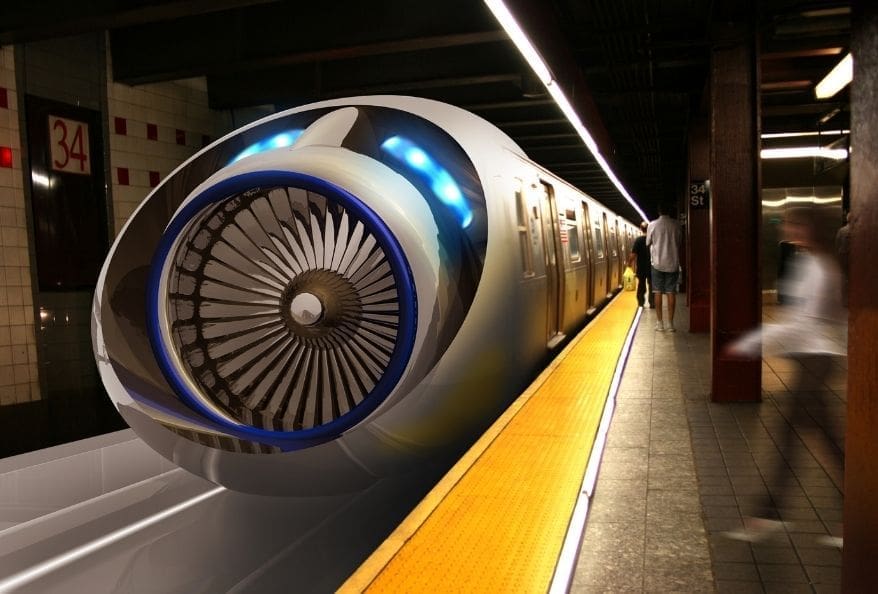
The transportation industry is entering a new era. Engineers around the world are developing Hyperloop transport, a futuristic system that could dramatically change how people travel long distances. Instead of relying on traditional rail or airplanes, this technology uses vacuum tubes and magnetic levitation to move passenger pods at extremely high speeds.
Recent research published in the journal Applied System Innovation explores improvements in pod design and system efficiency. The study highlights how advanced engineering could make this high-speed transportation system more reliable and sustainable.
As global demand for faster travel increases, Hyperloop transport is gaining attention as a possible solution.
How Hyperloop Transport Works
Unlike traditional trains, Hyperloop transport operates inside sealed tubes with very little air. Normally, vehicles lose energy due to air resistance. However, the Hyperloop system removes most of the air from the tube, creating a near-vacuum environment.
As a result, pods can travel with very little drag. This dramatically increases speed and reduces energy consumption.
Another important component is magnetic levitation. Instead of wheels touching the rails, the pod floats above the track using magnetic forces. Because there is no physical contact, friction is almost eliminated.
Consequently, the system could reach speeds of over 700 miles per hour, which is comparable to commercial aircraft.
Engineering Challenges in Hyperloop Transport
Although the concept sounds simple, designing a safe and efficient Hyperloop system requires solving several engineering challenges.
Lightweight Pod Design
One of the main goals in Hyperloop transport is reducing weight. Engineers are experimenting with materials such as carbon fiber and aluminum alloys. These materials are strong yet lightweight.
Because lighter vehicles require less power to accelerate, energy efficiency improves significantly.
Reliable Braking Systems
High-speed systems also require extremely reliable braking mechanisms. Researchers are currently testing regenerative braking, which converts kinetic energy into electricity during deceleration.
As a result, the system can recover energy that would otherwise be lost.
Thermal Management
Another challenge involves heat generation. High-speed motion and powerful electronics produce thermal energy that must be controlled.
Therefore, engineers are exploring liquid cooling systems to maintain safe operating temperatures. These cooling systems help ensure that motors and batteries function efficiently during long-distance travel.
Environmental Benefits of Hyperloop Transport
One major advantage of Hyperloop transport is its potential environmental impact. Unlike airplanes that burn fossil fuels, the Hyperloop system runs entirely on electricity.
In many proposed designs, electricity would come from renewable energy sources such as solar panels or wind turbines. Consequently, the system could operate with zero direct emissions.
Additionally, reduced travel time may encourage people to choose Hyperloop transport over flights for medium-distance journeys. This shift could significantly reduce transportation-related carbon emissions.
Global Interest in Hyperloop Transport
Several countries and technology companies are actively exploring Hyperloop projects. Governments are studying the possibility of connecting major cities using this high-speed network.
For example, transportation planners in regions such as the Middle East and Asia are considering test corridors between large metropolitan areas.
If successful, Hyperloop transport could shorten journeys that currently take hours into trips lasting only minutes.
Although the infrastructure cost is still high, technological advancements and large-scale adoption could reduce costs over time.
The Future of Hyperloop Transport
Hyperloop transport is still in the experimental stage, yet progress continues rapidly. Engineers are refining pod aerodynamics, improving safety systems, and optimizing energy efficiency.
Meanwhile, test tracks and prototype systems are already being built in several countries.
If these developments continue, Hyperloop transport could become one of the most important transportation innovations of the century.
In the coming decades, traveling between distant cities may become faster, cleaner, and far more efficient than ever before.
Additionally, to stay updated with the latest developments in STEM research, visit ENTECH Online.
Reference
- Priya, I. M., Sethuramalingam, P., Divakaran, H., Abraham, D., Srivastava, A., Choudhary, A. K., Mathews, A., Roopesh, A., Mohan, S. S., & Sathyan, N. V. K. (2026). Design Analysis and Performance Optimization of Next-Generation Hyperloop Pod Systems. Automation, 7(2), 47. https://doi.org/10.3390/automation7020047
- Author
- Latest Posts

Kottauppari Venkat Raghava
I am a technology-driven IT graduate with a strong passion for science and innovation. I am fascinated by how innovations like artificial intelligence, robotics, and emerging technologies are shaping our world. I specialize in analyzing complex scientific and technological research and presenting it in a clear, accessible way. My goal is to make science and technology understandable and engaging for students, tech enthusiasts, and professionals alike. By breaking down advanced concepts into simple, insightful narratives, I strive to inspire curiosity, learning, and innovation, helping readers stay informed about the breakthroughs that are shaping the future.