Scientists can now predict how long does plastic last. Discover the chemistry behind and exciting STEM careers in materials science.
Scientists Can Now Predict How Long Plastics Will Last — Here’s How
How long does Plastic last?
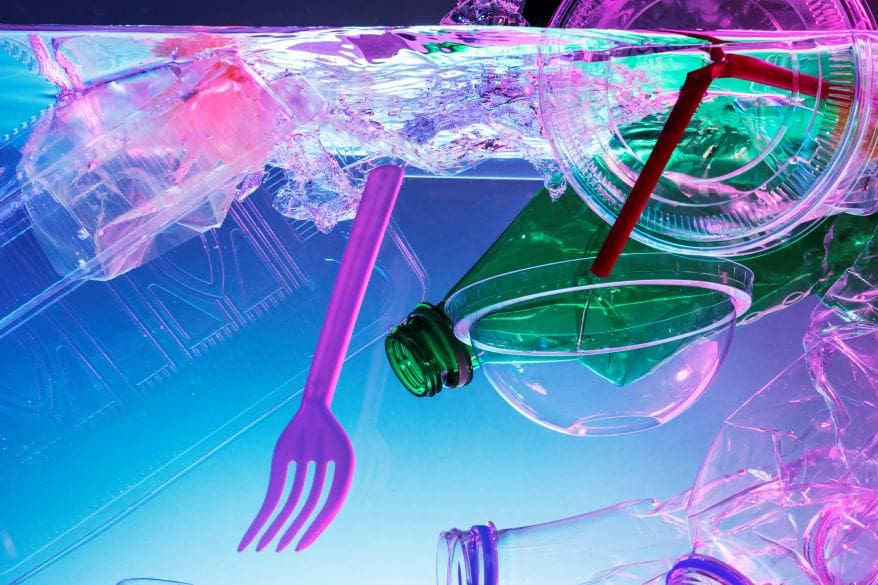
Plastics are everywhere. Your water bottle, your phone case, your sneakers — all made of polymers. But did you know that plastics actually age and break down over time? At first, this might sound surprising. After all, we often think of plastic as something that lasts forever. While this may be true in some environments, thermooxidation — a chemical process where heat and oxygen attack plastic — slowly destroys polymer materials. So, how long does a plastic product actually last? A new research review in Chemistry–Methods answers exactly that question.
What Is Thermooxidative Stability?
Thermooxidative stability simply means how well a material resists breaking down from heat and oxygen. To explain, think of it like this: leave a rubber band in the sun for a few months. It becomes brittle and snaps easily. That is thermooxidation at work.
Seeing that this process affects everything from car parts to museum artifacts, scientists need to predict it accurately. This 25-year research review builds a solid mathematical theory for doing just that.
The Science of Induction Periods
At this point, you might ask — what is an induction period? To put it simply, it is the quiet phase before a material visibly begins to degrade. All of a sudden, after this period ends, rapid breakdown begins. Think of it like the calm before a storm.
The researchers used isoconversional methods to study these induction periods. These are mathematical tools that track how fast a chemical reaction happens at different temperatures. What’s more, they found that a specific equation — the Berthelot–Hood equation — described the behaviour best. This equation models how reaction rates change with temperature. By comparison, other equations used before gave less accurate results, especially when predicting long-term polymer lifetime.
Polymer degradation
Provided that scientists run high-temperature tests in the lab, they can predict how a polymer behaves at normal, lower temperatures over time. To illustrate, imagine heating a plastic sample at 150°C in a lab test. The researchers can then use their mathematical model to extrapolate — that is, to calculate — how that plastic would behave at 25°C over many years.
At the same time, the team developed their own temperature function — a formula created in their own laboratory — that performs even better for some applications. As a result, engineers and conservators get a much sharper, more reliable picture of how long a material will survive. At any rate, this kind of precision is very hard to achieve without a strong theoretical foundation.
Dimensionless Criteria — A New Analytical Tool
To enumerate the innovations in this paper, the team also introduced dimensionless criteria. These are unitless numbers derived from experimental data. Analogous to how a BMI number summarises your health metrics in one figure, these criteria give scientists a quick synoptic view of material stability.
Saving Museum Artifacts with Polymer Science
Here is where it gets truly exciting for STEM students curious about real-world impact. The theory applies not just to industrial plastics. It also applies to conservation science — the field that protects historical objects in museums.
Many priceless museum artifacts — toys, sculptures, early film reels, scientific instruments — are made of historic plastics. Sooner or later, these materials degrade and crumble. Prior to this research, conservators had very limited tools to predict when an artifact would start visibly deteriorating. With this new model, museum scientists can now estimate the remaining lifetime of a plastic artifact. So that restoration work can begin at the right time — before it is too late.
This is a beautiful example of how chemistry and heritage science work hand-in-hand.
How Do Scientists Test All This?
The researchers used thermoanalytical methods — lab techniques like thermogravimetry (TGA) and differential scanning calorimetry (DSC) — to run their experiments. To list a few capabilities: these tools measure tiny changes in mass or heat as a material is heated. After that, the data feeds into the mathematical model, producing lifetime predictions.
These instruments are found in university labs, industrial R&D centres, and government testing facilities worldwide. So long as you study materials science or chemistry, you will likely use these tools in your career.
Material Science career
All things considered, this research opens exciting doors for students like you. At the present time, industries like aerospace, automotive, packaging, heritage conservation, and renewable energy all need professionals who understand polymer stability. In fact, the demand for materials scientists and polymer chemists is growing fast.
You can start by reading more about Understanding Polymer Chemistry: A Beginner’s Guide on entechonline.com. As a matter of fact, it breaks down the basics in a way that is easy to follow for high school students. At this stage, building your foundation in chemistry and mathematics is the most important step.
What’s more, if you want to see how polymers shape everyday life, check out Polymers: The Invisible Force Shaping Our Everyday Lives — also on entechonline.com. To sum up, these two articles together give you a great starting point for exploring this career path.
Additionally, to stay updated with the latest developments in STEM research, visit ENTECH Online.
Reference:
- Šimon, P., Dubaj, T., & Cibulková, Z. (2026). Thermo-oxidative stability of materials: Assessment and predictions. Chemistry–Methods, 6, e202500147. https://doi.org/10.1002/cmtd.202500147
- Author
- Latest Posts

I am an inspirational writer and emerging science blogger with a deep-rooted passion for understanding and sharing the wonders of the world around us. My journey began with a Bachelor of Science in Chemistry from AKI’s Poona College of Arts, Commerce and Science, where I developed not only a strong foundation in scientific principles but also a mindset that values curiosity, observation, and critical thinking. Studying chemistry has taught me to approach problems with logic, to look beyond the obvious, and to see patterns where others might only see complexity. These experiences have shaped the way I perceive life and influence the way I express my thoughts, both scientifically and creatively.
I have always believed that knowledge is only as powerful as the way it is shared. This belief has guided me to create content that bridges the gap between science and everyday life. I aim to simplify complex scientific ideas so they become approachable, relatable, and engaging for everyone—whether someone has a formal background in science or is simply curious about the world. Science, in my view, is not confined to textbooks and laboratories; it is a way of thinking, understanding, and connecting with the world around us. By making science accessible, I hope to inspire curiosity, ignite learning, and encourage people to see the beauty and relevance of scientific discovery in their daily lives.
Alongside my love for science, I am deeply passionate about motivational writing. I believe words carry the power to transform perspectives, encourage self-reflection, and inspire action. By combining analytical thinking with creativity, I create content that is intellectually stimulating yet emotionally resonant. Whether I am breaking down a chemical concept, exploring a scientific phenomenon, or crafting motivational narratives, my goal is to communicate ideas in a way that is clear, meaningful, and impactful.
Through my work, I strive to empower my readers—not just by helping them understand the science around them, but by inspiring them to grow, learn, and realize their full potential. Every article, post, or story I write reflects my commitment to turning knowledge into inspiration. I want to spark curiosity, encourage self-improvement, and show that learning and personal growth are deeply connected. For me, writing is not just a craft; it is a way to touch minds, connect hearts, and make ideas come alive in a way that truly resonates.