Learn how ROS2 Navigation helps robot dogs explore unknown spaces, build maps, and move independently in real-world environments.
ROS2 Navigation for Quadruped Robots Explained
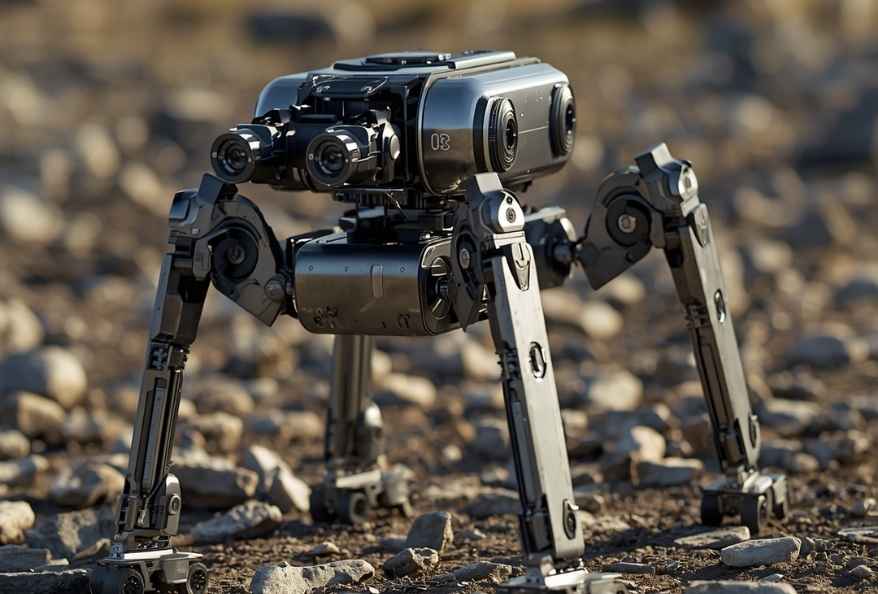
You may have seen these four-legged robots in viral videos, but it’s still quite hard to get them to walk on their own in real life. Researchers have been looking into a novel technique to enable these robots, especially the Boston Dynamics Spot, use ROS2 Navigation to get around difficult indoor spaces.
The goal is to give these robots the ability to think for themselves instead of just following prescribed courses. A platform has been built that uses advanced robot navigation technology to allow robots map and explore places on their own.
How the ROS2 Navigation System Works
The author who wrote this sought to make it easy for academics to use ROS2 Navigation systems. They used open-source software, which means that other people might duplicate and improve their work. They gave the robot strong computing and sensing abilities so it could find its way around on its own.
This is how the robot’s visual system works. It helps the robot observe its surroundings in real 3D and makes navigating with ROS2 easier.
Important Hardware for ROS2 Navigation
- The Nvidia Jetson AGX Orin is the processing unit that makes real-time navigation decisions.
- Livox Mid-360 LiDAR: Maps the environment in 3D so you can navigate accurately
- ZED 2i Camera: Improves how well you can see and perceive depth
- Custom brackets keep sensors safe and make sure data is collected steadily.
The robot employs SLAM Toolbox to find its way around, which is an important part of ROS2 Navigation mapping. As the robot walks through the area, it makes a digital map in real time.
How This Method Changes How Robots Find Their Way
The team made a big step forward in ROS2 Navigation research by making autonomous exploration better. The robot doesn’t look at every possible frontier. Instead, it adopts a rapid “early-exit” technique to choose a viable path.
This change makes it much easier to navigate in ROS2 systems.
- Lightning Speed: Picking goals faster makes autonomous robot navigation work better overall.
- Less Computation: Less processing makes the robot operate more smoothly
- Efficient Mapping: Improved exploration in ROS2 mapping frameworks
- Better Initialization: A “wiggle” motion makes it easier to find your way in the early stages.
STEM Jobs and ROS2 Navigation
This study demonstrates that there are many interesting employment in this industry if you love robots as much as I do. I want to point out a few ways you can get involved in this robotic future:
- Software engineers: You can help make the next generation of ros2 navigation systems and write code that makes robots smarter.
- Mechatronics Engineers: If you like working with your hands, you can make the physical hardware and mounts that keep sensors safe.
- Data Experts: You can assist robots understand their LiDAR eyes by translating raw sensor data into maps that are easy to use.
- Team Leaders: This whole project shows how important it is to work together, since it requires a lot of diverse abilities to make a robot dog work on its own.
This expanding industry shows that robots can lead to many different occupations, such as coding, design, data analysis, and management.
ROS2 Navigation: Final Thoughts
In conclusion,researchers are just starting to look into all the ways these mechanical explorers could be useful. The robotics community can speed up new ideas and make robots more independent by making tools open-source. This work shows that when you use smart tactics, ROS2 Navigation doesn’t have to be slow or hard to use.
The future of robotics is quite bright, and smart navigation systems will be very important for making autonomous robots work in the real world.
Additionally, to stay updated with the latest developments in STEM research, visit ENTECH Online.
Reference
- Brekke, V., Berge, E. O., Dybdahl, E., Singh, J., & Tyapin, I. (2026). ROS 2-Driven Navigation and Sensor Platform for Quadruped Robots. Robotics, 15(4), 70. https://doi.org/10.3390/robotics15040070
- Author
- Latest Posts

Kottauppari Venkat Raghava
I am a technology-driven IT graduate with a strong passion for science and innovation. I am fascinated by how innovations like artificial intelligence, robotics, and emerging technologies are shaping our world. I specialize in analyzing complex scientific and technological research and presenting it in a clear, accessible way. My goal is to make science and technology understandable and engaging for students, tech enthusiasts, and professionals alike. By breaking down advanced concepts into simple, insightful narratives, I strive to inspire curiosity, learning, and innovation, helping readers stay informed about the breakthroughs that are shaping the future.