AI crop classification is helping farmers identify crops early using machine learning and satellite crop monitoring, making farming faster, smarter, and more efficient than ever before.
New AI Crop Classification Technology Predicts Crops Before Harvest
Estimated reading time: 5 minutes
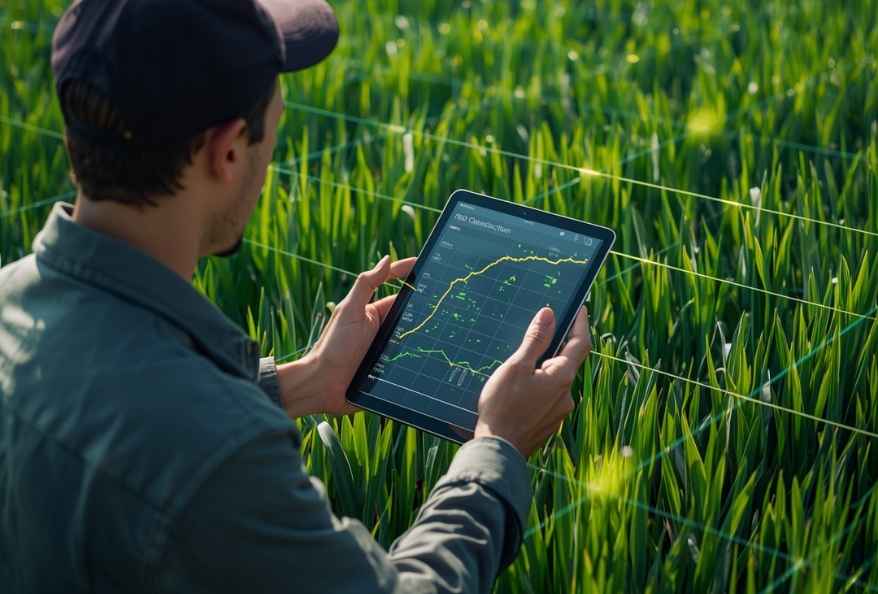
Modern farming is changing fast with AI crop classification and satellite crop monitoring. At the present time, farmers use smart tools to track crops early. These systems study plant growth using data and images.
As a result, farmers no longer wait for crops to mature. They can make faster and better decisions. This improves productivity and reduces waste.
Above all, it shows how science and technology work together in agriculture. Students can now see real-life uses of STEM subjects. In short, AI and satellites are transforming farming into a smarter and more efficient system for the future.
Key Takeaways
- AI crop classification identifies crops before full growth.
- Satellite crop monitoring tracks fields from space.
- Machine learning studies crop growth patterns.
- Farmers gain earlier farming insights.
- Smart tools improve harvest planning.
- STEM powers modern agriculture innovation.
What Is AI Crop Classification?
AI crop classification means using computers to identify crops. It happens before crops reach full growth and maturity. Normally, farmers wait until plants mature. Then they inspect the field. However, that takes time. It can delay decisions.
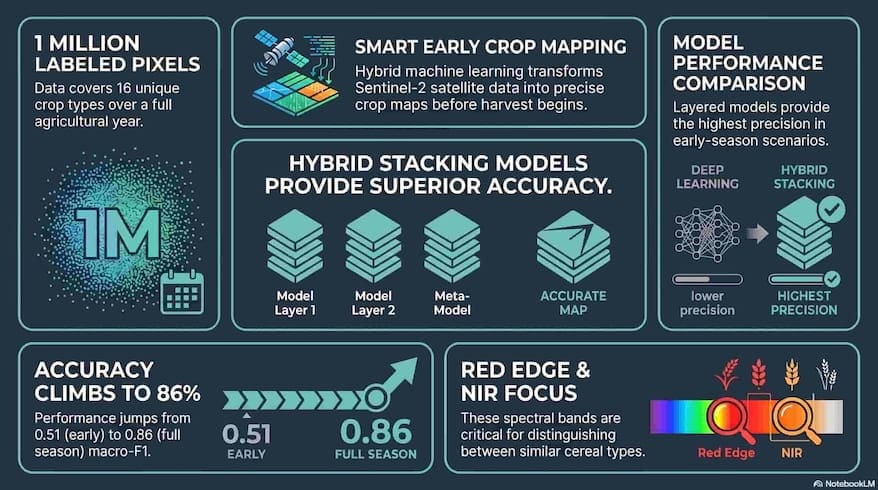
Scientists wanted a better solution. Therefore, they built AI systems. These tools predict crop types early. They learn from large data sets and they compare crop behavior patterns.
AI Crop Classification Works By:
- Collecting crop data
- Studying plant images
- Tracking growth changes
- Comparing seasonal patterns
- Predicting likely crop types
As can be seen, AI crop classification speeds up analysis. It reduces guesswork greatly. Farmers receive answers much sooner.
Why Early Crop Detection Matters
Farmers need fast and accurate information. Delays create major problems. Poor timing may lower harvest quality. It may also waste money.
When farmers know crops early, they can plan better. They react before problems grow larger.
Early Detection Helps Farmers:
- Plan irrigation sooner
- Organize workers earlier
- Schedule harvest dates
- Buy materials on time
- Reduce wasted resources
As a result, farms run more smoothly. Productivity often improves.
How Satellite Crop Monitoring Works
Scientists rely on satellites for satellite crop monitoring. As a result, these satellites orbit Earth daily. They scan farmland from above. Then, they capture clear images for analysis.
The researchers used Sentinel-2 satellite systems. These tools track crops over time. After that, computers study the images. They search for crop changes.
Satellite Crop Monitoring Tracks:
- Field color changes
- Plant health patterns
- Growth speed shifts
- Water stress signs
To explain, satellite crop monitoring helps experts study fields remotely. Farmers do not need constant physical inspections.
Why Satellite Crop Monitoring Is Important
Large farms cover huge areas of land. As a result, inspecting every part takes time. It also increases costs. Therefore, satellite crop monitoring offers a faster solution.
Instead of walking through every field, farmers can review digital data. In addition, this makes farming easier and more efficient.
Benefits of Satellite Crop Monitoring
- Saves time
- Reduces labor costs
- Improves farm visibility
- Provides frequent updates
With this in mind, satellite crop monitoring supports smarter and faster farming decisions.
The Science Behind AI Crop Classification
This research combines several STEM subjects. Each one plays an important role. Together, they make the system work effectively.
To explain, biology shows how plants grow. Meanwhile, physics explains how light reflects. At the same time, computer science powers the AI system. In addition, math improves prediction accuracy.
Biology Helps With:
- Plant growth cycles
- Crop structure differences
- Seasonal development stages
Physics Helps With:
- Light absorption
- Reflection behavior
- Spectral analysis
Computer Science Helps With:
- Training algorithms
- Processing data
- Building AI models
Math Helps With:
- Statistics
- Pattern recognition
- Prediction modeling
As a result, these subjects work together seamlessly. In conclusion, AI crop classification clearly shows how STEM connects in real-world applications.
How Plants Create Light Signatures
Many students think farming lacks innovation. However, this idea is outdated. At the present time, modern farming uses advanced tools daily.
Today’s farms use:
- Drones
- Satellites
- AI software
- Smart tractors
- Robotics
As a result, agriculture now needs tech experts. In addition, students who enjoy coding can explore agri-tech careers. Therefore, farming now offers exciting opportunities in STEM fields.
Why Students Should Know About This Technology
Many students think farming lacks innovation. However, this idea is outdated. Modern farming uses advanced tools daily.
Today’s farms use:
- Drones
- Satellites
- AI software
- Smart tractors
- Robotics
As a result, agriculture now needs tech experts. In addition, students who enjoy coding may explore agri-tech careers. Therefore, farming offers exciting opportunities in STEM fields.
Careers Linked to This Field
- Agricultural Engineer
- AI Developer
- Satellite Analyst
- Data Scientist
- Environmental Researcher
Above all, this field is growing rapidly. Demand may rise further soon.
The Future of AI and Satellite Farming
Experts believe smart farming will grow rapidly. At the present time, more farms adopt digital tools each year. As a result, AI crop classification may soon become standard.
Future farms may include:
- Self-driving tractors
- AI watering systems
- Drone crop scanners
- Robotic harvest machines
In addition, satellite crop monitoring will improve further. Future satellites may provide faster updates. They may also deliver sharper images.
This could help farmers:
- Predict drought risks
- Prevent crop disease
- Improve food supply planning
Therefore, farming may soon become highly automated. In conclusion, technology will make agriculture more efficient and reliable.
Final Thoughts on AI Crop Classification
AI crop classification is transforming farming rapidly. As a result, it predicts crops early using machine learning. Meanwhile, satellite crop monitoring improves accuracy. Therefore, these tools help farmers make smarter decisions.
In conclusion, this research proves STEM changes industries. Science and coding now improve agriculture daily. Students learning STEM today may design tomorrow’s farming systems. The future of farming will depend heavily on innovation.
Additionally, to stay updated with the latest developments in STEM research, visit ENTECH Online.
Frequently Asked Questions, FAQs
What is early crop classification?
It means identifying crops before full growth.
How does AI identify crops?
AI studies satellite images and plant patterns.
Why do farmers need early crop data?
It improves planning and boosts efficiency.
What satellites were used in this study?
Researchers used Sentinel-2 satellite imagery.
What STEM subjects connect to this research?
Biology, physics, math, and computer science.
Reference
- Alimagambetova, A., Yessenova, M., Konyrkhanova, A., Tatyana, T., Beissegul, A., Tashenova, Z., Kadirkulov, K., Ulzada, A., & Mauina, G. (2026). Early Crop Type Classification Based on Seasonal Spectral Features and Machine Learning Methods. Technologies, 14(4), 221. https://doi.org/10.3390/technologies14040221
- Author
- Latest Posts

Kottauppari Venkat Raghava
I am a technology-driven IT graduate with a strong passion for science and innovation. I am fascinated by how innovations like artificial intelligence, robotics, and emerging technologies are shaping our world. I specialize in analyzing complex scientific and technological research and presenting it in a clear, accessible way. My goal is to make science and technology understandable and engaging for students, tech enthusiasts, and professionals alike. By breaking down advanced concepts into simple, insightful narratives, I strive to inspire curiosity, learning, and innovation, helping readers stay informed about the breakthroughs that are shaping the future.