Dementia Glasses use AI to unlock a memory secret that helps patients stay independent and confident every day.
Dementia Glasses: The £1 Million Memory Secret?
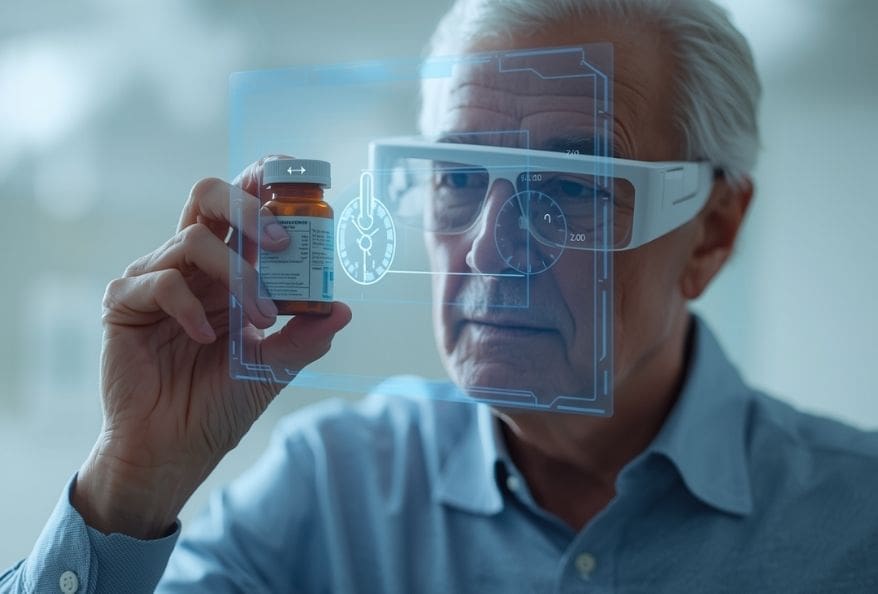
I have often worried about that scary moment when a familiar face suddenly becomes a total mystery. It turns out that I am not alone, as millions of people are now looking toward a high-tech solution called dementia glasses. These aren’t your average spectacles; they are essentially a digital brain that you wear on your face to help navigate the world. I recently took a deep dive into this technology, and what I found is both mind-blowing and a little bit complicated.
Meet Wispy: My New Digital Best Friend
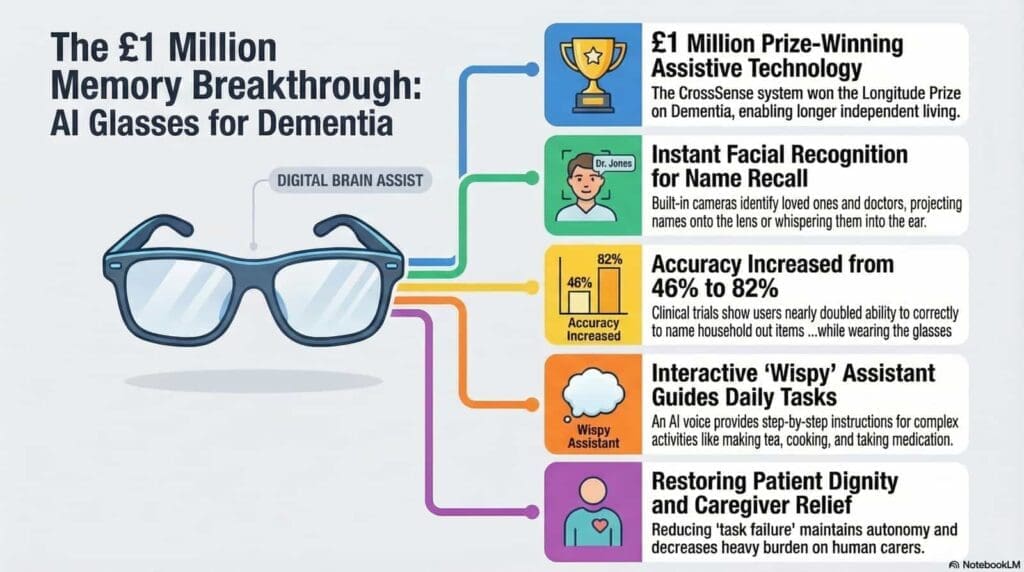
CrossSense recently grabbed a massive £1 million prize, marking it as one of today’s most exciting breakthroughs. To achieve this, these glasses use a chatty AI assistant named ‘Wispy’ to guide the wearer through their day. For instance, imagine walking into your kitchen and seeing floating text right in front of your eyes telling you exactly how to make a cup of tea. Additionally, the system uses a camera and microphone to identify what you are looking at and provides vocal prompts to keep you on track.
The coolest part of these dementia glasses is how they help with social awkwardness. Wispy can recognize the faces of your friends and family and whisper their names directly into your ear. This means you never have to go through that painful “roll call” of every relative’s name before finding the right one. It is all about helping people stay independent longer and avoiding the embarrassment that often comes with memory loss.
From Cooking to Meds: These Glasses Do It All
I also looked into a framework called “cARe” that works seamlessly with Dementia Glasses to improve everyday cooking tasks. It uses animated arrows to show you where items like the kettle or mugs are kept. Every time you complete a step correctly, the system plays a recording of a loved one praising you. This positive reinforcement highlights the Dementia Glasses Memory Secret, boosting motivation and confidence. As a result, users feel more successful and independent while preparing meals.
Another system called MedaCareLLM is a total lifesaver for anyone who has to take a lot of pills. These glasses can actually read labels on prescription bottles to ensure you are taking the right dose at the right time. They help prevent accidental doses, which takes a giant weight off the shoulders of family caregivers. I think this feature alone makes the technology worth watching.
The ExplorAR app further expands the capabilities of Dementia Glasses by helping users learn new technologies. It guides older adults through smartphone apps using a trial-and-error approach. When users select the correct option, a green border appears, while mistakes trigger a red warning. This interactive system demonstrates the practical value of the Dementia Glasses Memory Secret, turning learning into a safe and engaging experience.
The Real Talk: Batteries, Bulky Frames, and Big Data
However, I have to be honest—this technology isn’t perfect just yet. One of the most glaring flaws is that the battery on many of these devices only lasts for about one hour. That means you have to carry around a portable power bank just to get through a normal afternoon. Some users also find the hardware to be “monstrous” and too heavy to wear for long periods.
The expensive cost also poses an issue, as these glasses can run up to £1,000. On top of that, you might have to pay a monthly subscription fee just to keep the software running. For someone who might lose or break their glasses often, this feels like a very high price to pay for a bit of help.
I also found some scary concerns regarding privacy and how companies use your data. Because the glasses are constantly “eavesdropping” and recording what you see, there is a risk of data harvesting. Some experts worry that insurance companies could eventually use this data to track your health and change your rates. We have to make sure these devices protect our privacy before they become a part of every home.
The Future of Dementia Glasses and Memory Support Technology
If glasses feel like too much, I also discovered blue light therapy as a simpler alternative. By using pulses of light at a 40Hz frequency, doctors can help reset your circadian rhythm. This helps people with dementia sleep much better and reduces the urge to wander around at night. It is a non-invasive way to improve mood and memory without wearing a heavy headset.
In the end, while there are some technical hurdles, these dementia glasses offer a massive amount of hope. They provide a way for people to maintain their human dignity and stay in their own homes for as long as possible. I am excited to see how the tech improves before it hits the mainstream market in early 2027.
References
- Guo, Y., & Li, D. (2026). Interaction Design Strategies of AI Smart Glasses for Older Workers: An Embodied Cognition Perspective and Usability Evaluation. Applied Sciences, 16(6), 2768. https://doi.org/10.3390/app16062768
- Author
- Latest Posts

I’m Ashwini Darade, a dedicated and detail-oriented Digital Marketing professional with a strong academic background in Computer Engineering and an MBA in HR from Savitribai Phule Pune University. Currently working as a Content Writer and Author specializing in SEO-driven and research-based content, I’m passionate about transforming complex ideas into clear, engaging, and impactful narratives that connect with diverse audiences. With a strong focus on digital growth, structured storytelling, and continuous learning, I blend creativity with strategy to deliver content that enhances brand visibility and drives measurable results. Outside of work, I enjoy exploring new trends in digital marketing and sharpening my writing expertise.