The Hubble gravitational lensing discovery in 2026 reveals hidden dark matter and distant galaxies, offering new insights into cosmic structure.
Hubble Gravitational Lensing Discovery Reveals Dark Matter
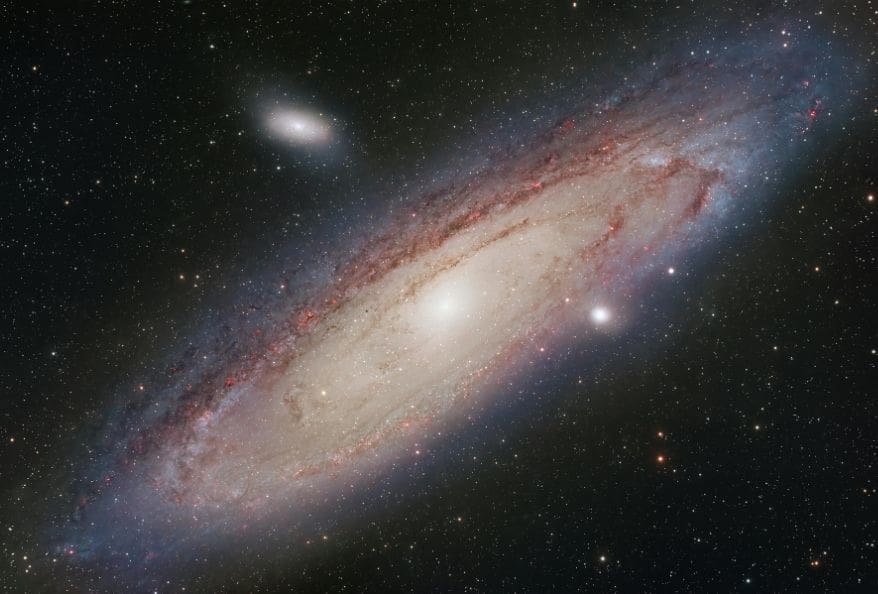
Recently, the European Space Agency and NASA released a new space image. This image comes from the Hubble Space Telescope. To explain, it highlights a powerful Hubble gravitational lensing discovery in a distant galaxy cluster. As a result, scientists can observe galaxies that are otherwise hidden. Above all, this discovery shows how gravity bends light across vast distances.
- Gravitational arcs appear clearly, showing how light bends around massive galaxy clusters
- Distant galaxies become visible, even if they are billions of light-years away
- Hidden dark matter effects are detected, based on how light is distorted
- High-resolution space imaging improves analysis, helping scientists study cosmic structures in detail
What Is Hubble Gravitational Lensing Discovery
Simple Explanation of Gravitational Lensing
At first, gravitational lensing occurs when a massive object bends light. To put it differently, galaxy clusters act like natural lenses in space. As can be seen, this bending creates arcs and stretched shapes in images. In effect, the Hubble gravitational lensing discovery allows astronomers to see distant galaxies more clearly. At the same time, it helps measure how mass is distributed in the universe.
Why This Discovery Matters
At the present time, scientists study dark matter using lensing. To point out, dark matter cannot be seen directly. However, it affects how light bends. All things considered, the Hubble gravitational lensing discovery gives strong evidence of hidden matter. As a result, researchers can better understand how galaxies form and evolve.
How Hubble Captured This Discovery
Observation and Data Collection
At first, the Hubble Space Telescope observed the galaxy cluster over time. After that, it collected faint light signals from distant galaxies. To explain, these signals traveled billions of years before reaching the telescope. With this in mind, the captured data contains valuable information about early cosmic events.
Image Processing Techniques
After that, scientists processed the data carefully. To list, they combined multiple exposures and enhanced faint details. In addition, they removed background noise to improve clarity. As a result, the final image shows clear gravitational arcs and distorted galaxy shapes. In short, advanced technology plays a key role in producing such discoveries.
Key Features of Hubble Gravitational Lensing Discovery
At this point, several important features stand out in this discovery:
- Visible gravitational arcs showing light bending effects
- Magnified distant galaxies that are otherwise invisible
- Evidence of dark matter distribution in galaxy clusters
- High-resolution imaging from space-based observations
- Detailed cosmic structure analysis using lensing patterns
As can be seen, these features help scientists study the universe in detail. What’s more, they provide insights into cosmic evolution.
Hubble Gravitational Lensing Discovery and Dark Matter
At the present time, dark matter remains one of the biggest mysteries in science. To illustrate, it does not emit or reflect light. However, its gravitational effects are visible. In effect, the Hubble gravitational lensing discovery helps scientists map where dark matter exists. As a result, researchers can estimate how much unseen mass is present in galaxy clusters. In general, this method acts like a cosmic tool for detecting invisible matter.
Applications of Gravitational Lensing
Impact on Science and Technology
As has been noted, space discoveries often lead to practical benefits. For the purpose of understanding, this research improves imaging techniques and data analysis methods. In addition, it supports advancements in artificial intelligence and simulation tools. All in all, the Hubble gravitational lensing discovery contributes to scientific progress.
Real-World Connections
To rephrase it, space research is not only about distant galaxies. It also affects everyday life. For example, satellite imaging, GPS systems, and medical scans use similar technologies. As a result, studying space can lead to real-world innovations.
Future of Space Discoveries
At this point, scientists continue to explore the universe using advanced telescopes. To point out, future missions will build on the work of the Hubble Space Telescope. In addition, newer telescopes will provide even deeper images of space. As a result, more discoveries about dark matter and cosmic structure are expected. Sooner or later, these findings may answer long-standing scientific questions.
Final Thoughts on Hubble Gravitational Lensing Discovery
In conclusion, the Hubble gravitational lensing discovery reveals hidden parts of the universe. It shows how gravity bends light and exposes unseen matter. At last, this discovery improves our understanding of galaxies and cosmic evolution. To sum up, it represents an important step in modern astronomy and future research.
Additionally, to stay updated with the latest developments in STEM research, visit ENTECH Online.
References
- European Space Agency. (2026). Hubble captures a gravitational lensing phenomenon. Retrieved from https://esahubble.org/news/heic2606/
- Gianopoulos, A., & Team, N. H. M. (2026, March 18). NASA’s hubble unexpectedly catches comet breaking up – NASA Science. NASA Science. https://science.nasa.gov/missions/hubble/nasas-hubble-unexpectedly-catches-comet-breaking-up/
- Author
- Latest Posts

Kottauppari Venkat Raghava
I am a technology-driven IT graduate with a strong passion for science and innovation. I am fascinated by how innovations like artificial intelligence, robotics, and emerging technologies are shaping our world. I specialize in analyzing complex scientific and technological research and presenting it in a clear, accessible way. My goal is to make science and technology understandable and engaging for students, tech enthusiasts, and professionals alike. By breaking down advanced concepts into simple, insightful narratives, I strive to inspire curiosity, learning, and innovation, helping readers stay informed about the breakthroughs that are shaping the future.