Continuous functions are a fundamental prerequisite for the development and application of calculus
What are Continuous Functions?

Continuous functions are a central concept in mathematical analysis, serving as the bedrock for an infinite theorems and applications. Understanding their definition, properties, and broader implications allows us to appreciate their significance in both abstract mathematics and practical scenarios. This article helps you to understand continuous functions, exploring their historical evolution, properties, examples, challenges, and future directions.
Defining Continuous Functions
A function, simple as it may seem, unfolds complexity when we explore continuity. A function (  ) is continuous at a point
  if the following condition holds:
![\[\lim_{h \to 0} \frac{f(x+h) - f(x)}{h} = f'(x)\]](https://b3411452.smushcdn.com/3411452/wp-content/ql-cache/quicklatex.com-46eeb184222d436f0a4219045460599c_l3.png?lossy=2&strip=1&webp=1 "Rendered by QuickLaTeX.com")
This definition might appear to be difficult, yet it carries a wealth of implications for calculus and beyond. It signifies that as  approaches
  , the function value
  approaches
  , that is
  as
as  . It is read as, tends to as x tends to a.
Key Characteristics of Continuous Functions
Characteristics
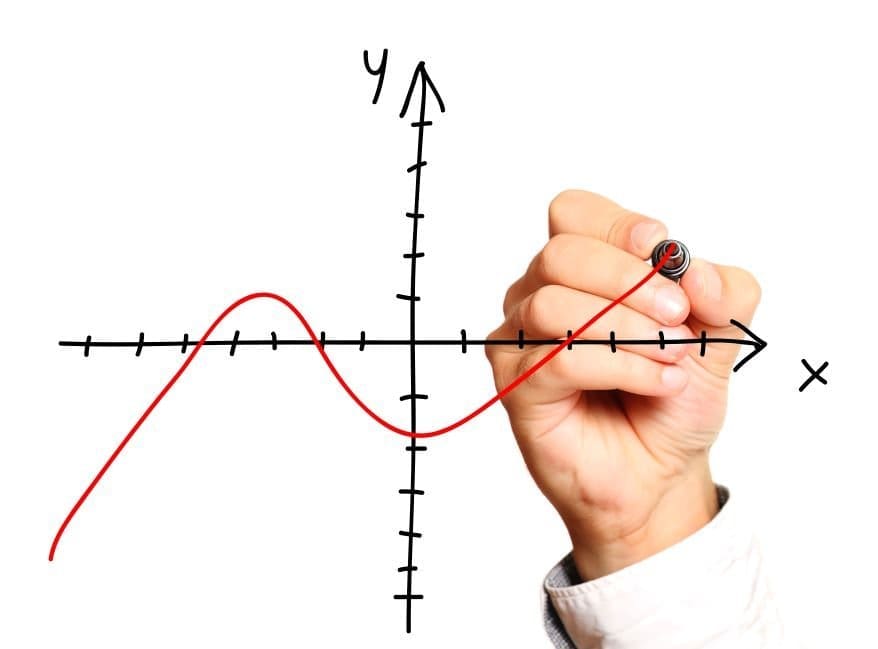
- Gradual Change: Unlike functions with abrupt changes or jumps, a continuous function changes smoothly. There are no breaks or holes, which means they can be drawn without lifting a pencil off the paper.
- Predictability: Because there are no sudden disruptions, predicting values close to a point becomes simpler, forming a cornerstone for many predictive models.
- Local Connectivity: It exhibit a profound connection between nearby points. This property is crucial for understanding the behavior of functions over intervals.
Properties of Continuous Functions
Continuous functions possess properties that are profound and far-reaching, influencing numerous mathematical domains. These properties endow these with a versatility that is crucial for both theoretical exploration and practical application.
Uniform Continuity Explained
Uniform continuity extends the idea of continuity. A function is uniformly continuous on a set if, for every small value of  , there exists a common
  that works, regardless of where you start on the set. It’s particularly useful in understanding function behavior over larger domains without discrepancies in continuity.
Functions such as  when restricted to bounded intervals, are uniformly continuous. This characteristic creates a universality that assists in numerous mathematical proofs and real-world applications where precise approximations are essential.
Their versatility makes them important across diverse fields, from advanced mathematics to practical implementations. Their behavior forms the underpinning of various scientific advances and technological developments.
Real-World Examples of continuous functions
- Engineering: Stress-strain relationships in materials under load are modeled using continuous functions for better predictability.
- Economics: Utility curves, exemplifying consumer satisfaction related to consumption, often assume continuity for practical calculation purposes.
- Physics: Motion dynamics rely on continuity to describe the seamless progression of time and space, crucial in predicting trajectories and system behaviors.
In these examples, continuity allows for the creation of models that can simulate and predict real-world processes effectively, enhancing our ability to design and innovate.
Role in Calculus
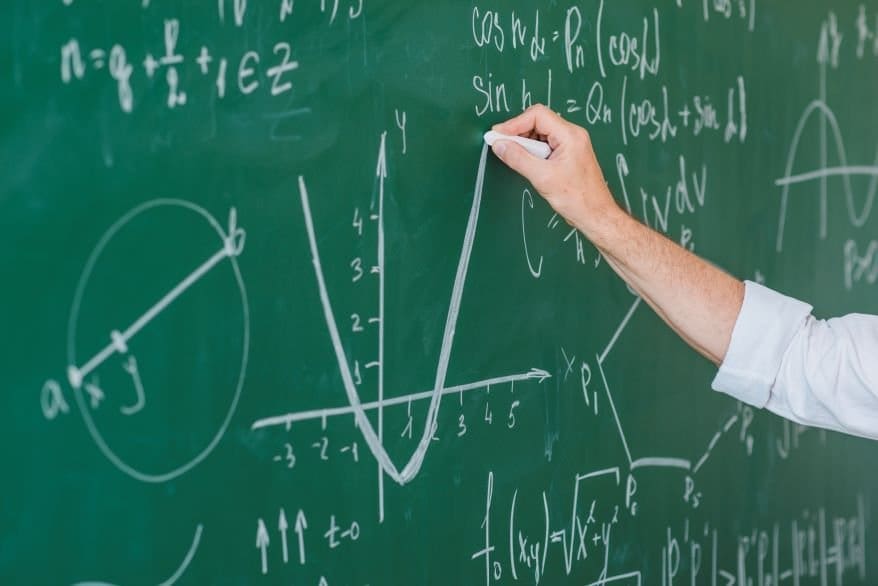
Continuous functions are a fundamental prerequisite for the development and application of calculus. Differentiation and integration theories are built upon the foundation of continuous functions. When a function is continuous, its derivative provides information about its rate of change, while integration allows the determination of accumulated quantities like area and volume.
In calculus, the beauty of continuous functions unfolds in the smooth transitions from simple polynomials to multifaceted curves. The intricate dance of differentiation and integration reflects how continuous functions are intricately woven into the fabric of mathematical analysis.
Challenges and Misconceptions about Continuous Functions
Despite their foundational role, continuous functions are often misunderstood in both academic and educational contexts. Clarity and comprehension become crucial when solving these challenges.
Common Misunderstandings
Common misconceptions include confusing continuous with smooth functions. While all smooth functions are continuous, not all are smooth (consider the absolute value function at zero). The misconception arises from visual assumptions rather than a rigorous definition.
Another misunderstanding is that all function types encountered in basic mathematics are continuous. However, piecewise functions can exhibit discontinuities, as each segment conforms to its rule. Recognizing these misconceptions helps in constructing a proper understanding of functions.
For example, |x| is a continuous function, but it is neither smoot nor differentiable at (  ). This is because the slope of the tangent line changes abruptly at that point, which violates the requirement for differentiability. The curve has corner at that point.
Addressing the Epsilon-Delta Definition
The  definition of continuity, while rigorous, often appears daunting to students. It emphasizes the formal process of proving continuity by showing that for every , there exists a corresponding
  such that the absolute difference between
  is less than ε whenever is within of
  . This requirement ensures the function conforms to precision, but the abstraction can be impediment if approached without understanding.
Understanding the interplay between and simplify the process, highlighting the balance of precision and approximation. Breaking down each component of this definition facilitates its acceptance and application across various mathematical proofs.
Future Directions in Continuous Function Research
The ongoing research in this domain unveils innovative approaches and potential applications beyond traditional boundaries. How continuous functions interplay with emerging mathematical theories!, is a growing interest in modern mathematical investigation.
Current Trends and Innovations
Current research is going deep into how continuous functions can enhance computational techniques and artificial intelligence models. These functions assist in creating algorithms that simulate human learning and decision-making processes. Researchers are also investigating how quantifying continuity could lead to breakthroughs in solving complex differential equations and optimizing numerical methods.
By aligning the properties of continuous functions with data processing needs, new computational approaches are evolving that promise to revolutionize industries reliant on data-intensive analysis.
Potential Impact on Other Fields
Beyond mathematics, continuous functions can impact fields as diverse as biology, economics, and environmental sciences. In biology, understanding the continuous behavior of biological functions can reveal patterns in genetics and population dynamics. The seamless behavior of functions aids in ecological modeling and understanding species interactions within ecosystems.
In economics, for example, it may refine economic models, allowing for more precise predictions of market trends and consumer behavior. Moreover, their ability to detect gradual changes parallels how real-world phenomena unfold, thus providing powerful analytical tools across disciplines.
Continuous functions represent an elegant intersection of mathematics and real-world application. Their simplicity invites curiosity, while their depth demands respect, making them an endlessly engaging topic of mathematical inquiry. As we continue to develop these further, their profound implications will no doubt have a good effect within and beyond the realm of mathematics.
Conclusion
The understanding of continuous functions is not merely an academic exercise but a journey into understanding the fabric of reality itself. By studying into these functions, mathematicians and scientists gain insights into the fundamental principles that govern natural phenomena. The continuous nature of these functions mirrors the seamless transitions observed in physical processes, from the flow of water to the propagation of light. This essential connection between mathematics and the natural world underscores the importance of these in modeling and predicting real-world events. Their application extends to various scientific domains, where they serve as essential tools for interpreting and forecasting complex systems. As research progresses, the potential for continuous functions to contribute to advancements in technology and science becomes increasingly evident.
FAQs
What is the definition of a continuous function?
A continuous function is defined as a function that does not have any breaks, jumps, or holes in its graph. For a function to be considered continuous at a point, the limit of the function as it approaches that point must equal the value of the function at that point. In formal terms, a function is continuous at a point if the following three conditions are met: 1) is defined, 2) the limit of as approaches exists, and 3) the limit equals .
How can we determine if a function is continuous on an interval?
To determine if a function is continuous on an interval, you must check the continuity of the function at every point in that interval. For example, if the interval is [a, b], you would evaluate the function at the endpoints a and b, as well as at any point c in between. If the function meets the conditions of the definition of continuity at all points in the interval, then the function is continuous on the interval. Additionally, you must also check for any potential points of discontinuity such as asymptotes.
What are some examples of continuous functions?
Common examples of continuous functions include polynomial functions (like ), exponential functions (like  ), and trigonometric functions (like
  ). These functions are continuous everywhere because they do not contain any points of discontinuity. Moreover, the graph of these functions can be drawn without lifting the pencil from the paper, illustrating their continuity.
What does it mean for a function to be continuous at a point?
For a function to be continuous at a specific point a, it must satisfy three criteria: the
What is the definition of a continuous function?
A continuous function is defined as a function for which small changes in the input produce small changes in the output. More formally, a function is said to be continuous at a point if the following conditions are met: the function equals the value of the function at that point, the limit of the function as it approaches that point exists, and the limit equals the value of the function. If a function meets these criteria for every point in its domain, it is considered continuous everywhere.
What does it mean for a function to be continuous on an interval?
When we say a function is continuous on an interval, we mean that the function does not have any breaks, jumps, or holes in its graph over that interval. This means that for every point in the interval, the function satisfies the definition of continuity. Common intervals include closed intervals, like [a, b], or open intervals, like (a, b). A function can be continuous on some intervals and discontinuous on others.
What is the intermediate value theorem?
The intermediate value theorem states that if a function is continuous on a closed interval [a, b], and N is any number between and  , then there exists at least one c in (a, b) such that
  = N. This theorem is crucial in proving the existence of roots within an interval. And also highlights a fundamental property of continuous functions.
What are some examples of continuous functions?
Some common examples of continuous functions include polynomial functions, exponential functions, and trigonometric functions.
Additionally, to stay updated with the latest developments in STEM research, visit ENTECH Online. Basically, this is our digital magazine for science, technology, engineering, and mathematics. Furthermore, at ENTECH Online, you’ll find a wealth of information.
References
- Davis, A. S. (1963). The uniform continuity of continuous functions on a topological space. In Proceedings of the American Mathematical Society (Vol. 14, Issue 6, pp. 977–980). American Mathematical Society (AMS). https://doi.org/10.1090/s0002-9939-1963-0157349-7
- Tang, B. (2024). On the Continuity of Functions and Their Application in Polynomial Approximation. In Highlights in Science, Engineering and Technology (Vol. 88, pp. 220–227). Darcy & Roy Press Co. Ltd. https://doi.org/10.54097/j728na47
- Continuity of Functions. (2019). In A Physicist’s Introduction to Algebraic Structures (1st ed., pp. 597–606). Cambridge University Press. https://doi.org/10.1017/9781108679114.021