At the present time, this study shows how island biogeography can be improved. Above all, using environmental filtering helps identify which species could survive on islands.
Enhancing island biogeography via environmental filtering of species
Estimated reading time: 4 minutes
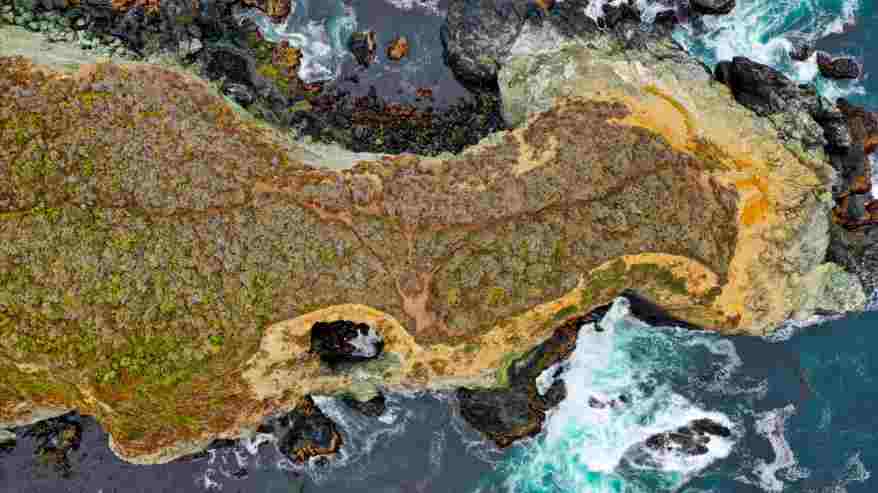
What is island biogeography, and how do specific animals manage to reach tiny, isolated islands in the first place? This concept in ecology explores how species arrive, establish, and survive on islands, as well as how factors like distance, size, and environmental conditions shape the diversity of life found there. As a biology enthusiast, I always find myself thinking about this exact question! For a very long time, scientists focused mostly on guessing the total number of creatures that could live on an isolated landmass. Unfortunately, they largely ignored the historical background and the exact identities of the animals that might actually show up.
The Big Problem with Old Rules: What Is Island Biogeography?
A famous concept called what is island biogeography explains that islands eventually reach a steady, natural balance of wildlife. However, this traditional theory ie what is island biogeography mostly cared about counting numbers rather than figuring out the actual traits of the creatures. That is exactly the puzzle a brand new study tried to solve to better understand our changing ecosystem!
To crack this ecological mystery ie. what is island biogeography, researchers recently designed a clever two-step process to identify exactly who might move in next. First, they gathered a massive starting list of potential animal names from the surrounding mainland regions. Then, they used a cool technique called environmental filtering to narrow down this giant list. They used models to match climate with species needs.
Also Read: Urban Heat Island Cooling Using AI and Green Infrastructure
Butterflies and What Is Island Biogeography: The Ultimate Test Subjects
What is island biogeography: To thoroughly test out their awesome new strategy, the scientists decided to look closely at colorful butterflies living across the sunny Caribbean Islands. Specifically, they focused on vibrant groups known as swallowtails and sulphurs. I think picking these insects was a super smart move! We already know a lot about where these bugs naturally like to hang out, making them the perfect test subjects for this kind of wild experiment.
By carefully analyzing the regional data, the dedicated team successfully weeded out the delicate species that definitely could not survive the harsh island weather. Interestingly, they also stumbled upon some highly unexpected results during their experiment. Their digital models showed a few leftover bugs that technically could survive the local climate perfectly, even though nobody has ever seen them on those specific islands yet, which totally blew my mind!
Also Read: Wallace Line Mystery: A Natural World’s Riddle
Unrealized Potential Colonizers: Bugs Yet to Arrive
I find it absolutely fascinating that the lead scientists decided to call these missing bugs “unrealized potential colonizers.” in what is island biogeography. This fancy term simply means that these specific insects possess the right survival skills for the island habitat, but they just haven’t managed to physically fly across the ocean yet. So, perhaps one day in the near future, we will excitedly spot these new arrivals landing on the sandy shores in what is island biogiography
To make this research even cooler, the scientists made all their computer code and data completely free to the public online! I love it when researchers share their hard work openly. Anyone who is curious can check out their specific methods on the internet. This means young scientists like us can potentially run these same exact tests on other cool animals, completely changing the way we study global wildlife!
Why This Matters for Our Planet’s Future
At this point, you might be asking yourself why we should even care about this highly specific bug research. Well, understanding exactly which creatures can survive in particular places genuinely helps us protect our deeply fragile environment in what is island biogeography. Instead of just guessing random population numbers, we can now make highly accurate estimates about future local biodiversity.
Furthermore, as global climate change rapidly alters our modern world, knowing who can successfully live where becomes more critical than ever before. I strongly believe this fresh scientific approach to mapping nature gives global conservationists an incredibly powerful new tool. Ultimately, this upgraded method allows us to actively safeguard unique animal populations before it is entirely too late.
Conclusion
At the present time, this study shows how island biogeography can be improved. Above all, using environmental filtering helps identify which species could survive on islands. Prior to this, scientists mainly counted species, ignoring their specific traits. To illustrate, researchers tested butterflies in the Caribbean. Another key point: some species are potential colonizers that haven’t arrived yet. With this in mind, STEM students can see how data science and ecology combine. .
Additionally, to stay updated with the latest developments in STEM research, visit ENTECH Online.
Reference:
- Nuñez-Penichet, C., Soberón, J., Cobos, M.E. et al. Enhancing island biogeography: improving identification of potential species pools via environmental filtering. Sci Rep (2026). https://doi.org/10.1038/s41598-026-43084-9
- Author
- Latest Posts

I completed my Master of Science from the University of Allahabad in 2017 with a strong academic background in life sciences and chemistry. My specialization included Molecular Biology, Microbiology, Genetics, Plant Breeding, Phycology, Paleobotany, and Bioinformatics, along with Organic Chemistry, Inorganic Chemistry, and Physical Chemistry. This multidisciplinary training provided me with a comprehensive understanding of biological systems and analytical scientific approaches.
After completing my postgraduate studies, I gained valuable professional experience in both the education and social development sectors. I worked at A.M. Oxford Public School, where I was actively involved in guiding students toward academic excellence. In this role, I focused on creating an engaging learning environment, encouraging critical thinking, and nurturing students’ curiosity for scientific learning. My experience as an educator strengthened my communication, mentoring, and classroom management skills.
In addition to my teaching experience, I worked with Jeevan Jagriti Foundation, where I contributed to community-based initiatives aimed at improving educational access and awareness among underprivileged sections of society. Through this work, I participated in programs designed to support social development and promote the value of education in marginalized communities.
These professional experiences helped me develop strong interpersonal, leadership, and organizational skills while reinforcing my commitment to education and community service.