Antonie van Leeuwenhoek was a master of optics. Prior to his work, people did not know microorganisms existed. He looked at a drop of pond water.
Seeing the Unseen: Antonie van Leeuwenhoek’s Microscopic Discoveries

Science is not just about big books and heavy tests. Antonie van Leeuwenhoek proved this 350 years ago in Delft. He was not a trained scientist at first. He worked as a draper and sold cloth for a living. As a result, he used lenses to count threads in fabric. This curiosity led him to build his own microscopes. He did not use the big, clunky tools of his time. Instead, he made tiny single-lens devices. These tools were smaller than a modern postage stamp. Yet, they changed how we see the universe.
Through a Tiny Lens: Antonie van Leeuwenhoek’s Discoveries
Antonie van Leeuwenhoek was a master of optics. Prior to his work, people did not know microorganisms existed. He looked at a drop of pond water. To illustrate, he found thousands of tiny “animalcules” swimming around. He was the first to see bacteria and red blood cells. What’s more, he studied the sharp barb of a bee sting. He even looked at the tiny crystals in salt. These observations proved that hidden organization exists in all matter. His work turned simple looking into a real science. He sent over two hundred letters to the Royal Society in London. This made him a hero in the world of biology (microscopy field).
The Modern Connection
You might think Antonie van Leeuwenhoek’s discoveries are just old history. While that may be true, Antonie van Leeuwenhoek’s ideas live on today. Modern engineers use Antonie van Leeuwenhoek’s same single-lens idea for new tools. Take the Foldscope, for example. It is a microscope made of paper. Antonie van Leeuwenhoek’s tiny lens concept powers it, letting users see cells clearly. Analogous to Antonie van Leeuwenhoek’s original lens, it is cheap and very powerful. In addition, smartphone clip-on lenses use this same minimalist design inspired by Antonie van Leeuwenhoek. These tools help doctors in poor areas find diseases quickly. At the present time, we still use Antonie van Leeuwenhoek’s “simple” methods to study.
Your Future in STEM
Are you curious about how things work? A career in science or engineering might be for you. You do not need a fancy lab to start. At first, Leeuwenhoek only had his hands and a lens. Today, STEM students can explore biotechnology or materials science. You can design better microscopes or find new cells. To point out, these fields help solve big global problems. You could work on pollution or new medicine. So as to succeed, you just need to keep asking “why?”
Start Your Journey Today
The world needs more innovators like you. You can start by reading more about materials and how they react. Check out this guide on understanding stress and strain to see how engineers test stuff. Or, you can learn about the microbes Leeuwenhoek loved. Read about common disease and treatments to see how biology saves lives.
Seeing the Unseen
Leeuwenhoek’s life shows that anyone can be a pioneer. He did not have a degree in microbiology. After all, the field did not even exist yet! He built his own path through grit and skill. To put it another way, he created his own luck. He stayed curious until he was ninety years old. With this intention, he showed that the microworld is full of wonders. At length, his tiny lenses opened a new doors
Join the STEM Revolution
Do you want to build the next big thing? In general, STEM offers endless paths for teens. You can study physics, chemistry, or robotics. Providing that you stay focused, you can change the world. So long as you keep looking, you will find something new. In fact, there are still many “animalcules” left to find. Summing up, Leeuwenhoek’s legacy is a call to action for you. At this point, the lens is in your hands. What will you choose to see?
Additionally, to stay updated with the latest developments in STEM research, visit ENTECH Online. Basically, this is our digital magazine for science, technology, engineering, and mathematics. Also, at ENTECH Online, you’ll find a wealth of information.
Reference:
- Lee, H., Rhyu, I.J.(2026) Antonie van Leeuwenhoek and the dawn of microscopic observation: a narrative review from Delft’s lens to the modern microscope. Appl. Microsc. 56, 3 . https://doi.org/10.1186/s42649-026-00123-z
- Author
- Latest Posts
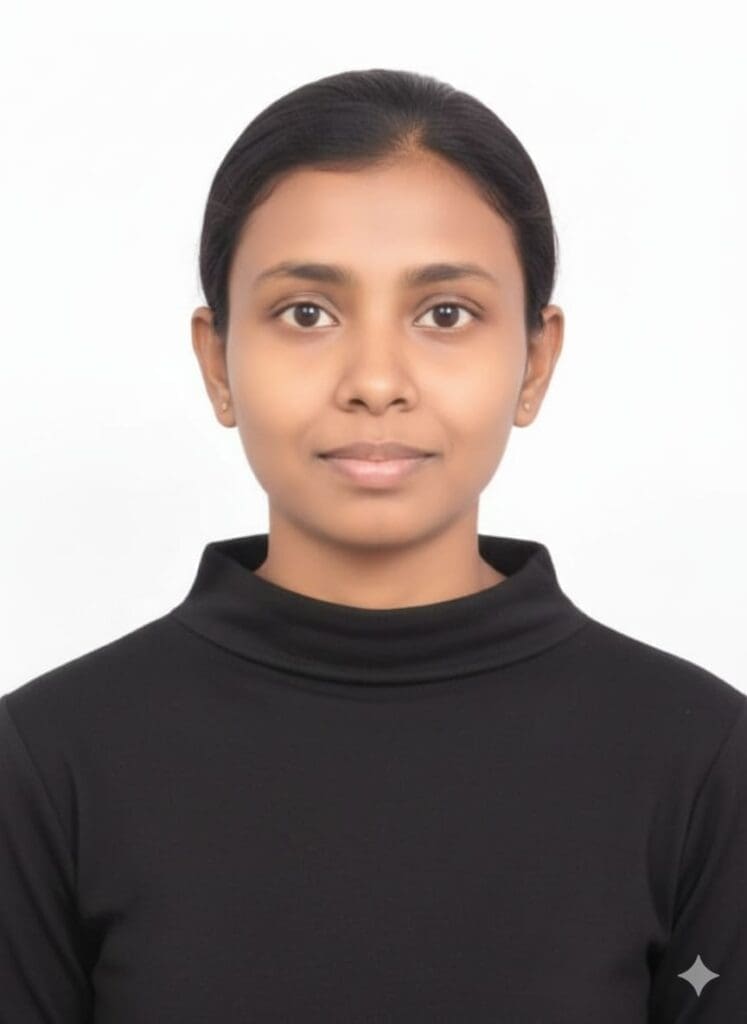
I completed my Master of Science from the University of Allahabad in 2017 with a strong academic background in life sciences and chemistry. My specialization included Molecular Biology, Microbiology, Genetics, Plant Breeding, Phycology, Paleobotany, and Bioinformatics, along with Organic Chemistry, Inorganic Chemistry, and Physical Chemistry. This multidisciplinary training provided me with a comprehensive understanding of biological systems and analytical scientific approaches.
After completing my postgraduate studies, I gained valuable professional experience in both the education and social development sectors. I worked at A.M. Oxford Public School, where I was actively involved in guiding students toward academic excellence. In this role, I focused on creating an engaging learning environment, encouraging critical thinking, and nurturing students’ curiosity for scientific learning. My experience as an educator strengthened my communication, mentoring, and classroom management skills.
In addition to my teaching experience, I worked with Jeevan Jagriti Foundation, where I contributed to community-based initiatives aimed at improving educational access and awareness among underprivileged sections of society. Through this work, I participated in programs designed to support social development and promote the value of education in marginalized communities.
These professional experiences helped me develop strong interpersonal, leadership, and organizational skills while reinforcing my commitment to education and community service.