Endangered Endo-Holoparasitic plants face serious threats from climate change. It is not just about rising temperatures. Global warming also affects many living things, big and small, and a new study shows how these unique parasitic…
Endangered Endo-Holoparasitic Plants: Threats and Conservation Strategies
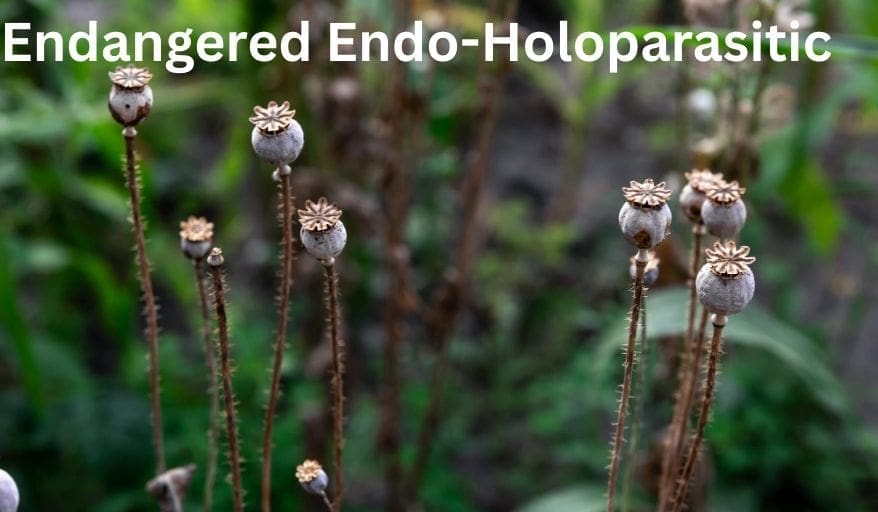
Endangered Endo-Holoparasitic plants face serious threats from climate change. It is not just about rising temperatures. Global warming also affects many living things, big and small, and a new study shows how these unique parasitic plants may be harmed worldwide.
Endangered Endo-Holoparasitic plants are a type of parasitic plant that survive by attaching to other plants. They extract water and nutrients from their hosts. This unique lifestyle makes them especially vulnerable to climate change, and scientists are studying how these species will cope in a warming world..
What the Research Found
Research published in Plants explains that global warming seriously threatens the survival of many Endangered Endo-Holoparasitic plant species. Above all, the study shows that rising temperatures are expected to shift their habitats. As a result, some species may lose their homes entirely. As a matter of fact, this could disrupt ecosystems and food webs. Scientists used climate models and plant distribution data to make these predictions.
To illustrate, Endangered Endo-Holoparasitic plants may not survive in areas that become too hot or dry. With this in mind, their host plants could suffer as well, affecting other organisms that depend on those hosts. This demonstrates that climate change has far‑reaching effects..
In essence, the research emphasizes the need to monitor Endangered Endo-Holoparasitic plant health worldwide. At the present time, awareness and action are essential to protect biodiversity.
Why Teens Should Care
Teenagers today are the future scientists, engineers, and leaders. You may be curious about how science connects to real life. To point out, this study shows how climate change affects Endangered Endo-Holoparasitic plants and other living things in complex ways. By understanding this, you can make informed choices.
Above all, knowledge of environmental science helps with school projects and career decisions. With this intention, educators can link the study of Endangered Endo-Holoparasitic plants to ecology, data science, and STEM careers.
Educational Opportunities in Environmental Science
Many schools and colleges now offer courses on ecosystems, biodiversity, climate modeling, and endangered endo-holoparasites. At first, you might take fundamental biology or environmental science classes. After that, you could explore GIS, data analysis, ecological research, or the conservation biology of endangered endo-holoparasitic.
With this in mind, learning these skills helps you understand studies like this one. That is to say, you can analyze real research and draw your own conclusions.
To sum up, science education opens doors to careers such as:
- Environmental scientist
- Plant biologist
- Climate data analyst
- Conservation researcher
If you love nature and data, these paths are exciting and meaningful.
For more about educational pathways and career tips, check out the resources at EntechOnline.
A Real Science Story You Can Relate To
While endangered endo-holoparasitic focuses on one area, its themes echo across many fields. In general, climate change affects ecosystems in visible and invisible ways.
At the same time, scientists use tools like predictive modeling to forecast future changes. In effect, these skills are in demand in many STEM careers.
In short, this research is not just about plants. It also connects to technology, mathematics, and data analysis.
In Conclusion
Global warming could limit where parasitic plants can grow. This finding shows how climate change threatens biodiversity. Understanding these effects helps you connect science to real problems. Above all, it highlights the importance of environmental science education and STEM careers.
The study finds that global warming will significantly influence the future distribution of the endangered endo‑holoparasitic plant Sapria himalayana, which depends on multiple host species to survive. Temperature and precipitation are key factors shaping where both the parasite and its hosts can live. Currently, S. himalayana occupies a limited suitable area in China, and climate change may expand its potential habitat slightly. However, the hosts show different trends in habitat shifts under future climate scenarios.
This creates mismatches in suitability between the parasite and its hosts, which could limit the parasite’s long‑term survival. The results suggest that conservation efforts must consider not only the parasite but also the varied responses of each host species to rising temperatures. In addition, maintaining healthy host populations will be crucial for protecting these rare parasitic plants as climate patterns change. All in all, the research highlights how climate change can differently impact interconnected species, underscoring the complexity of conserving vulnerable endo‑holoparasitic plants in a warmer world.
Additionally, to stay updated with the latest developments in STEM research, visit ENTECH Online.
Reference
Hang, W., Li, Y., & Zhang, G. (2026). Assessing potential habitat suitability of the endangered parasitic plants under climate change scenarios. Plants, 15(4), Article 574. https://doi.org/10.3390/plants1504057
- Author
- Latest Posts

I completed my Master of Science from the University of Allahabad in 2017 with a strong academic background in life sciences and chemistry. My specialization included Molecular Biology, Microbiology, Genetics, Plant Breeding, Phycology, Paleobotany, and Bioinformatics, along with Organic Chemistry, Inorganic Chemistry, and Physical Chemistry. This multidisciplinary training provided me with a comprehensive understanding of biological systems and analytical scientific approaches.
After completing my postgraduate studies, I gained valuable professional experience in both the education and social development sectors. I worked at A.M. Oxford Public School, where I was actively involved in guiding students toward academic excellence. In this role, I focused on creating an engaging learning environment, encouraging critical thinking, and nurturing students’ curiosity for scientific learning. My experience as an educator strengthened my communication, mentoring, and classroom management skills.
In addition to my teaching experience, I worked with Jeevan Jagriti Foundation, where I contributed to community-based initiatives aimed at improving educational access and awareness among underprivileged sections of society. Through this work, I participated in programs designed to support social development and promote the value of education in marginalized communities.
These professional experiences helped me develop strong interpersonal, leadership, and organizational skills while reinforcing my commitment to education and community service.