Protecting Elephants Through Science is more important than ever, as African savanna elephants face a very dangerous future.
Protecting Elephants Through Science and Indigenous Wisdom
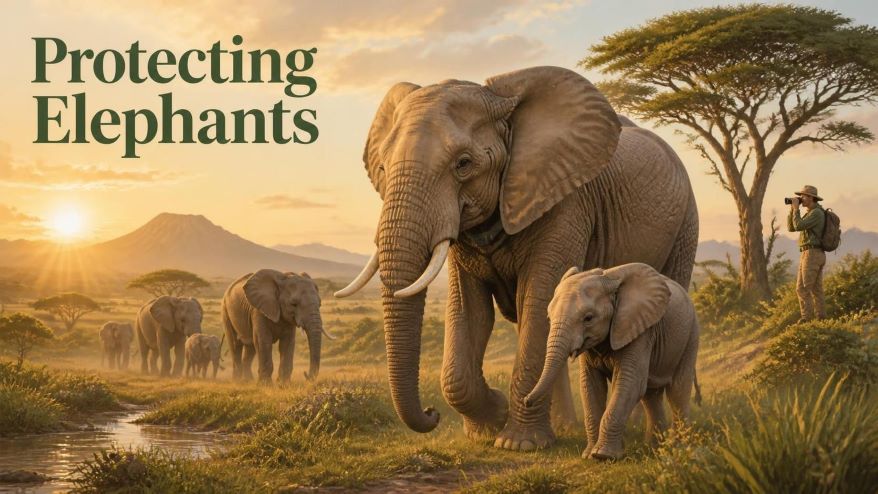
Humanity faces a critical challenge. We must save the African forest elephant and the savanna elephant from extinction. Their numbers have dropped sharply. Poaching and habitat loss drive this decline. One powerful method combines two worlds. That method is called science and dance. This novel approach creates empathy.
To illustrate, a child in a classroom learns about elephant migration. The child then mimics the giant steps. Suddenly, the struggle becomes real. Understanding an elephant’s journey is easier. We can protect elephants through science. We can also do it through authentic art. This article explores that dual path. It covers data, movement, and conservation. You will learn how this fusion works.
Key Takeaways
- Integration matters: Combining STEM facts with creative arts boosts memory retention. The brain links data to emotion.
- Empathy is key: Dance creates a visceral connection to wildlife. This connection motivates action.
- Global application: Communities from Kenya to Chicago use this method. It is scalable and cheap.
- Local knowledge: Indigenous cultures already use dance for storytelling. Science can validate this tradition.
- Actionable steps: You can support programmes that mix ecology and art. Your involvement helps stop poaching.
The Science Behind Elephant Conservation
Elephants are keystone species. They profoundly shape their ecosystems. Without them, forests and savannas change. We need solid data to save them. Scientists use GPS collars. This data is critical for policy. However, raw numbers pose a problem. They lack emotional weight. A statistic about poaching is abstract. Numbers often fail to inspire action.
For example, consider the grazing pressure on trees. A single elephant eats 300 pounds of food daily. That fact is impressive. However, it is equally impersonal. Environmental education must bridge this gap. We need a tool that makes data visceral. Thus, movement enters the picture. Consequently, this combination creates a learning loop. You learn a fact about behavior. Next, you move your body. Your muscle memory stores the information. This technique mimics how children learn naturally. Consumers of this content become advocates.
How Poaching Statistics Become Personal
Poaching statistics are grim. Over 20,000 elephants died each year in the last decade. That is one elephant every 26 minutes. These numbers are hard to grasp; dance performances, though, can change that. A dancer plays the role of a ranger; meanwhile, another becomes the threat. The audience watches a chase. They see the fall. Thus, movement translates time into feeling.
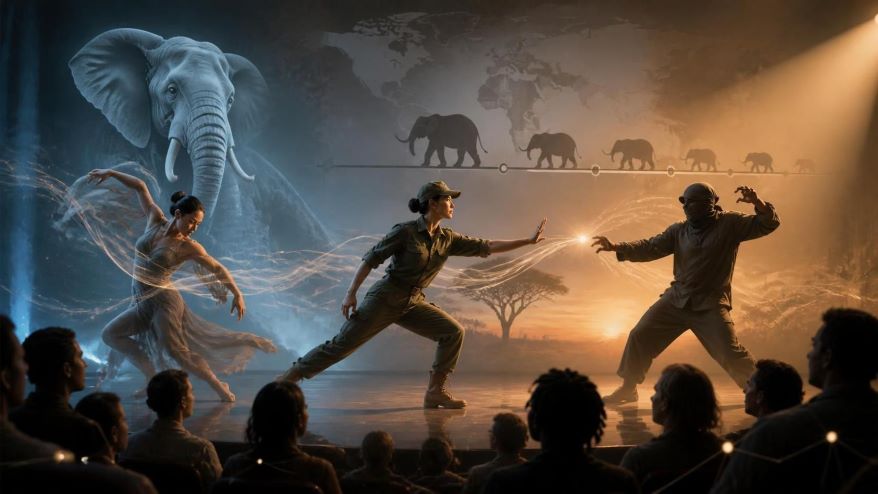
In scientific terms, this uses kinaesthetic learning. The limbic system processes emotion, while the motor cortex processes movement. When they fire together, memory sticks. Therefore, protecting elephants through science requires this stickiness. The data alone is not enough. Dance turns statistics into a story. It transforms a victim into a friend.
Genetic Analysis and the Herd Narrative
Genetic analysis tells us about relatedness. We know which herds are strong; furthermore, we know which ones face inbreeding. This is complex biology; nevertheless, dance simplifies it. A group of dancers represents a family unit. Their dance steps show genetic harmony. A solo step shows isolation. This is a powerful visual.
It allows students to see a family tree in action. Conservation biologists use this data. Accordingly, they decide which elephants to translocate, aiming to diversify the gene pool. The public rarely finds this topic exciting. However, moving with a partner changes that. You feel the bond. You feel the loss. Protecting elephants through science works best when we feel the family unit. Consequently, this narrative fuels our empathy.
Dance as a Vehicle for Empathy and Action
In fact, art predates writing, and dance long predates chemistry. It connects us to our humanity. For conservation, this connection is vital. Therefore, people protect what they love. They love what they understand. Dance builds understanding. It bypasses language barriers. It crosses cultural divides. A Maasai warrior and a New York student can share a movement. They share a meaning.
Moreover, the act of dancing releases oxytocin. In turn, this hormone builds trust and bonding. When we dance about elephants, we bond with them. We see them as beings with a story. This bond is the foundation of environmental stewardship. Empathy drives donations. Empathy drives volunteer hours.
Mimicry of Elephant Behaviour in Education
Students learn best by doing. For example, in a science-and-dance workshop, they mimic trunk swings and imitate slow, heavy footsteps. They also sway like a herd moving through a forest. This mimicry is more than fun: it teaches physics, such as pendulum motion, and biology, including trunk anatomy. In this way, movement conveys ideas about the animals’ lives.
For instance, a wave of dancers can represent migration, while stop-motion can illustrate drought. As a result, students feel the struggle and experience the effort of walking. Understanding elephants’ daily challenges is essential to protecting them—from finding water to safeguarding calves. Ultimately, this kind of education is active rather than passive, and active participants retain information at very high rates.
The Role of Music in Behavioral Ecology
Music sets the rhythm for the dance, and the tempo can match an elephant’s heart rate, creating a biological link. For instance, slower music can mimic a resting herd, while faster music suggests a stampede. Along the way, students learn about stress hormones and see how noise pollution affects elephants. As a result, ecology becomes more relatable, and music gives data context. Educators can also pair songs with graphs, so the rhythm reinforces the same story.
Integrating Traditional Knowledge with Modern Research
Indigenous communities have lived alongside elephants for millennia, preserving stories and dances that often imitate herds and honor these animals. Today, science is increasingly engaging with this knowledge: researchers collaborate with elders to investigate insights embedded in long-standing traditions.
For instance, a dance about rain may also reflect generations of observations about elephant movements. This knowledge deserves respect; therefore, conservation efforts should not overlook local wisdom. Without it, conservation plans may be weaker. In this sense, dance can preserve ecological knowledge, and incorporating it into conservation is a form of community participation rooted in a long history.
Frequently Asked Questions (FAQs)
How does dance help students understand wildlife conservation better than traditional methods?
While textbooks provide essential data and facts, dance and performance art translate that information into a visual and emotional narrative. This interdisciplinary approach allows students to visualize elephant behaviors and the tangible threats they face, such as poaching.
Why was Botswana chosen as the location for this creative conservation project?
Botswana is a critical region for elephant conservation, home to a significant portion of the African savanna elephant population. Because it is a key area where human-elephant conflict and habitat management are daily realities.
What are the primary threats currently facing African savanna elephants?
African savanna elephants are currently endangered and face a “dangerous future” due to several converging factors:
Habitat Loss, Human-Elephant Conflict, Poaching, and Climate Change
Reference
- De Sales, A. R., Evans, K. E., & Pereira, M. J. (2026). Protecting elephants through Science and Dance: A powerful environmental education approach. Wild, 3(1), 12. https://doi.org/10.3390/wild3010012
- Author
- Latest Posts

I completed my Master of Science from the University of Allahabad in 2017 with a strong academic background in life sciences and chemistry. My specialization included Molecular Biology, Microbiology, Genetics, Plant Breeding, Phycology, Paleobotany, and Bioinformatics, along with Organic Chemistry, Inorganic Chemistry, and Physical Chemistry. This multidisciplinary training provided me with a comprehensive understanding of biological systems and analytical scientific approaches.
After completing my postgraduate studies, I gained valuable professional experience in both the education and social development sectors. I worked at A.M. Oxford Public School, where I was actively involved in guiding students toward academic excellence. In this role, I focused on creating an engaging learning environment, encouraging critical thinking, and nurturing students’ curiosity for scientific learning. My experience as an educator strengthened my communication, mentoring, and classroom management skills.
In addition to my teaching experience, I worked with Jeevan Jagriti Foundation, where I contributed to community-based initiatives aimed at improving educational access and awareness among underprivileged sections of society. Through this work, I participated in programs designed to support social development and promote the value of education in marginalized communities.
These professional experiences helped me develop strong interpersonal, leadership, and organizational skills while reinforcing my commitment to education and community service.