Older males dominate Humpback whale mating as populations recover. Explore how STEM and DNA aging help scientists track ocean giants.
Humpback Whale Mating and the Evolution of Complex Animal Traits
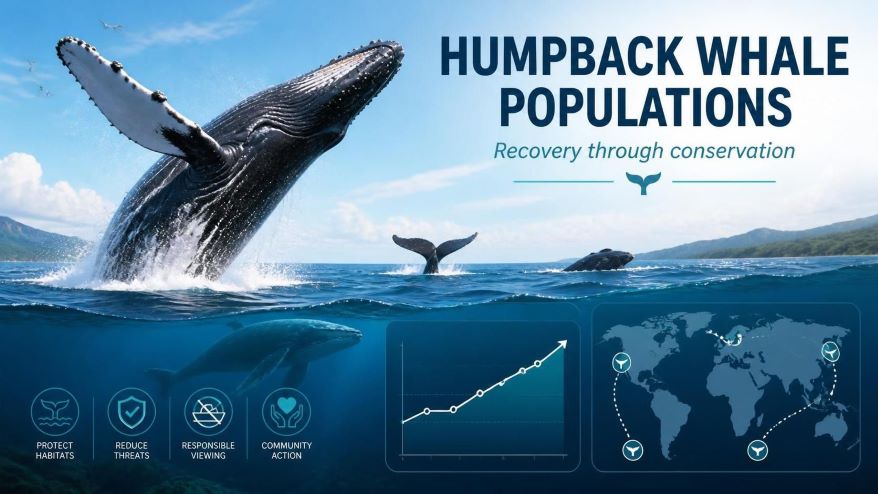
The recovery of humpback whale populations after commercial whaling represents one of the important success stories in modern conservation. Recently, a study published in Current Biology examined how this population recovery may affect age-related sexual selection in humpback whales. First, the research team followed individual whales over several decades to study their mating patterns and reproductive success. Furthermore, the researchers found that older males fathered more calves as recovering populations increased in size. As a result, the findings provide new insights into how population recovery can influence whale social and mating patterns.
Key Takeaways
- Older male humpback whales father more offspring in recovering populations
- Population density directly affects age-related reproductive success
- Younger males experience reduced mating opportunities as populations grow
- Long-term individual tracking reveals mating pattern shifts over time
- Conservation success creates new evolutionary pressures on whale populations
- Data spanning multiple decades provide unprecedented insight into whale reproduction
- Study methods can apply to other marine mammal conservation efforts
- Findings challenge previous assumptions about whale social behaviour
Understanding Humpback Whale Mating Systems
Humpback whale mating involves a complex social system. First, males compete for access to receptive females through displays and long, complex songs. Furthermore, groups of males may form temporary competitive groups and follow or compete around a receptive female. During these encounters, males can display strength, persistence, and other competitive behaviours. As a result, competition can influence which males gain mating opportunities. In addition, larger and more dominant males may have advantages during some contests. However, mating success does not depend on body size or dominance alone. Overall, humpback whale mating behaviour reflects a complex interaction between competition, social behaviour, and female choice.
The Connection Between Population Recovery and Mating Success
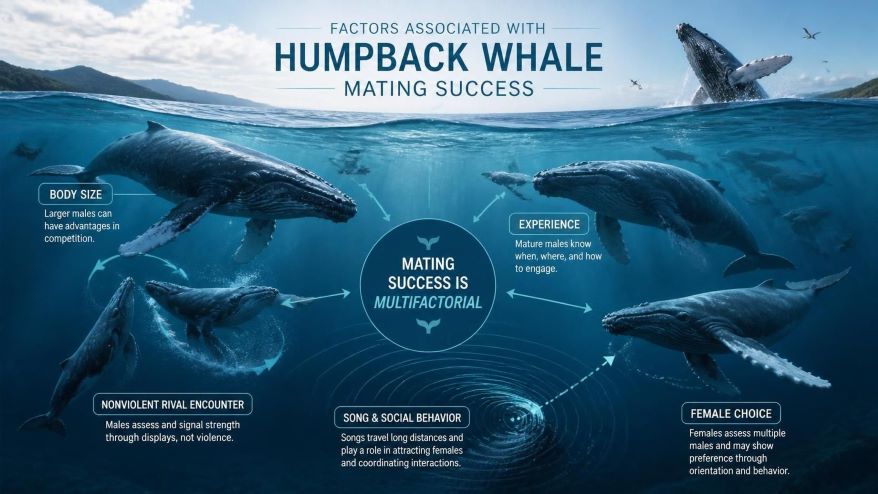
Humpback whale mating success depends on several factors that can shape competition and reproductive opportunities. First, body size can influence physical competition between males. Furthermore, larger males may have an advantage during direct encounters with rivals. In addition, experience can help males respond to complex social situations and compete more effectively. Meanwhile, song production also plays an important role in humpback whale social behaviour and may help males attract or interact with females over long distances. Moreover, researchers suggest that mating success can result from the combined effects of body size, experience, social behaviour, and female choice. Therefore, no single trait determines reproductive success. Overall, humpback whale mating reflects a complex interaction between physical competition, experience, communication, and social behaviour.
Long-Term Research Methods in Whale Biology
Tracking individual humpback whales for 20 years requires careful planning and long-term effort. First, the research team used photo identification to recognise and follow individual whales over time. In particular, researchers photographed the whales’ tail flukes, which have unique patterns and markings. Furthermore, these natural markings act like individual identification tags, allowing scientists to distinguish one whale from another. As a result, researchers can track the same individuals across many years and record important changes in their behaviour, movements, and reproductive success. In addition, long-term photo identification provides valuable data without requiring scientists to physically tag every whale. Therefore, this method plays an important role in studying whale populations and their social and reproductive patterns.
Implications for Conservation and Management
Humpback whale mating patterns affect population recovery rates. When older males dominate reproduction, genetic diversity may decrease. A few dominant males father most calves in a given season. Conservation managers must consider these factors. Protected areas should include breeding grounds where competition occurs. Disruption of these areas could harm reproductive success. Climate change adds another layer of complexity. Changing ocean temperatures affect food availability. This may shift where and when whales gather for mating. Population monitoring should continue for decades to come. The patterns observed may change again as populations approach carrying capacity.
Surprising Discoveries About Whale Social Structure
The Current Biology study revealed several unexpected aspects of humpback whale social life. Traditionally, scientists viewed competition among male humpback whales as a relatively simple process. However, the new research presents a more complex picture of how males compete and achieve reproductive success. First, the study highlights the role of age in shaping competition among males. Furthermore, older males may gain advantages as whale populations recover and become more crowded. In addition, social experience and interactions with other males can influence access to mating opportunities. As a result, reproductive success does not depend on a single trait or behaviour. Moreover, the findings show that changes in population size can affect social relationships and competition. Therefore, this research provides a deeper understanding of the complex social and reproductive lives of humpback whales. Overall, the study demonstrates that long-term research can reveal patterns that short-term observations may overlook.
Frequently Asked Questions (FAQs)
Why are older males more successful in the humpback whale mating season now than in previous decades?
In the early years of population recovery, there were fewer whales and less competition, allowing younger males to reproduce easily. As the population grew and the sea became more “crowded,” older males began to dominate.
What role does “singing” play in humpback whale mating?
Singing is a complex cultural display used to attract females or interact with other males. Because humpbacks in a specific region all sing the same evolving song, it takes years to master the nuances and vocal strength required to stand out.
Why is this research considered a sign of a “strong ecosystem”?
The return of complex social structures—where age and experience determine success—is a sign that the population is returning to its “natural state” before commercial whaling.
Reference:
Eichenberger, F., Carroll, E. L., Garrigue, C., Jarman, S., Steel, D. J., Robbins, J., Rendell, L., & Garland, E. C. (2026). Changes in age-related sexual selection in a humpback whale population recovering from exploitation. Current Biology, 36(1), 1–13. https://doi.org/10.1016/j.cub.2026.01.018
- Author
- Latest Posts

Lubna Nabi is a zoologist, science communicator, and life sciences specialist with a Master’s degree in Zoology and research focus in Limnology (the study of inland aquatic ecosystems). She combines hands-on laboratory experience with an interdisciplinary approach to biological and environmental research, bridging academic science with public literacy.
With a strong foundation in aquatic biology, laboratory techniques, and scientific outreach, Lubna excels at translating complex medical, biological, and ecological research into engaging, educational content. Her work focuses on fostering scientific curiosity, advancing environmental awareness, and promoting lifelong learning through clear, creative science communication.
- Author
- Latest Posts

I completed my Master of Science from the University of Allahabad in 2017 with a strong academic background in life sciences and chemistry. My specialization included Molecular Biology, Microbiology, Genetics, Plant Breeding, Phycology, Paleobotany, and Bioinformatics, along with Organic Chemistry, Inorganic Chemistry, and Physical Chemistry. This multidisciplinary training provided me with a comprehensive understanding of biological systems and analytical scientific approaches.
After completing my postgraduate studies, I gained valuable professional experience in both the education and social development sectors. I worked at A.M. Oxford Public School, where I was actively involved in guiding students toward academic excellence. In this role, I focused on creating an engaging learning environment, encouraging critical thinking, and nurturing students’ curiosity for scientific learning. My experience as an educator strengthened my communication, mentoring, and classroom management skills.
In addition to my teaching experience, I worked with Jeevan Jagriti Foundation, where I contributed to community-based initiatives aimed at improving educational access and awareness among underprivileged sections of society. Through this work, I participated in programs designed to support social development and promote the value of education in marginalized communities.
These professional experiences helped me develop strong interpersonal, leadership, and organizational skills while reinforcing my commitment to education and community service.