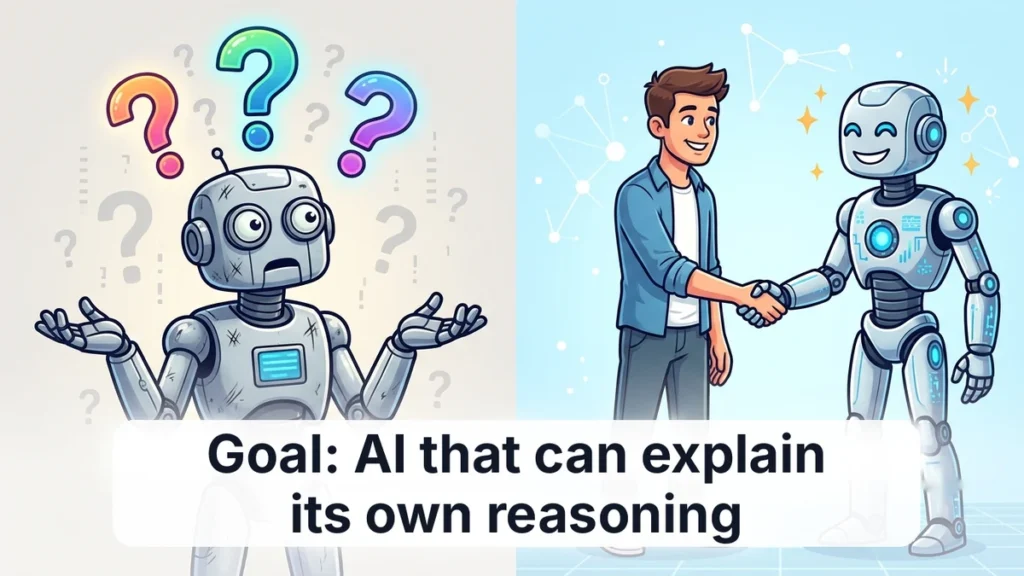
Ask a chatbot why it answered strangely, and you’ll often get a confident guess. It can sound sure of itself, yet it can’t really tell you what happened inside. That gap bothers many researchers, including Jacob Andreas at MIT. He works in computational linguistics and NLP, short for natural language processing. This field teaches computers to read, write and use human language. On November 17, 2026, MIT News published a profile of Andreas and his research group. Andreas, an associate professor who recently earned tenure, has a simple-sounding wish. Instead of prying models open with outside tools, he’d like models to explain themselves. Models, he says, could “talk about themselves in a way that is accurate,” at least in principle. So how close is that goal, and why should students care?
Today’s language models can chat about almost anything, from history to homework. Yet they are surprisingly poor at describing their own thinking. A recent MIT talk abstract by Andreas makes this point directly. It notes that models struggle to judge whether their own answers are correct. They also find it hard to explain their behavior when users ask. That’s a real problem when people start trusting AI with serious decisions. Inside, a model is a huge web of numbers called parameters. Researchers normally study that web with special probes and visualization tools. Andreas describes this as untangling a complex network of internal nodes. It’s slow, it’s technical, and the answers aren’t always clear. If a model could report its own reasoning honestly, checking it would get much easier.
Fig. 1: The Goal of AI That Can Explain Its Own Reasoning
The Data Problem Behind AI Language Learning
Children pick up language from a modest amount of everyday talk. Language models, by contrast, train on enormous amounts of text. Scientists still can’t fully explain why people learn so much more efficiently. Andreas points to a related gap in today’s research. He says the field lacks a sound scientific theory for training outcomes. In other words, nobody can reliably predict what a dataset will teach a model. That uncertainty makes training expensive trial and error for many teams. Part of his group’s work tries to change this. They build methods to predict how specific examples or datasets will shape a model’s behavior. Better predictions could save computing time and reduce surprises after release. They could also make training feel a bit more like human learning.
Explainer: How Language Models Learn From Text
Most modern language models learn by playing a guessing game. They read a sentence and try to predict the next word, again and again. Each wrong guess nudges millions or billions of internal numbers slightly. After enough practice, the model gets very good at continuing text. Here’s the surprising part: predicting words forces the model to capture grammar, facts and style. In a 2022 paper, Andreas argued that models can even represent the writers behind text. Text comes from people with goals, beliefs and intentions. To predict their next words well, a model must infer some of those hidden traits. That’s partly why today’s chatbots can sound so human. Still, sounding human isn’t the same as understanding, and that difference matters a lot. Computational linguistics and NLP research tries to measure exactly where the difference lies.
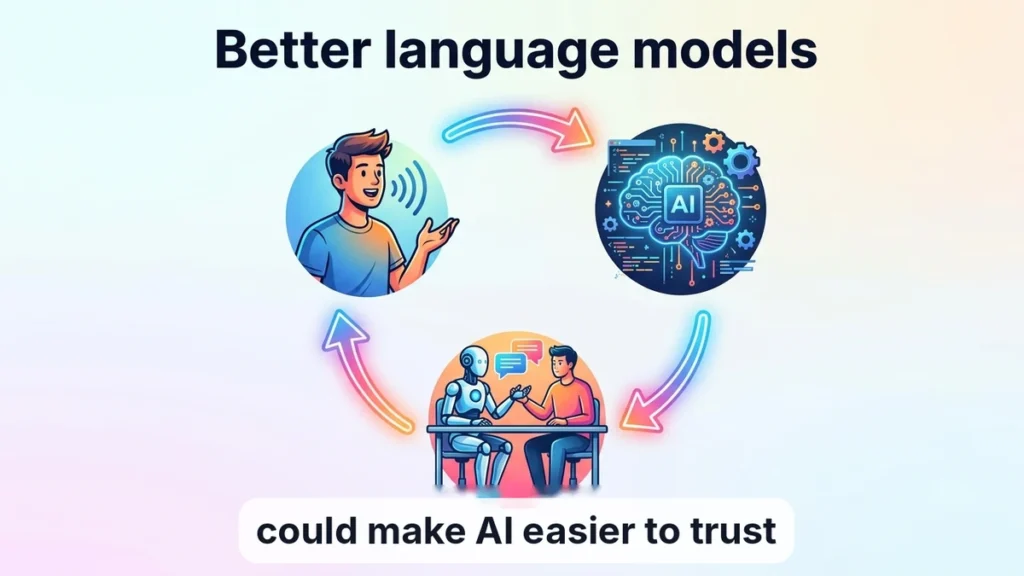
Fig. 2: Better Language Models Could Make AI Easier to Trust
Turning Neurons Into Plain Words
One technique from Andreas’s group translates a network’s inner parts into sentences. A 2022 project called MILAN, from MIT CSAIL researchers, labels individual neurons in image models. MILAN stands for mutual-information-guided linguistic annotation of neurons. It looks at the image regions that make a neuron fire strongly. Then it writes a short description that best fits those regions. One neuron, for example, responded to patches of grass near animals. The team showed several uses for such labels. They spotted neurons tied to sensitive traits like race and gender. In another test, researchers deleted neurons fooled by misleading text, making a classifier more reliable. Labels like these turn a mysterious network into something people can read and question. That’s a small but real step toward models that explain themselves.
Inside Jacob Andreas’s Computational Linguistics and NLP Lab
Andreas runs his group within MIT’s Computer Science and Artificial Intelligence Laboratory, known as CSAIL. His work has two main threads, according to the MIT profile. The first is the science of large language models, including tools that predict model behavior. Training models to explain other networks belongs here. His second thread focuses on new training algorithms. It also asks how individual datasets or examples affect what a model does. Both threads aim to make deep learning easier to understand and steer. His group also wants training to feel more natural, closer to how people learn. If that works, models might learn more from less data and fewer surprises. Engineers would then spend less time guessing and more time building. That’s a big if, but it’s a valuable target for computational linguistics and NLP.
From a Blast Email to a Research Career
Andreas’s own path into the field started almost by accident. He grew up in the San Francisco Bay Area and loved reading. As a computer science student at Columbia University, he wasn’t sure what to study next. So he emailed everyone in the department working on anything AI-related. The natural language processing faculty replied first, and that settled it. He then wrote a thesis on machine translation in Michael Collins’s lab. Next came a master’s degree at Cambridge and a PhD at UC Berkeley. In Dan Klein’s lab there, he built neural module networks for specific tasks. After a year at a startup called Semantic Machines, he joined MIT in 2019. Sometimes a whole career really does start with one email. His side projects on describing models in plain language later shaped his MIT group.
The Business Value of Clearer Human-Computer Interaction
Why would companies pay attention to this research? AI tools are moving into customer service, healthcare software and scientific labs. In those settings, a wrong answer can cost money, time or even health. Andreas expects interpretability to matter more as AI agents take on high-stakes tasks. He also mentions models for scientific discovery trained on raw lab data. If such a model suggests an experiment, researchers will want to know why. Explanations could help teams catch errors before customers or patients see them. They could also help firms meet growing demands for transparent, accountable AI. The incumbent approach relies on external auditing tools and lots of manual testing. Self-explaining models wouldn’t replace testing, but they could make it faster and cheaper. That’s a strong business case for computational linguistics and NLP research.
How Fast the Field Changes
Here’s a reality check for anyone planning a career. Andreas says the field shifts dramatically about every three to five years. That pace forces him to redesign his courses every single year. He co-teaches MIT’s undergraduate and graduate NLP classes, 6.461 and 6.861. Methods that seemed cutting-edge a few years ago can quickly look dated. So today’s tools may not be tomorrow’s, even inside top labs. For businesses, that means skills and products need regular updates. Students, meanwhile, gain more from foundations than from memorizing one tool. Our guide to reading the internal logic of neural networks shows how fast related methods evolve. Expect the next big shift sooner than you think, too. Flexible learners will have a clear advantage in that kind of field.
Future Jobs in Computational Linguistics and NLP
Careers here mix computer science, linguistics, statistics and cognitive science. Computer and information research scientists design new algorithms and test how models behave. The O*NET profile for computer research scientists lists their typical tasks. Figures from the US Bureau of Labor Statistics show about 38,600 such jobs in 2025. Employment is projected to grow 22% from 2025 to 2035, much faster than average. Their median pay was $140,300 a year in May 2025. Most of these roles need at least a master’s degree. Other paths include machine learning engineers, data scientists and evaluation specialists. Companies also hire linguists to design test sets and review model behavior. Interpretability research is a smaller niche, but it’s growing alongside AI safety work. Students who enjoy both language and code may find it a natural fit.
How Students Can Prepare
Start with strong math, especially algebra, probability and statistics. Calculus and linear algebra come next, because neural networks run on them. Learn Python early, since most NLP tools and courses use it. Reading about grammar and how languages differ will help you think like a linguist. Andreas stresses that a deep grasp of how the technology works is essential. He tells students it is the only way they’ll truly understand it. That matters, because coding agents can now write a lot of routine code. Try a small project, like training a simple text classifier on movie reviews. Then ask yourself why it makes each mistake it makes. Curiosity like that is the core skill of the field. For a gentle start, try our explainer on the algebra and calculus inside AI systems.
Limits Worth Keeping in Mind
This story is a researcher profile, not a report of one new breakthrough. The MIT article describes goals and ongoing work rather than a finished product. Self-explaining models are still an open research problem. A model’s description of itself could sound convincing and still be wrong. That’s why researchers test explanations against what the network actually does. MILAN, for instance, worked on image models, and language models raise new challenges. The field’s rapid change also means today’s methods may be replaced soon. Even so, the direction is clear and important for trustworthy AI. Students drawn to computational linguistics and NLP can help answer these questions. Careful testing and honest reporting will matter as much as clever models. Who knows, the next model that explains itself might be yours.
Hernandez, E., Schwettmann, S., Bau, D., Bagashvili, T., Torralba, A., & Andreas, J. (2022). Natural language descriptions of deep visual features. International Conference on Learning Representations. https://arxiv.org/abs/2201.11114
The piece explains how language models learn and why interpretability matters in clear, student-friendly terms. It correctly presents the source as a researcher profile rather than a report of a single new result. The discussion of business uses stays appropriately cautious about how close self-explaining models are to real deployment. Readers who want the researcher's own words and background should check the original source article this story draws on.
Editorial note
ENTECH is running this story because AI tools that can explain their own reasoning would be easier to trust in schools, hospitals and businesses. The profile shows students how language, mathematics and computer science come together in one research career. It also points to fast-growing jobs for people who understand how these systems work inside. The article describes research goals and ongoing work rather than a finished product, so self-explaining AI is still some way off. For the full story, we suggest readers turn to the original article from the university behind this profile.
Aditya Joshi is an SDE Intern at Coneixement India, the company behind ENTECH STEM Magazine and STEMQuiz. He is a Computer Engineering graduate from Savitribai Phule Pune University (SPPU), with honours in Machine Learning and Data Science. His academic background and hands-on project experience have developed his interest in artificial intelligence, emerging technologies, software development, and the practical applications of computing.
His areas of technical interest include Artificial Intelligence (AI), Generative AI, Machine Learning, Data Science, Large Language Models (LLMs), Natural Language Processing (NLP), Retrieval-Augmented Generation (RAG), GraphRAG, and knowledge graphs. Through projects involving locally hosted language models, Neo4j knowledge graphs, multilingual chatbots, and AI-powered analytics, he has explored how emerging technologies can be used to solve practical problems.
Aditya's professional experience includes work in frontend development, AI/ML application development, and full-stack software projects. During his internships at Maharashtra Knowledge Corporation Limited (MKCL) and Hilwitz Solutions, he worked on applications involving web technologies, Python, Flask, and AI-driven functionality. He has also developed projects such as SalesCope, an AI-assisted sales analytics platform, and a multilingual chatbot designed to help users explore Indian government schemes.
At ENTECH STEM Magazine and STEMQuiz, Aditya brings a technology-focused perspective shaped by his engineering education and practical experience with AI and software systems. He is interested in making complex science and technology concepts easier to understand through clear explanations, relatable everyday examples, and an emphasis on how emerging innovations work and affect real-world applications.
His broader goal is to help bridge the gap between technical concepts and public understanding, encouraging curiosity about artificial intelligence, computing, and the technologies shaping the future.
Aditya Joshi is an SDE Intern at Coneixement India, the company behind ENTECH STEM Magazine and STEMQuiz. He is a Computer Engineering graduate from Savitribai Phule Pune University (SPPU), with honours in Machine Learning and Data Science. His academic background and hands-on project experience have developed his interest in artificial intelligence, emerging technologies, software development, and the practical applications of computing.
His areas of technical interest include Artificial Intelligence (AI), Generative AI, Machine Learning, Data Science, Large Language Models (LLMs), Natural Language Processing (NLP), Retrieval-Augmented Generation (RAG), GraphRAG, and knowledge graphs. Through projects involving locally hosted language models, Neo4j knowledge graphs, multilingual chatbots, and AI-powered analytics, he has explored how emerging technologies can be used to solve practical problems.
Aditya’s professional experience includes work in frontend development, AI/ML application development, and full-stack software projects. During his internships at Maharashtra Knowledge Corporation Limited (MKCL) and Hilwitz Solutions, he worked on applications involving web technologies, Python, Flask, and AI-driven functionality. He has also developed projects such as SalesCope, an AI-assisted sales analytics platform, and a multilingual chatbot designed to help users explore Indian government schemes.
At ENTECH STEM Magazine and STEMQuiz, Aditya brings a technology-focused perspective shaped by his engineering education and practical experience with AI and software systems. He is interested in making complex science and technology concepts easier to understand through clear explanations, relatable everyday examples, and an emphasis on how emerging innovations work and affect real-world applications.
His broader goal is to help bridge the gap between technical concepts and public understanding, encouraging curiosity about artificial intelligence, computing, and the technologies shaping the future.