Learn the Basics of Experimental Pharmacology, covering essential principles, methods, and techniques to study drug actions,
Basics Of Experimental Pharmacology: Principles, Techniques, and Applications

Basics of Experimental Pharmacology
Experimental pharmacology is a branch of medical science. It focuses on studying drug effects through laboratory tests. Scientists use controlled experiments to find safe medicines for people. They examine how substances interact with living systems. This field is the first step in discovering new life-saving drugs. At the present time, modern technology makes these tests very precise. Researchers look for the specific site where a drug works. They also study the mechanism of how it changes the body. Above all, safety is the most important goal of every trial. Therefore, it becomes important for us to understand the basics of experimental pharmacology.
Key Takeaways
- Definition – Experimental pharmacology studies how drugs affect biological systems in controlled lab settings.
- Types of Studies – Includes in vivo, in vitro, and ex vivo experiments to test drug effects.
- Dose-Response Relationship – Analyzes how different drug doses produce varying biological responses.
- Mechanism of Action – Explores how drugs interact with receptors, enzymes, or cells to cause effects.
- Safety and Efficacy Testing – Provides data on drug toxicity, side effects, and therapeutic potential.
Also Read: https://entechonline.com/basics-of-pharmaceutical-organic-chemistry/
Core Branches and Key Terms
Pharmacology has two main areas you should know. These are pharmacokinetics and pharmacodynamics. To explain, pharmacokinetics is what the body does to the drug. It involves four stages called ADME. To list, these are absorption, distribution, metabolism, and excretion (National Center for Biotechnology Information ). To repeat, the body must absorb the drug first. After that, the blood carries the drug to different organs. At first, the liver usually breaks the drug down. At last, the kidneys remove the waste from the body.
By comparison, pharmacodynamics is what the drug does to the body. It explores how drugs bind to receptors. Receptors are like locks on the surface of cells. Drugs act like keys that fit into these locks. A drug can turn a cell function on or off. So that we understand this, scientists measure the biological response. With this in mind, the dose often determines the strength of the effect.
Common Experimental Models
Scientists use different models to test new chemical substances. At this time, they use four main types of experiments. To enumerate:
- In vitro tests happen in test tubes or dishes.
- In vivo tests involve living animals like mice or rats.
- Ex vivo tests use tissues taken from a living body.
- In silico tests use computer programs to simulate drug actions.
Mice and rats are very common subjects. At any rate, they help predict how humans might react. While this may be true, animals are not exactly like humans. So as to fix this, scientists use advanced genetic models. What’s more, they use human cell cultures to improve accuracy. As an illustration, scientists can grow “organs-on-a-chip” today. To put it differently, these are tiny devices that mimic human organs.
The Drug Discovery Process
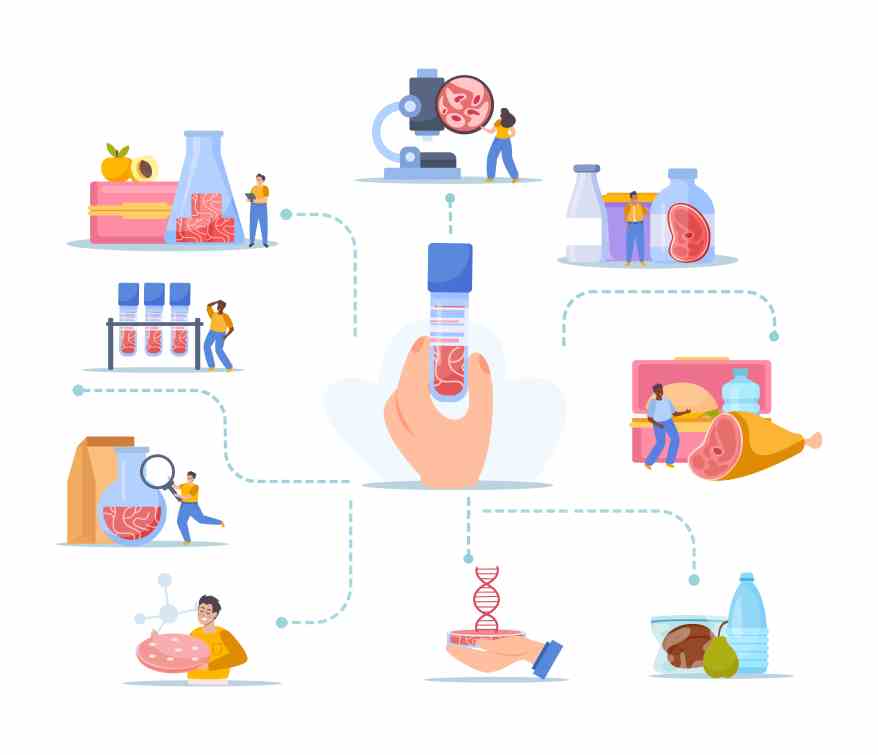
Creating a new medicine takes a very long time. Prior to human trials, researchers perform preclinical screening. They test thousands of chemicals to find a few “hits.” In this case, they look for high efficacy and low toxicity. All of a sudden, a promising molecule can fail if it is toxic. So far, only a few molecules become real medicines. With this intention, scientists perform acute toxicity tests first. These tests show if a single dose causes harm. After all, we must ensure a drug does not kill cells.
So long as a drug passes these tests, it moves forward. Then again, researchers must check for long-term side effects. To summarize, this stage filters out dangerous or useless substances. Balanced against the cost, this process saves many lives. All things considered, careful screening is the backbone of medicine.
Ethics and Regulations- Basics of Experimental Pharmacology
Ethics are vital in any pharmacological study. As has been noted, animal research follows the 3Rs principle. To list, these are Replacement, Reduction, and Refinement. Researchers try to replace animals with computer models. At the same time, they reduce the number of animals used. They also refine methods to minimize any pain or distress. Being that animals are living beings, they deserve respect.
In short, committees must approve every study before it starts. Provided that the study is ethical, it can proceed. In reality, public trust depends on these strict rules. To that end, scientists must keep honest and clear records. Summing up, ethics ensure that science helps without causing unnecessary harm.
The Future of Experimental Research
At this point, the field is changing very fast. To say nothing of AI, new tools appear every day. Seeing that computers are faster, in silico testing is growing. In essence, software can predict if a drug fits a receptor. With this purpose in mind, researchers can save time and money. While it may be true that computers help, labs are still needed. To point out, we still need to see real biological reactions.
Analogous to a puzzle, every experiment adds a piece. With the result that, we understand diseases better over time. At length, this leads to cures for hard-to-treat illnesses. Sooner or later, we may find a cure for every disease. All in all, experimental pharmacology is an exciting and noble field. It combines biology, chemistry, and engineering to save the world.
Frequently Asked Questions
Does the article on basics of experimental pharmacology present new experimental data?
No — it is an editorial summarizing and commenting on papers in the Research Topic rather than reporting original experimental results.
What areas are mentioned as keywords in this editorial?
Experimental pharmacology, animal models, stomatitis, ADHD, and aging are listed as key subjects.
Additionally, to stay updated with the latest developments in STEM research, visit ENTECH Online.
Reference
Arumugam, S., Khurana, A., & Bharani, K. K. (2025). Editorial: Methods in experimental pharmacology 2023. Frontiers in Pharmacology, 16, 1531464. https://doi.org/10.3389/fphar.2025.1531464
Disclaimer: We do not intend this article/blog post to provide professional, technical, or medical advice. Therefore, please consult a healthcare professional before making any changes to your diet or lifestyle. In fact, we use AI-generated images for illustration and decoration. Their accuracy, quality, and appropriateness can differ. So, users should avoid making decisions or assumptions based only on the text and images.
- Author
- Latest Posts

I completed my Master of Science from the University of Allahabad in 2017 with a strong academic background in life sciences and chemistry. My specialization included Molecular Biology, Microbiology, Genetics, Plant Breeding, Phycology, Paleobotany, and Bioinformatics, along with Organic Chemistry, Inorganic Chemistry, and Physical Chemistry. This multidisciplinary training provided me with a comprehensive understanding of biological systems and analytical scientific approaches.
After completing my postgraduate studies, I gained valuable professional experience in both the education and social development sectors. I worked at A.M. Oxford Public School, where I was actively involved in guiding students toward academic excellence. In this role, I focused on creating an engaging learning environment, encouraging critical thinking, and nurturing students’ curiosity for scientific learning. My experience as an educator strengthened my communication, mentoring, and classroom management skills.
In addition to my teaching experience, I worked with Jeevan Jagriti Foundation, where I contributed to community-based initiatives aimed at improving educational access and awareness among underprivileged sections of society. Through this work, I participated in programs designed to support social development and promote the value of education in marginalized communities.
These professional experiences helped me develop strong interpersonal, leadership, and organizational skills while reinforcing my commitment to education and community service.