Discover the Importance of Pharmaceutical Quality Control, highlighting methods and practices that ensure medicines are safe, effective.
Pharmaceutical Quality Control: Comparing Branded and Generic Angiotensin Receptor Blockers
The pharmaceutical industry must ensure every medicine is safe and effective. Quality control serves as a vital safeguard for public health, preventing sub-standard products from reaching patients. Today, global regulations for drug quality are strict, and scientists use precise tests to check each batch. These tests detect impurities and verify correct dosages, with the ultimate goal of protecting the person taking the medicine. In this article, we will explore the importance of Pharmaceutical Quality Control.
Key Takeaways
- Study focus: The research evaluated the quality and cost differences between branded and generic angiotensin receptor blocker (ARB) drugs used to treat hypertension.
- Drugs analyzed: The study examined five ARBs — Irbesartan, Losartan Potassium, Olmesartan Medoxomil, Telmisartan, and Valsartan — in both branded and generic forms.
- Quality assessment: Branded and generic ARBs were tested using pharmacopoeial standards, FT‑IR, NMR, HPLC, and dissolution testing, and all met accepted quality criteria.
- Cost comparison: Generic ARB formulations were found to be significantly cheaper than branded versions, often costing 50–90% less.
The study confirms that generic ARBs have equivalent quality to branded drugs while offering a more affordable option for long‑term treatment, especially in low‑resource settings
Importance Of Pharmaceutical Quality Control in Medicine
Quality control is a set of operational techniques. These techniques help fulfill strict quality requirements. A lab worker tests raw materials before production starts. They check for identity, strength, and purity. After that, they monitor the drug during the making process. At first, small changes in temperature can ruin a batch. So that this does not happen, sensors track conditions in real time. What’s more, they test the final product before it leaves the factory.
As a result, patients receive medicine they can actually trust. In fact, even tiny errors can cause serious health problems. To list, a dosage error could be too weak or too strong. By and large, quality control keeps these errors from happening. While it may be true that tests take time, they are necessary. After all, human lives depend on the accuracy of these results.
Key Procedures in Quality Systems
Standard Operating Procedures (SOPs) guide every step in the lab. To enumerate, these steps include sampling, testing, and documentation. Prior to releasing a drug, experts must review all test data. At length, they look for any trends or strange results. In due time, this data helps improve future production runs. Documentation creates a clear history for every pill.
With this in mind, many companies use the ICH Q10 framework. Analogous to a map, this guide helps manage quality. So as to maintain high standards, managers must provide enough resources. At the same time, they must train staff on new safety rules. To point out, a skilled team is just as important as machines. With the result, the whole company works toward a “quality-first” culture.
In-Process Quality Control (IPQC)
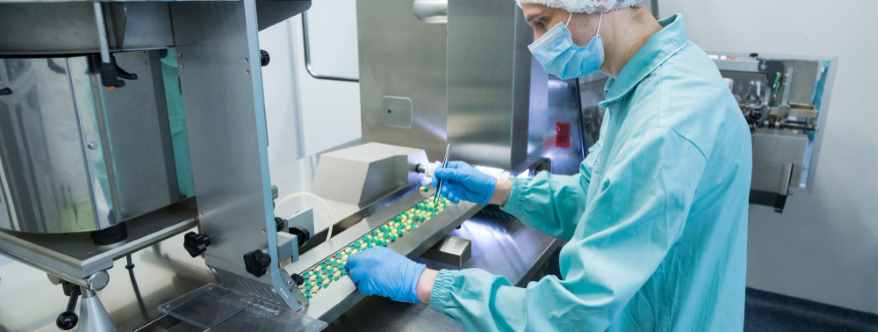
At this point, most testing happens while the drug is being made. This is called In-Process Quality Control. To rephrase it, workers check the product at different stages. Take the case of tablet making. So long as the tablets have the right weight, they pass. All of a sudden, if a tablet is too light, the machine stops. This prevents wasting a whole day of work.
Quality by Design (QbD)
Another key point is the concept of Quality by Design. With this intention, quality is built into the product from the start. Provided that the process is well-designed, it will be consistent. To repeat, we should not just test for quality at the end. To sum up, we must plan for quality during every single step.
Challenges and Future Trends
At this instant, the industry faces new challenges like fake medicines. In short, counterfeit drugs are a major threat to global health. So far, new tracking tools like barcodes help stop fakes. Furthermore, some labs now use Artificial Intelligence (AI) for testing. To that end, AI can spot tiny defects in packaging very fast. At any rate, technology makes quality control more reliable than ever before.
All things considered, quality control is the heart of pharmaceutical science. Seeing that diseases change, our testing methods must also evolve. In reality, without these tests, modern medicine would not be safe. Summing up, quality control ensures that medicine heals rather than harms. To summarize, it is the bridge between a chemical and a cure.
FAQs
Which drugs were analyzed in this research?
The study examined Irbesartan, Losartan Potassium, Olmesartan Medoxomil, Telmisartan, and Valsartan.
What quality tests were used to assess the drugs?
The drugs were tested using pharmacopoeial standards, FTIR, NMR, HPLC, and dissolution testing.
What was a key finding of the cost comparison?
Generic formulations were found to be significantly more affordable than their branded counterparts.
Additionally, to stay updated with the latest developments in STEM research, visit ENTECH Online
Reference
Sharma, A. K., Rastogi, S., Ali, F., Yadav, A. P., & Goyal, R. K. (2024). A comprehensive quality control and cost comparison study of branded and generic angiotensin receptor blockers. Saudi Pharmaceutical Journal, 32(3), 101985. https://doi.org/10.1016/j.jsps.2024.101985
Disclaimer: We do not intend this article/blog post to provide professional, technical, or medical advice. Therefore, please consult a healthcare professional before making any changes to your diet or lifestyle. In fact, we use AI-generated images for illustration and decoration. Their accuracy, quality, and appropriateness can differ. So, users should avoid making decisions or assumptions based only on the text and images.
- Author
- Latest Posts

I completed my Master of Science from the University of Allahabad in 2017 with a strong academic background in life sciences and chemistry. My specialization included Molecular Biology, Microbiology, Genetics, Plant Breeding, Phycology, Paleobotany, and Bioinformatics, along with Organic Chemistry, Inorganic Chemistry, and Physical Chemistry. This multidisciplinary training provided me with a comprehensive understanding of biological systems and analytical scientific approaches.
After completing my postgraduate studies, I gained valuable professional experience in both the education and social development sectors. I worked at A.M. Oxford Public School, where I was actively involved in guiding students toward academic excellence. In this role, I focused on creating an engaging learning environment, encouraging critical thinking, and nurturing students’ curiosity for scientific learning. My experience as an educator strengthened my communication, mentoring, and classroom management skills.
In addition to my teaching experience, I worked with Jeevan Jagriti Foundation, where I contributed to community-based initiatives aimed at improving educational access and awareness among underprivileged sections of society. Through this work, I participated in programs designed to support social development and promote the value of education in marginalized communities.
These professional experiences helped me develop strong interpersonal, leadership, and organizational skills while reinforcing my commitment to education and community service.