This study analyzes Medication-Related Problems in a Neonatal Clinical Care Unit and the pharmacist-led interventions to identify and prevent them.
Medication-Related Problems: Analysis of Pharmacist Interventions to Reduce Medication Errors
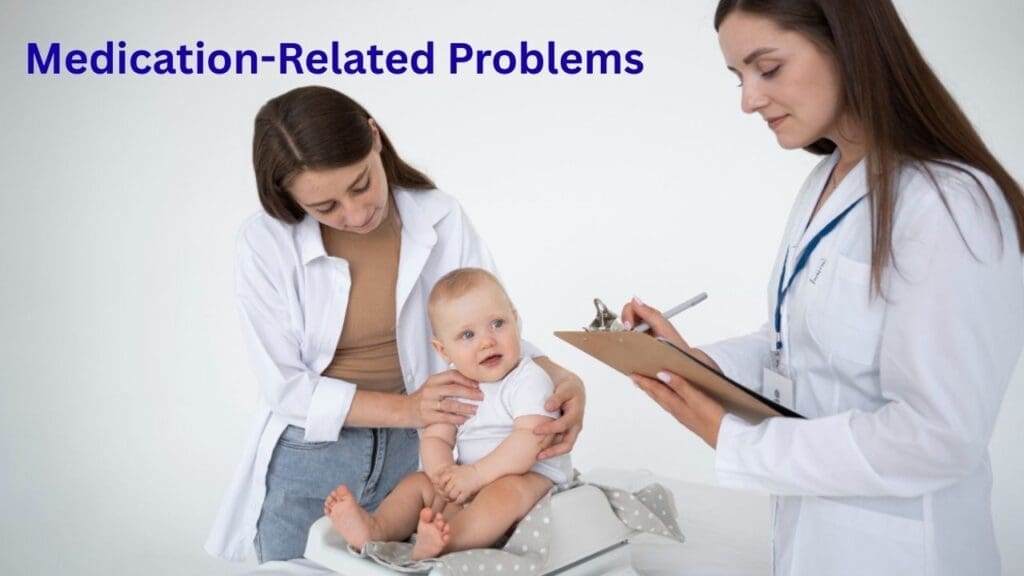
Medication-Related Problems highlight why pharmacy is evolving beyond just counting pills—it’s about patient care and cutting-edge science. In the vast world of STEM, many students flock to medicine or engineering, but pharmacy is surging in popularity right now. A recent study examined pharmacy education in the United Kingdom, focusing on how experiential learning—hands-on training in hospitals and GP surgeries—helps students master this craft. These placements not only build practical skills but also profoundly shape future careers.
Learning Beyond the Textbook
At first, students learn chemistry and biology in class. They study pharmacology and physiology. After that, they must apply this knowledge. The study followed students during their clinical placements. These are real-world work blocks. In fact, these experiences are vital. Students meet real patients. They work with doctors and nurses. Prior to these placements, students often feel nervous. While this may be true, they gain confidence quickly. They learn how to communicate well. To point out, communication is a core skill. It is as vital as math.
All things considered, the research shows a big shift. Students move from theory to practice. They see how medications affect people. As a result, they understand their responsibility. In detail, the study used interviews to gather data. Students shared their personal stories. To repeat, these stories show a transformation. They start as students. They finish as healthcare professionals. This path is exciting for anyone liking applied science. You can see more about STEM career paths here.
The Role of Mentors
In similar fashion, mentors play a huge role. These are experienced pharmacists who guide students. They provide feedback on performance. Provided that a student has a good mentor, they thrive. To put it another way, mentorship builds professional identity. It helps students visualize their future. At the same time, it teaches ethics. Pharmacists must make tough decisions. They ensure patient safety every day. So far, the data suggests that support is key.
Working in a Team
Another key point is interprofessional collaboration. This is a fancy way to say teamwork. Pharmacists do not work alone. They work with physiotherapists and social workers. Vis a vis the medical team, the pharmacist is the drug expert. To sum up, they prevent drug interactions. They suggest the best dosage. With this in mind, students learn to value other roles. All in all, it makes for better healthcare.
Is Pharmacy Right for You?
As can be seen, this career offers variety. You could work in a community pharmacy. You might work in research labs. To list, some pharmacists work in toxicology. Others work in nuclear pharmacy. Up to now, you might have thought it was boring. In reality, it is a dynamic field. By and large, the UK study proves that hands-on training works. It prepares you for challenges. So as to succeed, you need analytical skills. You also need empathy. At this point, think about your strengths. Do you like problem-solving? Do you want to help society?
Career Opportunities in STEM
At any rate, pharmacy is a stable career. The demand for healthcare workers is high. With the result that, finding a job is usually easy. To explain, the population is aging. People need more medication management. To this end, STEM students are in high demand. You can explore engineering and science tips to help your studies. Summing up, the journey is hard but rewarding. In due time, you could be the expert people trust.
Final Thoughts on Education: Medication-Related Problems
All of a sudden, the transition from school to work feels close. So long as you stay curious, you will find your way. Take the case of the students in the study. They faced uncertainty. Yet, they came out stronger. As a matter of fact, pharmacy is a bridge. It bridges pure science and human care. With this intention, look for volunteering spots. Try to shadow a pharmacist near you. At last, you will see the impact they have. To that end, your STEM journey starts today. Keep asking questions. Keep seeking knowledge. In short, the future of medicine needs you.
Additionally, to stay updated with the latest developments in STEM research, visit ENTECH Online.
Reference
Teoh, S. W. K., Lebedevs, T., Dickson, G., Femia, M., & Mukadam, N. (2026). Analysis of pharmacist interventions to reduce medication errors. Pharmacy, 14(2), 40. https://doi.org/10.3390/pharmacy14020040
Disclaimer: We do not intend this article/blog post to provide professional, technical, or medical advice. Therefore, please consult a healthcare professional before making any changes to your diet or lifestyle. In fact, we use AI-generated images for illustration and decoration. Their accuracy, quality, and appropriateness can differ. So, users should avoid making decisions or assumptions based only on the text and images.
- Author
- Latest Posts

I completed my Master of Science from the University of Allahabad in 2017 with a strong academic background in life sciences and chemistry. My specialization included Molecular Biology, Microbiology, Genetics, Plant Breeding, Phycology, Paleobotany, and Bioinformatics, along with Organic Chemistry, Inorganic Chemistry, and Physical Chemistry. This multidisciplinary training provided me with a comprehensive understanding of biological systems and analytical scientific approaches.
After completing my postgraduate studies, I gained valuable professional experience in both the education and social development sectors. I worked at A.M. Oxford Public School, where I was actively involved in guiding students toward academic excellence. In this role, I focused on creating an engaging learning environment, encouraging critical thinking, and nurturing students’ curiosity for scientific learning. My experience as an educator strengthened my communication, mentoring, and classroom management skills.
In addition to my teaching experience, I worked with Jeevan Jagriti Foundation, where I contributed to community-based initiatives aimed at improving educational access and awareness among underprivileged sections of society. Through this work, I participated in programs designed to support social development and promote the value of education in marginalized communities.
These professional experiences helped me develop strong interpersonal, leadership, and organizational skills while reinforcing my commitment to education and community service.