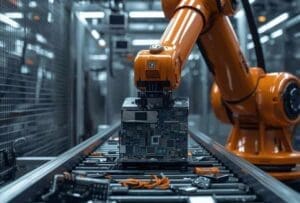
Get business growth through legacy environment modernization. Learn how to reduce technical debt, improve system performance, and strengthen security.
How Modernizing Legacy Environments Unlocks Performance, Security, and Scalability

Legacy environments often carry years of incremental updates, patchwork integrations, and technical debt. While they may still function, they rarely operate efficiently. Over time, performance slows, maintenance costs rise, and security risks increase. Organizations that continue to rely on aging systems often find innovation difficult because every change introduces complexity.
Investing in cloud modernization is not simply about upgrading infrastructure. It is about transforming the operational backbone of the business so that systems become faster, safer, and more adaptable. When modernization is approached strategically, it unlocks measurable improvements across performance, security, and scalability. Enterprises that collaborate with firms such as Sutherland often gain added momentum by pairing deep technical insight with execution rigor, helping ensure modernization initiatives drive sustained, organization-wide impact.
Improving System Performance
Legacy environments are frequently built on hardware and architectures that were not designed for today’s workloads. As data volumes grow and user expectations increase, these systems struggle to keep pace. Applications may experience latency, downtime, or inconsistent response times.
Modernized environments use distributed architectures, containerization, and performance-optimized storage solutions. These upgrades reduce bottlenecks and enable more efficient resource allocation. Workloads can be balanced dynamically, preventing single points of failure from affecting the entire system.
Performance improvements are not limited to speed. Modern platforms also enhance reliability. Automated monitoring tools detect anomalies in real time, allowing teams to resolve issues before they escalate. This proactive approach reduces outages and strengthens customer confidence.
Strengthening Security Posture
Security risks evolve constantly. Older environments often lack advanced threat detection, granular access controls, or automated patch management. As a result, vulnerabilities may go unnoticed for extended periods.
Modernization provides an opportunity to embed security directly into infrastructure design. Identity and access management frameworks enforce role-based permissions. Encryption standards protect data at rest and in transit. Continuous monitoring systems provide visibility into unusual behavior patterns.
Additionally, automated patching and configuration management reduce the risk of human error. Security becomes an ongoing process rather than a reactive response to incidents. This shift significantly lowers exposure to breaches and compliance violations.
Enabling True Scalability
Legacy systems are typically built with fixed capacity. When demand increases unexpectedly, performance suffers. Scaling often requires purchasing new hardware or undergoing disruptive upgrades.
Modernized environments support elastic scalability. Resources expand or contract automatically based on real-time demand. This flexibility allows organizations to accommodate growth without long lead times or excessive upfront investment.
Scalability also supports innovation. Teams can test new products or services without worrying about infrastructure constraints. If adoption increases, systems scale accordingly. If a project underperforms, resources can be reallocated quickly.
Reducing Technical Debt
Over time, legacy environments accumulate outdated code, redundant systems, and inefficient processes. This technical debt slows development cycles and increases operational costs.
Modernization initiatives provide an opportunity to evaluate which systems remain essential and which can be retired. Refactoring applications, consolidating platforms, and eliminating redundant services simplify the technology stack. This streamlined environment supports faster decision-making and lower maintenance overhead.
Supporting Data-Driven Growth
Modern environments are better equipped to handle analytics, machine learning, and advanced reporting. As businesses increasingly rely on data to inform strategy, infrastructure must support high-volume processing and integration with analytical tools.
Modernized platforms enable real-time insights, helping leaders respond quickly to trends and opportunities. Data becomes accessible and actionable rather than siloed and delayed.
Aligning Infrastructure With Business Goals
Perhaps the most important benefit of modernization is strategic alignment. Legacy systems often constrain what businesses can do. Modern environments, by contrast, are built to support change.
When infrastructure aligns with growth strategies, expansion into new markets, product innovation, and operational optimization become easier to execute. Technology shifts from being a barrier to becoming an enabler.
Additionally, to stay updated with the latest developments in STEM research, visit ENTECH Online. Basically, this is our digital magazine for science, technology, engineering, and mathematics. Further, at ENTECH Online, you’ll find a wealth of information.
- Author
- Latest Posts

Kottauppari Venkat Raghava
I am a technology-driven IT graduate with a strong passion for science and innovation. I am fascinated by how innovations like artificial intelligence, robotics, and emerging technologies are shaping our world. I specialize in analyzing complex scientific and technological research and presenting it in a clear, accessible way. My goal is to make science and technology understandable and engaging for students, tech enthusiasts, and professionals alike. By breaking down advanced concepts into simple, insightful narratives, I strive to inspire curiosity, learning, and innovation, helping readers stay informed about the breakthroughs that are shaping the future.