Building a Resilient IT Infrastructure for Modern Businesses
Explore strategies for a resilient IT infrastructure that helps maintain uptime, security, and rapid recovery from disruptions.

Building a Resilient IT Infrastructure for Modern Businesses
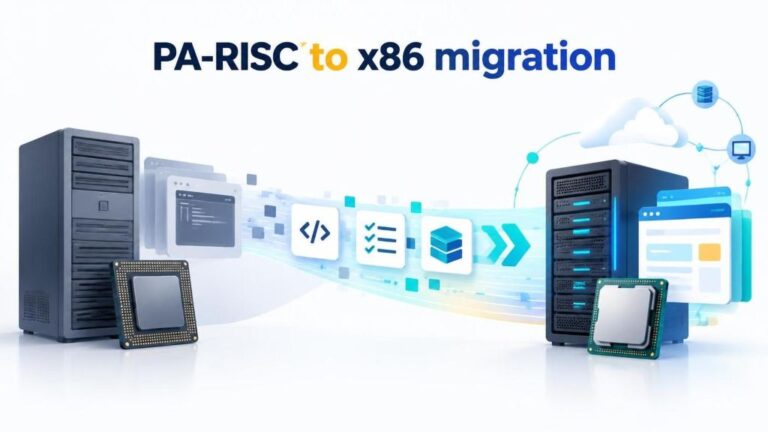
PA-RISC Architecture to x86: How Enterprises Can Modernize Without Rewriting HP-UX Applications

Corporate Website Maintenance: Why Ongoing Care Matters for Your Business

Factories Are Evolving with Monocular Imaging Systems in Computer Vision

Using AI to Create Multi-Channel Content Variations Automatically

How AI Uses Headless CMS to Deliver Content Across Devices

How AI Improves Content Quality Through Automated Optimization
How Modernizing Legacy Environments Unlocks Performance, Security, and Scalability

Is the Mac camera light on? Here’s how to fix it!

Tips to reduce CPU usage on your Mac
Computer Engineering is a branch of engineering that combines principles of electrical engineering and computer science to design, develop and improve computing systems. It focuses on both hardware and software, including processors, computer circuits, memory systems, embedded devices and computer architecture.
Computer engineering powers many technologies used in everyday life, from laptops and smartphones to industrial machines, communication systems and smart devices. It also plays an important role in artificial intelligence, robotics, automation and the Internet of Things (IoT).
At ENTECH STEM Magazine, this category brings together educational articles, technical insights and industry developments related to computer engineering. It helps students, aspiring engineers and technology enthusiasts understand how computers work, how computing hardware is developed and how engineering shapes modern digital technology.
Computer engineering includes several specialised areas that combine electronics, programming, mathematics and computing principles. Engineers work on designing individual hardware components as well as complete computer systems.
Some important areas of computer engineering include:
Computer architecture deals with the design and structure of computer systems. It explains how processors, memory, storage and other components work together to execute instructions and process information.
Computer organisation focuses on how these components are implemented and connected at the hardware level. Engineers study concepts such as instruction sets, data paths, registers, memory hierarchy and processor performance.
Digital electronics forms the foundation of modern computing hardware. It deals with electronic circuits that process information using binary values, represented by 0s and 1s.
Computer engineers study logic gates, Boolean algebra, combinational circuits and sequential circuits. These concepts help engineers design components such as adders, counters, registers and digital controllers.
Furthermore, digital logic design provides the foundation for developing complex processors and integrated circuits.
Microprocessors and microcontrollers are important components of modern electronic devices. A microprocessor primarily acts as a central processing unit, while a microcontroller combines a processor with memory and other peripherals on a single chip.
Computer engineers study their architecture, instruction sets, programming and applications. These technologies power devices such as computers, industrial controllers, consumer electronics and automotive systems.
Embedded systems are specialised computing systems designed to perform specific functions within larger devices or machines. They combine hardware, software and electronic components to control different operations.
Examples include smart appliances, medical equipment, industrial controllers and automotive electronics. Embedded systems engineering involves microcontrollers, sensors, real-time operating systems and hardware-software integration.
VLSI technology allows engineers to integrate large numbers of electronic components onto a single semiconductor chip. It plays an important role in developing processors, memory chips and specialised integrated circuits.
Computer engineers explore digital circuit design, semiconductor technology, chip architecture and hardware description languages. In addition, advances in semiconductor manufacturing continue to support smaller, faster and more energy-efficient computing devices.
Computer networks connect computing devices and allow them to exchange information. This area covers network architecture, communication protocols, data transmission and network hardware.
Computer engineers study how routers, switches, network interfaces and communication technologies support digital connectivity. These concepts are important in cloud computing, connected devices, data centres and modern communication infrastructure.
Computer engineering supports technologies used in almost every major industry. Its applications extend from consumer electronics to industrial automation and scientific research.
Some important applications include:
Therefore, computer engineering connects electronic hardware with software-driven applications across different industries.
Advances in computing hardware and electronics continue to expand the possibilities of computer engineering. New technologies are changing how engineers design processors, develop computing systems and process information.
Some important developments include:
Furthermore, developments in robotics, autonomous systems and high-performance computing are creating new engineering challenges and research opportunities.
Computer engineering offers several educational pathways for students interested in electronics, programming, mathematics and computing technology. Students can explore diploma programmes, undergraduate engineering degrees and postgraduate specialisations.
Important subjects include digital electronics, computer architecture, microprocessors, data structures, programming, operating systems, embedded systems, computer networks and semiconductor technology.
Practical learning is equally important. Students can develop their skills through programming projects, digital circuit design, microcontroller experiments, hardware development and engineering laboratories.
Career opportunities exist across semiconductor companies, electronics manufacturers, technology organisations, automotive companies, communication providers and research institutions. Depending on their qualifications and interests, graduates may explore roles in hardware engineering, embedded systems development, processor design, VLSI engineering, firmware development, computer architecture and systems engineering.
Students can also specialise in areas such as robotics, computer networks, AI hardware, semiconductor design and high-performance computing.
Computer engineering demonstrates how electronics, programming and engineering principles work together to create the computing systems that power modern technology. It connects digital electronics, computer architecture, semiconductor technology and software to develop increasingly capable devices and systems.
Through this category, ENTECH STEM Magazine brings together educational articles, technical explanations, industry insights and career-related resources on computer engineering. Readers can explore processors, computer hardware, embedded systems, digital electronics, chip design and emerging computing technologies.
Whether you are a student considering computer engineering as a career, an aspiring engineer interested in computer hardware or a technology enthusiast curious about how computing devices work, explore our collection of computer engineering articles and discover how this field is shaping the future of technology.