A headless CMS provides the structural foundation by separating content from presentation and storing it as reusable, structured data.
How AI Uses Headless CMS to Deliver Content Across Devices

Digital experiences no longer live in one place. A customer may discover a brand on a laptop, continue the journey on a mobile phone, revisit through an app, and later interact through a customer portal, smart device, or support interface. This shift has changed the role of content completely. Businesses are no longer publishing only for webpages. They are managing information that needs to move fluidly across many devices, screen sizes, formats, and usage contexts while still remaining accurate, consistent, and relevant. Understanding how a headless CMS for cross platform works is very much essential in this context.
This is where AI and headless CMS work especially well together. A headless CMS provides the structural foundation by separating content from presentation and storing it as reusable, structured data. AI adds an intelligence layer that helps determine how that content should be selected, adapted, prioritized, and delivered depending on the device, the context, and the behavior of the user. Instead of forcing every channel to manage its own disconnected copy of the same information, businesses can create one structured content source and let intelligent systems distribute it more effectively.
The result is a more connected digital ecosystem. Content becomes easier to reuse, easier to personalize, and easier to deliver in forms that fit the needs of each device. For businesses, this creates stronger consistency and greater efficiency. For users, it creates experiences that feel smoother, more relevant, and more responsive. In modern digital operations, that combination is becoming increasingly important.
Why Device Diversity Changes Content Strategy
Content strategy used to be easier to contain because most digital experiences were designed primarily for desktop websites. Today, that is no longer the case. Content must support phones, tablets, apps, kiosks, internal tools, portals, ecommerce environments, wearables, and sometimes even voice or embedded interfaces. Each of these devices creates different expectations. Some support detailed reading, while others are built for speed, brevity, or highly contextual interactions. This means businesses can no longer assume one fixed version of content will work well everywhere, which is why many teams choose to Build with Storyblok as part of a more flexible content approach.
The challenge is not just visual formatting. Device diversity also changes how users behave. A person browsing on mobile often wants quick clarity and fast next steps. A user on desktop may spend more time comparing, researching, or reading in depth. Someone using an app may be returning with a more defined purpose. If the content system cannot adapt to those differences, the user experience becomes less effective. Content may be too long, too vague, badly prioritized, or simply out of place.
This is why content strategy must shift from page-first thinking toward content that can be adapted and assembled according to context. That shift is difficult in rigid systems, but much easier when content is structured and detached from one fixed presentation model.
How Headless CMS Makes Cross-Device Delivery Possible
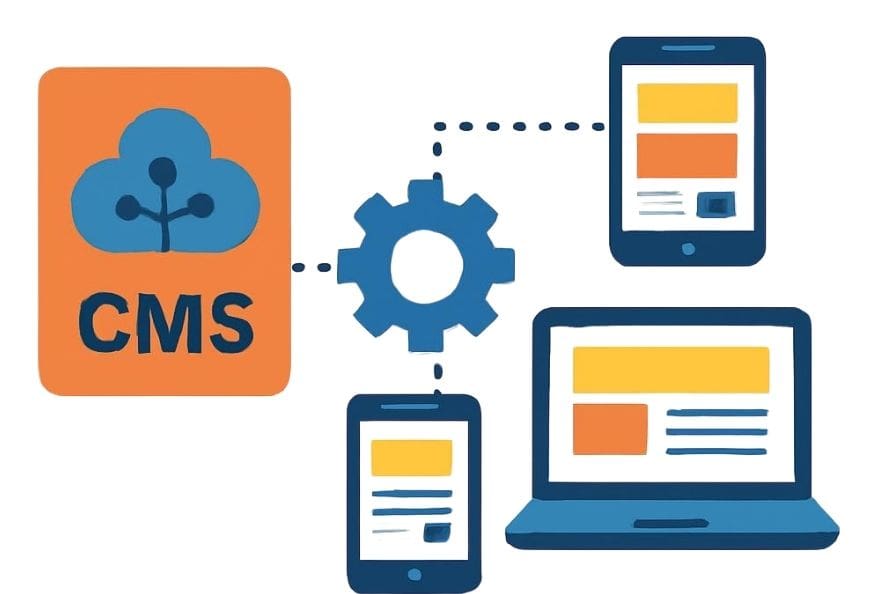
A headless CMS makes cross-device delivery possible by separating content from the frontend layer where it appears. Instead of embedding text, media, and messaging directly into one page template, a headless CMS stores content as structured data. That means the same core asset can be delivered to different devices through APIs without being rewritten or rebuilt every time. The presentation changes according to the device, but the underlying content remains connected to one central source.
This is especially important in multi-device environments because it reduces duplication. Without a headless CMS, teams often create separate versions of the same content for web, app, support, or campaign environments. Over time, those copies drift apart, become harder to update, and create inconsistency across the customer journey. A headless CMS avoids that by allowing the business to manage one content foundation that can support many outputs at once.
It also improves scalability. As new devices or interfaces are added, the content system does not need to be reinvented. The same structured content can continue feeding new experiences. That gives businesses a much stronger long-term model for managing digital growth across an expanding number of touchpoints.
Why AI Is the Intelligence Layer Behind Device-Aware Delivery
A headless CMS provides flexibility, but flexibility alone does not automatically create relevance. The system still needs to decide what content to show, how much of it to show, and which version is most useful in a given moment. This is where AI becomes valuable. AI acts as an intelligence layer that helps interpret context and support better delivery decisions across devices.
For example, AI can recognize that a mobile user may need a shorter summary and a clearer call to action, while a desktop user may benefit from more supporting information and deeper navigation options. It can identify whether a user is returning, which content they have already consumed, and what kind of asset is most likely to help them continue. This means content delivery becomes more adaptive instead of simply responsive in a design sense.
That distinction matters. Responsive design adjusts layout. AI-supported delivery adjusts the content experience itself. It helps determine which asset, which level of detail, and which sequence of information fits the user and the device together. This is what makes content delivery feel more intelligent rather than simply resized for another screen.
Structured Content Gives AI Better Material to Work With
AI can only deliver content effectively if the content itself is structured clearly enough to be understood. A headless CMS supports this by organizing content into content types, fields, metadata, taxonomy, and relationships. Titles, summaries, body fields, product references, audience tags, support labels, and calls to action can all be stored separately. This gives AI much more precise material to work with when deciding how content should appear across devices.
For example, if the system knows what the summary field is, it can prioritize that on smaller screens. If it knows which content is introductory and which is detailed, it can choose the appropriate level of depth depending on the interface. If metadata shows that a certain asset is meant for existing customers or for users in a support flow, AI can factor that into the decision. Without structure, the model has to infer too much from broad page content, which weakens the usefulness of the result.
This is why structured content matters so much. It turns content into something AI can interpret rather than just display. That makes device-aware delivery more accurate, more scalable, and much easier to optimize over time.
How AI Adapts Content Length and Format by Device
One of the clearest ways AI improves cross-device content delivery is by adjusting content length and format. Different devices create different levels of tolerance for detail. Mobile users usually need faster access to key points. Desktop users may be more open to richer explanations. App environments may require very concise content blocks, while support environments may need practical step-based guidance. AI can help adapt content so it better fits each of these situations without forcing teams to manually rewrite every version.
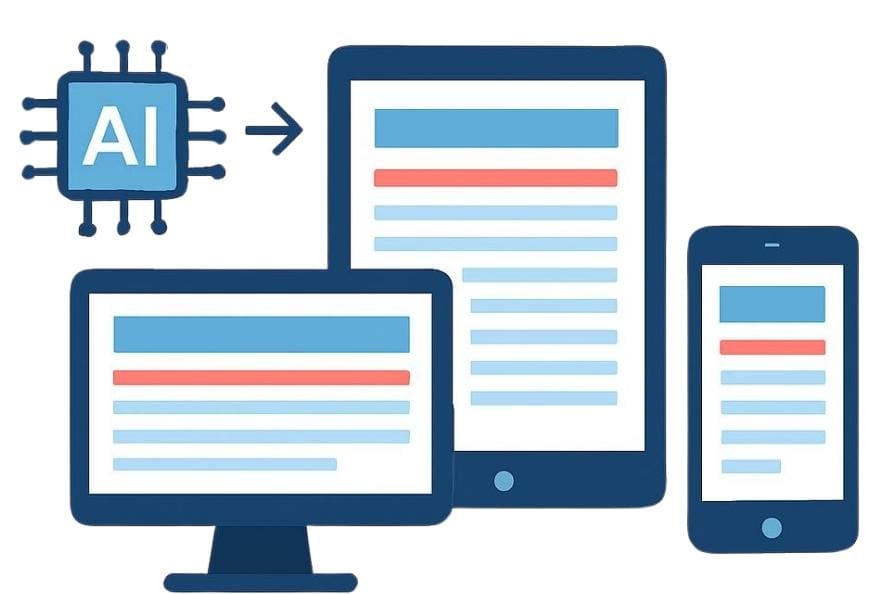
This might mean showing a shorter summary on mobile while offering deeper supporting text on desktop. It might mean highlighting a key product benefit in an app card while surfacing the full product explanation in a web view. It may also mean changing how calls to action are introduced depending on the device and likely intent of the user. These adjustments can have a major impact on engagement because they reduce friction and make the content feel more appropriate to the context.
The benefit for the business is that one structured source can serve many device-specific needs. AI handles more of the adaptation logic, while teams maintain a stronger central content system.
How AI Supports Personalized Delivery Across Devices
Cross-device delivery is not only about format. It is also about relevance. A user on mobile may not just need shorter content. They may need different content depending on what they have already done in another channel. A person who explored product information on desktop might later open the app and need more specific next-step guidance. Someone who used support content on mobile might return through the website and benefit from a deeper explanation or related resources. AI helps connect these moments.
Because a headless CMS stores content centrally, the system can use the same core assets across multiple touchpoints. AI can then analyze user behavior and determine what should be shown next depending on the device and the journey history. This makes personalization much more continuous. The experience does not have to reset every time the user changes devices. Instead, the content system can stay connected to the broader journey.
This is valuable because users rarely think in terms of channels and devices. They think in terms of getting what they need. AI-supported headless delivery helps businesses meet that expectation by making the content feel more aware of the user’s broader context instead of just the current screen.
Metadata and Taxonomy Improve Device-Specific Decision Making
Metadata and taxonomy play an important role in helping AI deliver content across devices in a more intelligent way. They tell the system what a content asset is for, who it serves, and where it belongs in the journey. When this descriptive structure is strong, AI can make better decisions about which assets should appear on which devices and in what form.
For example, content tagged as quick-reference support material may be better suited for mobile or in-app surfaces, while in-depth educational resources may be better introduced on larger screens. A content asset labeled for early-stage awareness may need a different presentation style than one designed for high-intent evaluation. Regional metadata may influence which device experiences deserve localization first. All of these decisions become easier when the content system carries the right descriptive signals.
Without strong metadata, AI may still deliver content across devices, but the choices are more likely to become generic. With metadata and taxonomy, delivery decisions become much more precise. This improves both relevance and consistency, which are critical when businesses want to maintain high-quality experiences across many digital environments.
How AI Helps Manage Omnichannel Consistency
One of the biggest risks in multi-device delivery is inconsistency. Businesses often end up with slightly different messages across the website, app, customer portal, and other interfaces because each channel is updated separately. This weakens trust and makes the content ecosystem harder to maintain. Headless CMS helps by creating one source of truth, but AI adds another layer of support by helping that source adapt consistently across devices without breaking the core message.
AI can assist by generating device-appropriate variations while still preserving shared terminology, product logic, and brand tone. It can help ensure that shorter mobile versions still align with the fuller desktop version, or that app-friendly summaries do not drift away from the original meaning. This matters because consistency is not about showing identical wording everywhere. It is about making sure the same underlying message remains coherent across all forms.
That kind of coherence strengthens the user experience and reduces operational strain. Teams do not have to manage every variation by hand, and users do not encounter conflicting information as they move between devices. AI and headless CMS together make omnichannel consistency much easier to maintain at scale.
Why Real-Time Delivery Becomes More Practical
Another major benefit of combining AI with headless CMS is that real-time delivery becomes more practical. Businesses often want to respond to behavior while it is happening rather than waiting until later. A user may shift from browsing broadly to exploring one specific product area. Another may move from discovery content into support-oriented behavior. With a static system, the experience remains largely unchanged. With AI and structured content, the system can react more fluidly.
Because the CMS provides modular assets, AI can change what is surfaced based on device and context in real time. On a mobile screen, this might mean showing a highly relevant quick-answer block. On desktop, it might mean surfacing a more detailed comparison or next-step recommendation. The content itself is not being rewritten every second. It is being assembled more intelligently from a structured pool of assets.
This responsiveness can improve user outcomes significantly because the content becomes more closely aligned with what the person is trying to do in the moment. It also creates stronger business performance because the system is better at reducing friction while opportunities are still active.
- Author
- Latest Posts

Deven Nandapurkar is a Software Engineer, Project Lead; working at the strategic intersection of software engineering, productivity science, and emerging technologies. Driven by a core philosophy of “building things worth building,” he leads cross-functional teams and drives end-to-end technical strategy—from early-stage conceptualization through production-grade deployment.
A Computer Engineering graduate from Pune University, Deven brings a sharp systems-thinking approach to technical leadership, honed by years of managing high-stakes engineering projects and leading teams to top placements in national and international hackathons, including the NASA Space Apps Challenge and the Peerlist GenAI Hackathon.
Deven explores how human cognition and emerging technology converge. He regularly writes about cognitive performance optimization, attention management, AI integration, and the evolving dynamics of the modern workforce – offering actionable frameworks for professionals seeking to maximize their productivity and thrive alongside intelligent systems.