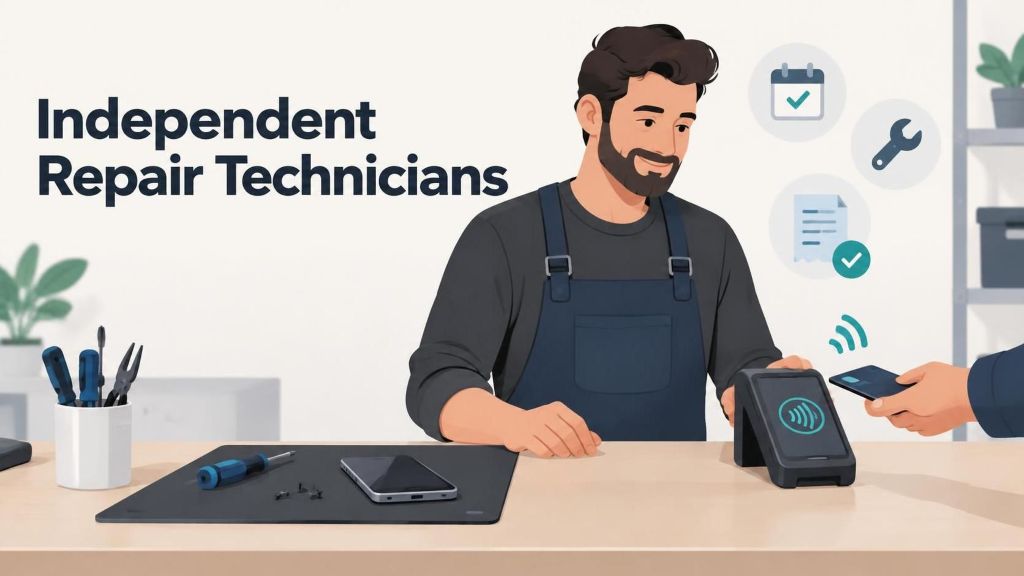
Independent repair technicians need a checkout process that protects cash flow, sets clear customer expectations, and keeps payment information secure. A job may begin with an uncertain diagnosis, develop into a more complex repair, and end with several payment options. Without clear procedures, even excellent technical work can result in disputed charges or unpaid balances. A few practical controls can make every stage easier to document and explain.
More shops and independent technicians are repairing electronic modules and individual components instead of replacing complete assemblies. The shift reflects the wider software-driven repair era, where diagnostic tools and technical knowledge carry as much value as mechanical labor.
Component-level work can save a customer hundreds of dollars, but the final cost may remain uncertain until testing begins. Your intake form should identify the item, record its condition, and explain that diagnosis may uncover additional faults. Photograph connectors, housings and visible damage before work starts. Detailed records help customers understand why replacing a failed capacitor, sensor or circuit section requires skilled labor even when the physical part is inexpensive, especially when considering a modern component workflow.
Handling Diagnostic Deposits and Balances
Collect a diagnostic deposit when a job requires bench testing, disassembly or dedicated scan time. Set a fixed amount, such as $75 or one hour of labor, then state whether it will be credited toward the approved repair. The receipt should describe the deposit as payment for diagnostic work already performed, not simply a reservation fee.
Choose payment methods that fit how customers interact with your shop. A counter terminal works for local drop-offs, while a secure payment link may suit remote customers shipping components for service. When independent repair technicians compare ways to accept credit cards, they should consider transaction fees, payout timing, receipt delivery, and support for both in-person and remote payments. Always collect the remaining balance before releasing or shipping the repaired item.
Confirming Quotes Before Starting Work
Send a written quote once diagnosis identifies the likely repair. Include labor, parts, taxes or applicable fees and any shipping charge. Add an expiration date because component availability and supplier prices can change. Clear estimates are especially useful as shops respond to documented repair shop challenges, including cost pressure and changing service demands.
Ask the customer to approve the quote through a signed form, email reply or trackable digital authorization. If the technician discovers another fault, pause and issue a revised quote before continuing. For example, a customer may approve a $240 control-module repair, but internal corrosion could add $90 in cleaning and trace repair. Recorded approval prevents confusion at checkout and gives you evidence if the charge is later questioned.
Securing Cardholder Data in the Shop
Use payment tools that send card data directly to a compliant processor. Staff should never copy full card numbers into job notes, spreadsheets, text messages or email. If a customer calls to pay, enter the details into an approved virtual terminal while following the provider’s security instructions. Don’t retain the number after authorization.
Limit payment-system access to workers who need it and assign each person an individual login. Turn on multifactor authentication, install software updates promptly and lock the point-of-sale screen whenever the counter is unattended. Printed receipts should display only masked card details, while unwanted copies belong in a cross-cut shredder.
Create a short response procedure for suspicious activity. Staff should know whom to contact, how to preserve transaction records and when to disable an account. Review permissions whenever an employee leaves. These controls reduce avoidable exposure without slowing down routine checkout.
A completed repair should leave the customer with an itemized invoice, proof of payment and any applicable service warranty. Keep those records attached to the job file so a follow-up call can be handled from documented facts, not memory.
Deven Nandapurkar is a Software Engineer, Project Lead; working at the strategic intersection of software engineering, productivity science, and emerging technologies. Driven by a core philosophy of "building things worth building," he leads cross-functional teams and drives end-to-end technical strategy—from early-stage conceptualization through production-grade deployment.
A Computer Engineering graduate from Pune University, Deven brings a sharp systems-thinking approach to technical leadership, honed by years of managing high-stakes engineering projects and leading teams to top placements in national and international hackathons, including the NASA Space Apps Challenge and the Peerlist GenAI Hackathon.
Deven explores how human cognition and emerging technology converge. He regularly writes about cognitive performance optimization, attention management, AI integration, and the evolving dynamics of the modern workforce - offering actionable frameworks for professionals seeking to maximize their productivity and thrive alongside intelligent systems.