Older males dominate Humpback whale mating as populations recover. Explore how STEM and DNA aging help scientists track ocean giants.
Humpback Whale Mating: How Age Affects Breeding Success
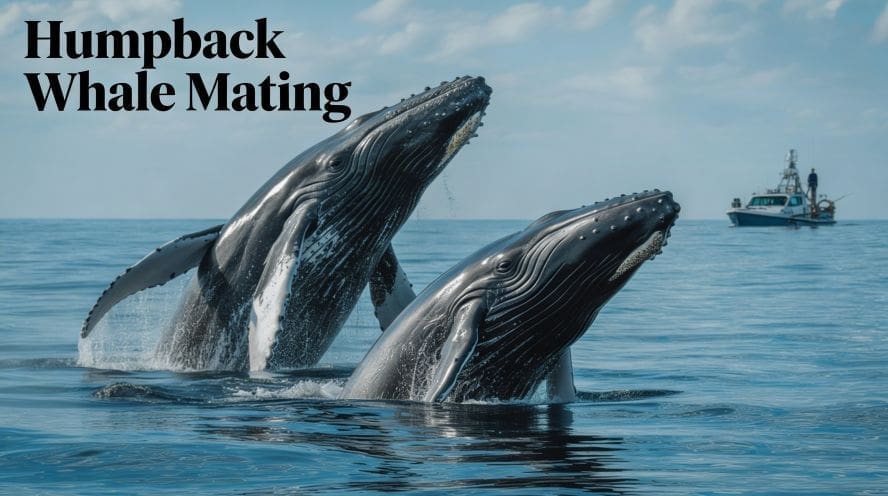
Whaling almost wiped out the world’s largest mammals in the past century. Humpback whales faced a dark future for many years as their numbers dropped. Populations are finally bouncing back in the South Pacific thanks to global protection. This recovery is changing how these giants interact during the Humpback whale mating season. In fact, the way they find partners is evolving as the sea fills up. To point out, this shift shows how nature adapts to growth and success.
A new research paper shows that age matters more now for survival and growth. Older males are taking over the Humpback whale mating game in ways we did not expect. This shift tells a story of evolution and resilience in a crowded sea. At this time, scientists are watching how these social structures stabilize.
The Battle of Humpback Whale Mating
Scientists spent 19 years studying whales in New Caledonia to track their lives. They tracked 485 males to see who became a father over several generations. At first, the population was very small and mostly made of young individuals. Young males had a great chance to reproduce back then because competition was low.
At the present time, the ocean is more crowded with experienced adults. Older males now dominate Humpback whale mating in the breeding grounds near the islands. To explain, these veterans use better tactics to find mates than the younger ones. They are better at singing and escorting females through dangerous waters. What’s more, their experience gives them a huge advantage in physical standoffs. In reality, being a seasoned veteran pays off in the deep blue.
The Power of a Humpback Whale Mating Song
Singing is a key part of whale life and is a complex art. Male humpbacks perform complex songs to attract females across many miles. Prior to this study, we did not know how age helped these singers. It turns out that practice makes perfect for whales over many decades. Older males likely have better vocal skills for Humpback whale mating success. In like manner, they are better at physical competition and protecting their space.
All things considered, being a senior is a good thing for a male whale. As a result, the genetic makeup of the pod is shifting toward these survivors. This shows how sexual selection works in the wild as groups get larger. So far, the data proves that density changes everything about how they live. At this point, we can see that maturity is a biological superpower.
Technology for Humpback Whale Mating Research
Scientists did not just watch the water with binoculars from the shore. They used epigenetic aging to find out how old each whale was. This technology looks at chemical changes in DNA over a long time. To illustrate, it is like a biological clock hidden inside their cells. As well as that, they used paternity tests to confirm who the fathers were. All in all, it took a lot of data and patience to finish.
In short, engineering helps us understand nature in a very deep way. With this in mind, STEM is vital for conservation efforts around the globe. So as to save species, we must use tools that are very precise. To put it another way, modern science is the best friend of the whale.
Why This Matters for the Future
The recovery of humpbacks is a huge success for the entire world. While this may be true, the work is not over for scientists. Above all, we must protect their habitat from pollution and loud noise. At any rate, the whales are adapting well to their new environment. At the present time, we are seeing a shift in Humpback whale mating habits. In conclusion, the ocean is a place of discovery for those who look.
To sum up, older whales are the new kings of the sea. At last, we see the full cycle of recovery after years of effort. So long as we study them, we can help them thrive forever. All of a sudden, the deep blue feels much smaller and more connected. With attention to detail, we find the truth about their amazing lives. To that end, we must keep supporting marine science every single day.
Conclusion
To summarize, this research proves that nature rewards experience as populations grow healthy again. As a result, we see that Humpback whale mating is a complex dance of age and skill. In essence, these animals show us that conservation efforts truly work over time. After all, the rise of the “whale dads” is a sign of a strong ecosystem. In sum, our future in STEM depends on protecting these biological wonders. To rephrase it, the more we learn, the better we can guard the blue world.
Additionally, to stay updated with the latest developments in STEM research, visit ENTECH Online.
Reference:
Eichenberger, F., Carroll, E. L., Garrigue, C., Jarman, S., Steel, D. J., Robbins, J., Rendell, L., & Garland, E. C. (2026). Changes in age-related sexual selection in a humpback whale population recovering from exploitation. Current Biology, 36(1), 1–13. https://doi.org/10.1016/j.cub.2026.01.018
- Author
- Latest Posts

A Master’s-qualified Zoologist with a focus on Limnology, I combine hands-on laboratory experience with a sophisticated background in science communication. My career is defined by an interdisciplinary approach to the life sciences, merging technical research skills with a proven ability to teach and engage diverse audiences. I am committed to lifelong learning and the creative dissemination of medical and biological research, ensuring scientific literacy and inspiration remain at the forefront of the field.