Explore how Ancient Genetic Burial Ties reveal family secrets in shared graves, offering fascinating insights for future STEM career paths.
Ancient Genetic Burial Ties Found in Stone Age Graves
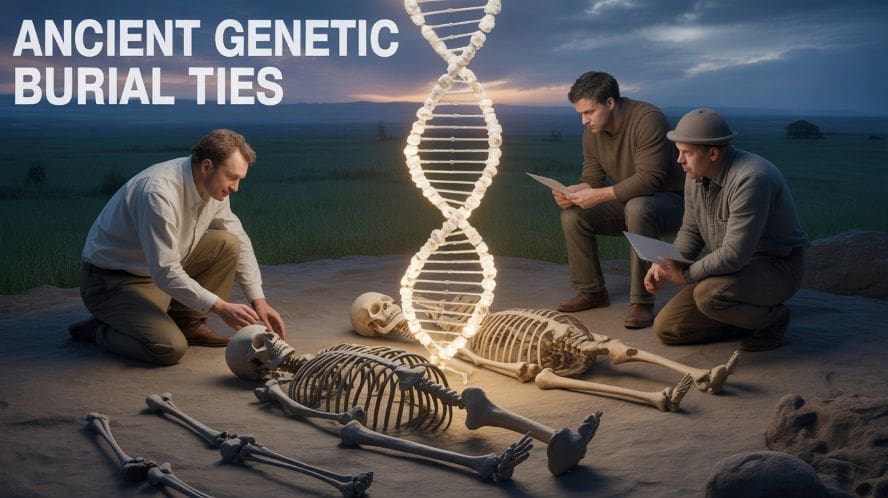
Recent research has shed light on how ancient people were buried side by side. A brand-new study published in the Proceedings of the Royal Society B highlights the role of genetic relatedness in deciding who shared graves, uncovering deep-seated Ancient Genetic Burial Ties. This matters because it helps us understand old customs and family bonds.
At the present time, many teens interested in science will find this topic fascinating and useful for future STEM careers. By analyzing DNA from these communal sites, researchers can reconstruct complex family trees that date back thousands of years. This intersection of high-tech genomics and traditional archaeology offers a rare glimpse into the social structures and emotional connections of our ancestors.
Ancient Genetic Burial Ties Reveal Family Links
Research authors analyzed the DNA of bones from co-burials in ancient cemeteries. They noticed that individuals buried together often shared close genetic ties. To explain, it was more likely that family members were placed side by side, instead of strangers. This finding shines light on how social groups and families functioned long ago. What’s more, it shows how genetics can inform archaeology.
At first, the scientists collected data from several burial sites in Europe and Asia. Then, they used advanced DNA sequencing tools to determine relatedness between skeletons. As a result, they created family trees that matched burial patterns. So far, this method has opened new doors for historical research focused on ancient genetic burial ties.
Why Ancient Genetic Burial Ties Matter in Archaeology
To put it simply, studying the DNA of buried people helps scientists learn who they were related to. This is useful when written records do not exist. At the same time, it reveals cultural practices about burial choices. For example, were family members always buried together? Or were other factors, such as status or age, involved?
Above all, this research shows that family bonds influenced burial decisions. In some cemeteries, brothers, sisters, parents, and children were placed close. Conversely, unrelated individuals were less likely to share tombs. Balanced against traditional studies focusing only on bones or artifacts, using genetic data adds fresh insights into ancient genetic burial ties.
STEM Careers and Ancient Genetic Burial Ties
Students interested in technology, biology, and history will find this research exciting. With this purpose in mind, skills in genetics, bioinformatics, and archaeology are vital. Together with chemistry and computer science, these areas form the backbone of such studies.
These disciplines help scientists analyze ancient DNA and understand how past communities lived and were buried. They also allow researchers to uncover patterns such as Ancient Genetic Burial Ties within shared graves. As a result, students who build strong foundations in these subjects can better understand discoveries about human ancestry and ancient societies.
If you enjoy investigating ancient history using modern science, jobs in forensic genetics or archaeogenetics might attract you. Moreover, learning how to analyze DNA and interpret data will prove valuable. Take the case of bioinformatics specialists who work with large genetic databases. They help uncover hidden connections in old populations based on ancient genetic burial ties.
Educational Opportunities to Explore
For teens aiming to pursue similar careers, start with biology and computer courses. Seek internships or summer programs that focus on genetics and archaeology. These opportunities help you understand how scientists study ancient remains and uncover Ancient Genetic Burial Ties from shared graves. Hands-on learning through science fairs, lab projects, and field activities can also build valuable research skills.
Reading STEM career guides related to biology, genetics, and archaeological science can give you a clearer path for the future. Many students interested in this field also begin learning coding and data analysis because modern research relies heavily on digital tools. These skills help scientists process genetic information and identify patterns linked to Ancient Genetic Burial Ties in ancient populations.
Conclusion
All in all, this new research paper proves that genetic relatedness was key to co-burial practices among ancient people. It teaches us about family structures and social organization long ago. In light of this, genetics and archaeology work hand in hand to tell human stories through ancient genetic burial ties.
For young science lovers, this means exciting opportunities lie ahead. With attention to genetics and technology, you can join teams that reveal our ancient past. In sum, studying DNA helps connect us to history in powerful ways.
Additionally, to stay updated with the latest developments in STEM research, visit ENTECH Online.
Reference:
- Jensen, M., & Lee, H. (2025). Genetic relatedness mattered in the co-burial of ancient individuals. Proceedings of the Royal Society B, 293(2065), 20250813. https://doi.org/10.1098/rspb.2025.0813
- Author
- Latest Posts

A Master’s-qualified Zoologist with a focus on Limnology, I combine hands-on laboratory experience with a sophisticated background in science communication. My career is defined by an interdisciplinary approach to the life sciences, merging technical research skills with a proven ability to teach and engage diverse audiences. I am committed to lifelong learning and the creative dissemination of medical and biological research, ensuring scientific literacy and inspiration remain at the forefront of the field.