Wolffia globosa is a tiny aquatic plant that scientists are studying This plant is often called water meal or duckweed.
Climate Heatwaves Hinder Importance of Wolffia Globosa
Importance of Wolffia Globosa
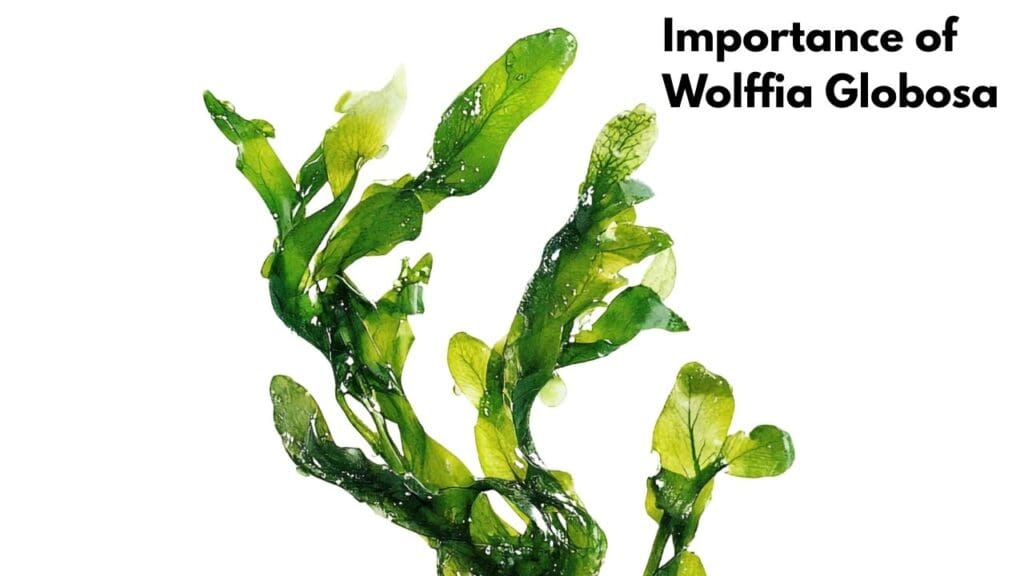
Importance of Wolffia globosa as a tiny aquatic plant that scientists are studying This plant is often called water meal or duckweed. Above all, it is the world’s smallest flowering plant. It grows very fast in Southeast Asia. People eat it as a nutritious food source. It contains high levels of protein and minerals. This makes it a great tool for food security. Prior to this study, we knew it liked warm water. However, climate change is bringing more heatwaves. Researchers at the University of Waterloo wanted to see how it survives.
Testing the Limits of Heat
The team tested how the plant grows at different temperatures. They used constant temperatures and fluctuating temperatures. At first, the results looked good for the plant. The plant grows well at 28.5°C. This is the predicted temperature for Thailand in 40 years. To explain, mean temperature rises might not hurt the plant alone. But climate change also causes extreme heat events. These events make water temperatures spike and then fall. To enumerate, the team simulated these fluctuating cycles in the lab. They wanted to see if the plant could handle the stress.
Heatwaves Cause Plant Death
The study found that heatwaves are a major problem. While it may be true that the plant likes warmth, too much heat is deadly. High temperatures increase the rate of frond death. This means the tiny green leaves die off quickly. To point out, the plant stops reproducing when it gets too hot. Summing up, the population growth drops significantly during these heat spikes. At the present time, this is a worry for farmers. If the water gets too hot, the whole crop could fail.
Why STEM Students Should Care
This research is a perfect example of environmental biology and climate science. Scientists use mathematical models to predict future food supplies. If you enjoy botany or ecology, this field is for you. You can learn more about plant science careers on entechonline.com. To list, you could become a biotechnologist or a climate analyst. These experts find ways to protect our food from global warming. With attention to sustainable agriculture, we can solve these big problems.
The Future of Food Engineering
All things considered, this tiny plant is still a hero. It grows much faster than most land crops. It also lives in water, which stays cooler than air. To put it another way, it might recover faster than corn or wheat. Researchers want to use genetic material to make it even tougher. This involves bioengineering and genomics. If you are curious about STEM opportunities, check out the guides at entechonline.com. You can help build a world where everyone has enough to eat. In short, even the smallest plants need our help to survive.
Future Prostective
The study “Thermal performance of Wolffia globosa under climate change: heatwaves impair population growth” published in Oxford University Press journal AoB PLANTS highlights important future prospects for this aquatic plant. Wolffia globosa has a very fast growth rate and high protein content, making it a promising candidate for sustainable food production in a warming climate.
Future prospects suggest that moderate increases in average temperature may not significantly reduce its growth because the plant performs well near 26–32 °C, close to predicted future temperatures in Southeast Asia. However, more frequent heatwaves and temperature fluctuations could lower growth rates by increasing frond mortality.
Conclusion
The study provides important insights into how temperature changes associated with climate change may influence the growth and survival of Wolffia globosa, a small aquatic duckweed widely harvested as a food source in Southeast Asia. By constructing the first thermal performance curve for this species, the researchers were able to evaluate how different temperature conditions affect its population growth rate. The results show that W. globosa has an optimal growth temperature around 30–32 °C, with maximum growth observed near 31.5 °C. Growth rates decline at temperatures both below and above this optimal range, indicating a strong dependence on temperature for population performance.
Additionally, to stay updated with the latest developments in STEM research, visit ENTECH Online.
Reference
Cuddington, K., Kuntze, M., Andrade-Pereira, D., Gasmen, Y., Wu, J., Ferns, A., & Geng, X. (2026). Thermal performance of Wolffia globosa under climate change: heatwaves impair population growth. AoB Plants, 18(2). https://doi.org/10.1093/aobpla/plaf068
- Author
- Latest Posts

I completed my Master of Science from the University of Allahabad in 2017 with a strong academic background in life sciences and chemistry. My specialization included Molecular Biology, Microbiology, Genetics, Plant Breeding, Phycology, Paleobotany, and Bioinformatics, along with Organic Chemistry, Inorganic Chemistry, and Physical Chemistry. This multidisciplinary training provided me with a comprehensive understanding of biological systems and analytical scientific approaches.
After completing my postgraduate studies, I gained valuable professional experience in both the education and social development sectors. I worked at A.M. Oxford Public School, where I was actively involved in guiding students toward academic excellence. In this role, I focused on creating an engaging learning environment, encouraging critical thinking, and nurturing students’ curiosity for scientific learning. My experience as an educator strengthened my communication, mentoring, and classroom management skills.
In addition to my teaching experience, I worked with Jeevan Jagriti Foundation, where I contributed to community-based initiatives aimed at improving educational access and awareness among underprivileged sections of society. Through this work, I participated in programs designed to support social development and promote the value of education in marginalized communities.
These professional experiences helped me develop strong interpersonal, leadership, and organizational skills while reinforcing my commitment to education and community service.