The nao robot autism training ai system uses AI and rewards to make autism therapy more engaging, personalized, and effective for children.
NAO Robot Autism Training AI System Transforms Learning
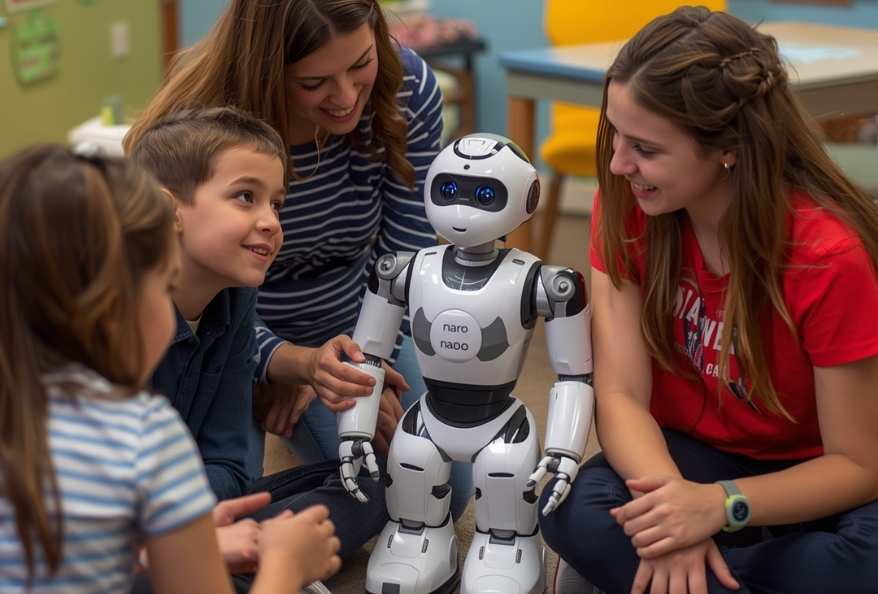
The nao robot, an AI system made to help kids with autism learn and make friends, is changing the way they do both. This little robot that looks like a person is making therapy more interesting, structured, and effective than it has ever been.
Here’s why this innovation is making headlines:
- Personalized learning using facial recognition
- Reward-based training that boosts motivation
- Faster learning and improved focus
- Positive emotional engagement in children
Above all, this breakthrough shows how technology can make therapy more accessible and enjoyable.
What is the NAO Robot Autism Training AI System, exactly?
The nao robot autism training ai system is a high-tech humanoid robot made to help kids with Autism Spectrum Disorder (ASD).At first glance, it might appear to be just a simple gadget.However, it’s powered by artificial intelligence. This technology can identify students, keep track of them, and then offer personalized lessons tailored to each individual’s needs.
The robot uses its integrated cameras and sensors to identify each child, immediately loading a tailored learning plan. This approach ensures that every session is distinct and customized, a level of personalization that’s often difficult to achieve in traditional treatment environments.
How the Robot Helps Kids Learn
NAO Robot Autism Training AI System in Action
During therapy, the robot engages in straightforward learning exercises. It introduces basic vocabulary, covering words such as “cow,” “moon,” and “bus.” The robot’s behavior is that of a consistent and reliable teacher. This is especially important because many children with autism struggle with social interactions.
The robot also says hello to each child by name. This makes people feel safe and at ease from the outset.After that, it patiently goes over the instructions again and again until the child gets it. This steady behavior helps kids learn one step at a time.
Also, the robot makes modest movements and gestures. These simple actions make it easier for kids to understand what you’re saying.
Why Robots Are Effective for Autism Therapy
Kids with autism frequently like places that are regimented and easy to understand. That’s exactly what the nao robot autism training AI system does.
Robots don’t have rapid shifts in mood like people do. This helps kids stay focused and calms their nerves.Also, robots can do the same thing over and over without getting upset. This gives kids the chance to work on their skills at their own speed.
For example, a toddler can learn one word again and over until they feel sure of it. Only then does the robot go on to the next idea.Because of this, learning is less stressful and more stable.It works because of humanoid robot reinforcement learning.
Humanoid Robot Reinforcement Learning Makes It Work
The Science Behind the Learning
The system uses both Applied Behavior Analysis (ABA) and humanoid robot reinforcement learning.For example, the robot delivers praise or a reward when a child gets the answer right. Sometimes, it even offers a little treat, perhaps a mango bar.
This creates a cycle of positive reinforcement. It not only fuels motivation but also encourages children to persist. Learning becomes quicker and more enjoyable when the rewards are consistent.
Reinforcement learning also helps the robot change over time. It might change its answers based on how well the child is doing.
The Study’s Surprising Results
Why Humanoid Robot Reinforcement Learning Matters
The results of the study are impressive.
- Children with rewards scored 65 percent on average
- Children without rewards scored only 46 percent
- Response time improved from 44 seconds to 29 seconds
What’s more, the robot tracked facial expressions using its camera.A huge 88 percent of children in the reward group showed positive emotions.
This proves that humanoid robot reinforcement learning not only improves performance but also enhances emotional well-being.In other words, children are not just learning better. They are also enjoying the process more.
Emotional Intelligence Through AI
After all, human therapists can get tired, whereas robots can repeat lessons endlessly without losing patience. All in all, this technology is shaping the future of healthcare and education by making learning more consistent, scalable, and accessible for every child.
Real-World Applications and Future Potential
At present, the nao robot autism training ai system is being tested in controlled environments. However, its future potential is much bigger.
Schools, therapy centers, and even homes could use such robots.For example, parents may use robots for daily practice sessions. Teachers can also integrate them into special education classrooms.
Looking to the future, the potential exists for even more sophisticated AI to significantly enhance these robots. They could soon be capable of managing intricate conversations and undertaking social training exercises.
Why This Matters for the Future of STEM and Healthcare
The nao robot autism training ai system represents a powerful mix of robotics, AI, and psychology.
- It provides consistent and unbiased teaching
- It reduces anxiety in children
- It supports therapists with scalable solutions
After all, human therapists can get tired, whereas robots can repeat lessons endlessly without losing patience. All in all, this technology is shaping the future of healthcare and education by making learning more consistent, scalable, and accessible for every child.
Conclusion
The nao robot autism training AI system is changing how children with autism learn, communicate, and develop self-esteem. By combining structured teaching with a humanoid robot that learns from experience, it creates a safe, enjoyable, and highly personalized learning environment.
This new idea suggests that technology can help improve traditional therapy. As research continues, these advanced robots could become very important in schools and hospitals, helping children reach their full potential.
Additionally, to stay updated with the latest developments in STEM research, visit ENTECH Online.
Reference
- Karim, M., Mia, M. S., Tareeq, S. M., & Hasanuzzaman, M. (2026). Reinforcement-Based Person-Specific Training for Children with Autism Using a Humanoid Robot NAO. Robotics, 15(4), 66. https://doi.org/10.3390/robotics15040066
- Author
- Latest Posts

Kottauppari Venkat Raghava
I am a technology-driven IT graduate with a strong passion for science and innovation. I am fascinated by how innovations like artificial intelligence, robotics, and emerging technologies are shaping our world. I specialize in analyzing complex scientific and technological research and presenting it in a clear, accessible way. My goal is to make science and technology understandable and engaging for students, tech enthusiasts, and professionals alike. By breaking down advanced concepts into simple, insightful narratives, I strive to inspire curiosity, learning, and innovation, helping readers stay informed about the breakthroughs that are shaping the future.