Robots Now Practice Delicate Assembly in Simulation Before Touching Real Parts
At CoRL 2026, NVIDIA and its partners showed how robots practice fitting gears, nuts and cables in simulation, with new physics tools, benchmarks and smarter training.
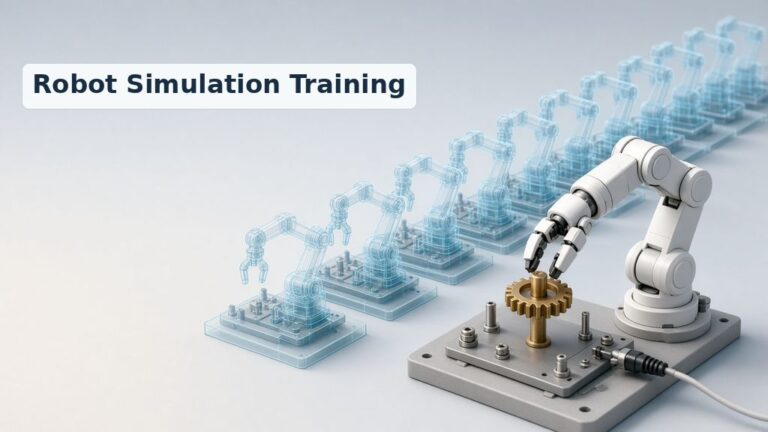
Robots Now Practice Delicate Assembly in Simulation Before Touching Real Parts

Light, Compliant Robot Arms Learn From Factory Demonstrations
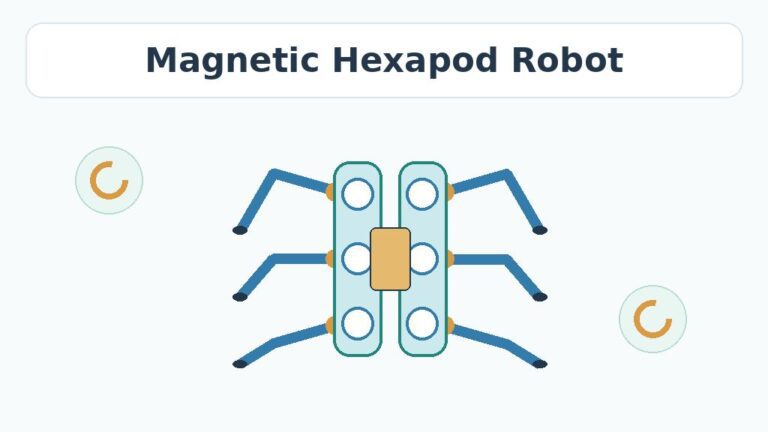
Tiny Six-Legged Robot Uses Magnetic Clutches to Shrug Off Knocks

Light Powered Soft Robot Arm: Algae Bend a Hydrogel With Sunlight
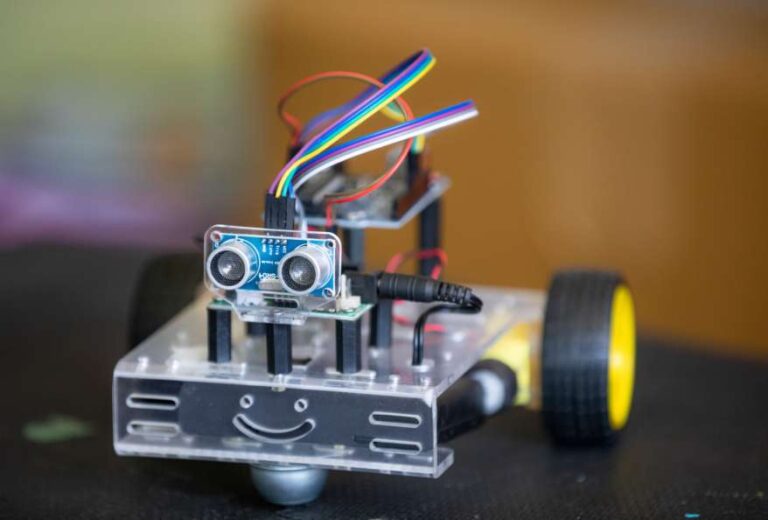
Can a Small Robot Have a Personality? A STEM Sound-Design Challenge
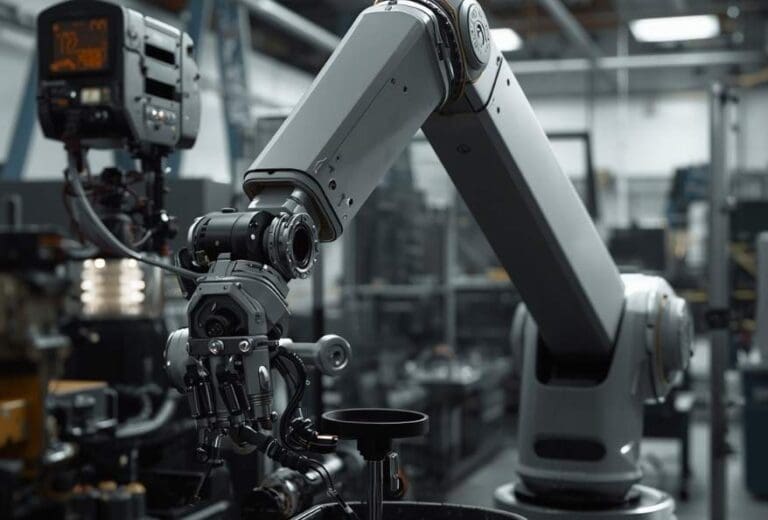
Gemini Robotics-ER 1.6 Is Changing AI Robotics Faster Than You Think

Mobile Robot Motion Control and Path Planning Explained

6 DOF Robotic Arm Design That Transforms Flight Tests

ROS2 Navigation for Quadruped Robots Explained
Adaptive Robotics Lets Machines Learn Movements Instantly
Robotics is an interdisciplinary field that focuses on designing, building, programming, and operating robots. It combines mechanical engineering, electrical engineering, electronics, computer science, and control systems to create machines that can perform physical tasks. Depending on their design, robots can follow programmed instructions, respond to their surroundings, or operate with different levels of autonomy.
Robots are used in manufacturing, healthcare, agriculture, transportation, space exploration, education, and many other fields. Some perform repetitive tasks on production lines, while others assist medical professionals, inspect difficult-to-reach locations, or support scientific research.
At ENTECH STEM Magazine, the Robotics category explores the engineering principles, technologies, applications, and innovations behind modern robotic systems. Readers can discover how robots work, what components make them function, and how robotics is influencing industries and future careers.
Robotics is the science and engineering of developing and using robots. A robot is generally a programmable machine that can perform physical tasks through a combination of mechanical components, sensors, actuators, and control systems.
Unlike a simple machine that performs one fixed mechanical operation, a programmable robot can often be configured to carry out different tasks by changing its instructions or software.
Robots vary widely in their capabilities. Some operate in controlled environments and repeat predefined movements. Others use cameras, sensors, and computing systems to understand their surroundings and adjust their actions.
The level of independence also differs. A remotely operated robot depends on human instructions, while an autonomous robot can make certain decisions based on its programmed goals and sensor information.
Most robotic systems combine hardware and software to sense their surroundings, process information, and perform physical actions.
Sensors collect information about a robot’s environment and internal condition. They help robots detect objects, measure distances, identify movement, and monitor their position.
Common examples include cameras, ultrasonic sensors, infrared sensors, LiDAR, force sensors, temperature sensors, and inertial measurement units.
The information collected by these sensors helps a robot respond to its environment and perform tasks with greater accuracy.
Actuators convert energy into physical movement. They allow robots to rotate joints, move wheels, operate grippers, and control other mechanical components.
Electric motors are widely used in robotics. Pneumatic and hydraulic actuators are also used in selected applications where their characteristics suit the task.
A robot’s control system manages its behaviour by processing information and sending commands to its actuators.
Control systems may use predefined instructions, feedback mechanisms, mathematical models, and real-time sensor information. They help robots maintain position, regulate movement, and respond to changes in their surroundings.
Robotics software defines how a robot behaves and performs tasks. It may include movement planning, navigation, object recognition, sensor processing, and communication with other devices.
Programming languages, robotics frameworks, and simulation environments allow engineers to develop and test robotic applications before deploying them on physical hardware.
Robots can be classified according to their structure, mobility, application, and level of autonomy.
Industrial robots are used in manufacturing and production environments. They perform tasks such as assembly, welding, material handling, painting, packaging, and inspection.
Robotic arms are common examples. They can perform repeated movements with consistent positioning and are often integrated into automated production lines.
Collaborative robots, commonly called cobots, are designed to work alongside people in shared workspaces under suitable safety conditions.
They are used in applications such as assembly, machine tending, packaging, and material handling. Their deployment requires appropriate risk assessment, safety measures, and system integration.
Mobile robots can move through their environment using wheels, tracks, legs, or other movement systems.
They are used in warehouses, hospitals, laboratories, agriculture, and inspection environments. Autonomous mobile robots may use cameras, LiDAR, maps, and navigation algorithms to move between locations.
Humanoid robots are designed with human-like body structures or movement capabilities. Some include a head, torso, arms, and legs, while others reproduce only selected human features.
Researchers study humanoid robotics to understand balance, movement, manipulation, interaction, and the challenges of operating in environments designed for people.
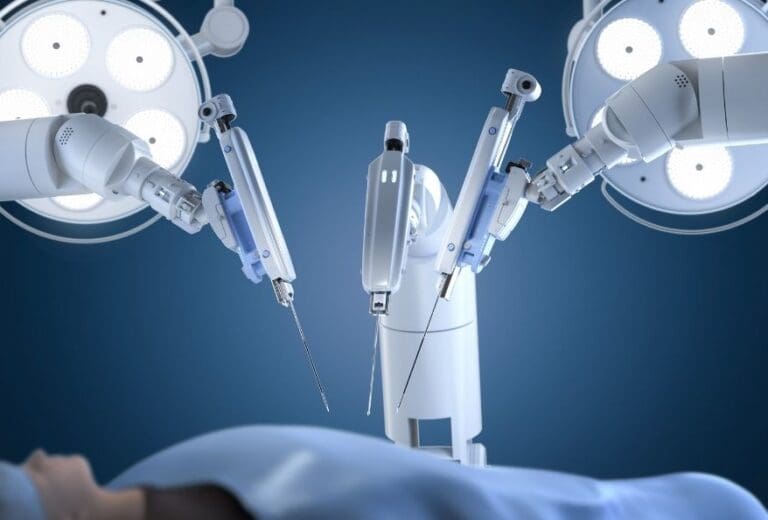
Medical robots support healthcare professionals in areas such as surgery, rehabilitation, patient assistance, and medical training.
Some systems provide precise instrument positioning, while rehabilitation robots help support guided physical exercises. Their design and use must meet relevant medical and safety requirements.
Autonomous robots use sensors, software, and control systems to perform tasks with limited continuous human intervention.
They may navigate changing environments, recognise objects, plan movements, and adjust their behaviour based on incoming information. The degree of autonomy depends on the robot’s design and operating conditions.
Educational robots help students understand programming, electronics, mechanical design, and problem-solving. Research robots provide platforms for testing new algorithms, sensors, control methods, and robotic designs.
They are widely used in schools, universities, engineering laboratories, and robotics competitions.
Modern robotics depends on several supporting technologies that help machines perceive, move, communicate, and make decisions.
Together, these technologies are expanding what robots can do and where they can be deployed.
Robotics has become an important part of modern engineering and industrial development.
Factories use robots for assembly, welding, inspection, packaging, and material handling. Robotic systems can support consistent production and take on repetitive or physically demanding tasks.
Robots assist in surgical procedures, rehabilitation, medical training, laboratory automation, and hospital logistics. Their applications are designed to support healthcare professionals and improve specific processes.
Agricultural robots are used in crop monitoring, harvesting, planting, sorting, and selected farm operations. They can combine sensors, cameras, navigation systems, and automated equipment to support precision agriculture.
Robots help manage warehouse operations, move materials, sort packages, and support inventory management. Autonomous mobile robots are increasingly relevant to logistics environments.
Robotic systems allow researchers to explore environments that are distant, difficult to access, or unsuitable for direct human operation. Space rovers, robotic spacecraft systems, and underwater exploration robots support scientific investigation.
Robotics provides practical opportunities to learn engineering concepts. Students and researchers use robotic platforms to explore coding, electronics, artificial intelligence, control systems, and mechanical design.
Developing reliable robotic systems involves several engineering and practical challenges.
Cost and complexity: Advanced robots can require expensive hardware, specialised components, software, and maintenance.
Navigation and perception: Robots may struggle with changing environments, poor visibility, unexpected obstacles, and incomplete sensor information.
Power and battery life: Mobile robots need efficient energy systems to operate for useful periods without frequent recharging.
Safety and reliability: Robots operating near people must be designed, tested, and integrated with suitable safety measures.
Human-robot interaction: Robots need appropriate interfaces and behaviour when people operate them or share working environments.
Cybersecurity: Connected robotic systems can face digital security risks. Protecting their software, communication systems, and data is important.
Robotics is evolving through advances in artificial intelligence, materials science, sensors, computing, and mechanical engineering.
AI-enabled robots are being developed to recognise objects, understand instructions, and perform tasks in less predictable environments. Soft robotics explores flexible structures and materials that can support new forms of movement and interaction.
Other research areas include swarm robotics, which studies the coordination of multiple robots; bio-inspired robotics, which takes ideas from living organisms; and human-robot interaction, which focuses on how people and robots communicate and work together.
Advances in sensors, batteries, actuators, and computing may also make robotic systems more capable, efficient, and adaptable.
As these technologies develop, robotics is expected to remain important across manufacturing, healthcare, agriculture, research, and other sectors.
Robotics connects ideas from mechanical engineering, electronics, computer science, mathematics, and artificial intelligence. It demonstrates how knowledge from different STEM disciplines can be combined to build machines that interact with the physical world.
Through ENTECH STEM Magazine, readers can explore robotics alongside related subjects such as artificial intelligence, IoT, electronics, automation, computer science, and engineering.
Our goal is to make complex STEM topics easier to understand while introducing readers to the technologies, research developments, and career opportunities shaping the future of robotics.