Today, I want to explain this amazing discovery that finally lets us peek inside a single droplet to uncover its hidden molecular secrets.
Study of Infrared Spectroscopy Applications and Single Droplet Displacement Technique
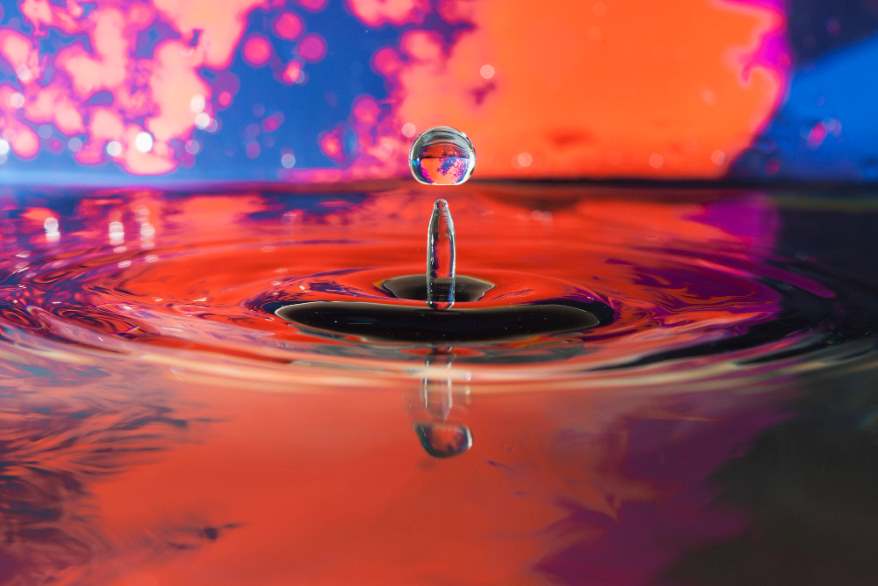
Infrared Spectroscopy Applications: Have you ever looked closely at a tiny speck of morning dew and wondered what secret chemistry happens inside? I certainly have, especially when it rains. For a very long time, everyday people and researchers alike assumed that a microscopic puddle behaved exactly the same as a giant swimming pool or a massive ocean. However, recent studies show that these tiny specks of liquid actually possess unique properties that completely break our traditional scientific rules. In a newly published open-access study in Nature Communications, a team of scientists shared a fascinating new breakthrough. Today, I want to explain this amazing discovery that finally lets us peek inside a single droplet to uncover its hidden molecular secrets.
- Until recently, analyzing the complex chemistry of microscopic liquid droplets was extremely challenging for scientists.
- Researchers faced major limitations because precise spectroscopic measurements on a single, well-defined droplet were difficult to perform.
- Studying individual droplets was almost impossible due to interference from surrounding samples.
- This challenge can be compared to trying to hear a whisper in a noisy, crowded stadium.
Catching Water in Mid-Air
Fortunately, a brilliant group of researchers from places like the University of Southern California and Sandia National Laboratories just changed the scientific game entirely. They recently invented a brand new, highly advanced technique that they proudly call Single Droplet Displacement Infrared Action Spectroscopy. Since that name is quite a mouthful, they simply call it SiDDIRAS for short. To make this incredible idea work in the real world, they built a very special device officially known as a linear quadrupole electrodynamic balance. I like to think of this amazing machine as a science-fiction tractor beam, because it literally catches and traps the floating speck safely right in thin air.
Once the tiny sphere of water is floating securely in place, the real investigative magic finally begins in the laboratory. Next, the research team carefully shoots a special invisible laser, technically known as IR radiation, directly at the trapped liquid. When this laser light hits the water at the exact right resonant frequency, the droplet actually absorbs all that incoming energy and quickly starts to heat up. Consequently, the liquid rapidly experiences a significant amount of mass loss because it violently evaporates into the dry air surrounding it.
Because the droplet loses weight and gets noticeably lighter as it evaporates, something visually amazing happens inside the machine. It physically moves and instantly displaces upwards inside the electrical trap. By carefully tracking this exact upward movement while they slowly change the invisible laser’s frequency, I think it is totally awesome that scientists can essentially draw a highly detailed map. Ultimately, this specific map gives them a beautifully complete IR spectrum picture of that one isolated microscopic sphere.
A Super Salty Surprise
To definitively prove that this awesome new tool actually works correctly, the dedicated team ran a highly fascinating practical test. They successfully trapped an incredibly tiny liquid sphere, measuring only about 8 micrometers wide, and stuffed it full of common salts like sodium chloride and sodium azide. When they tested this salty sphere using their brand new SiDDIRAS method, they observed a very clear shift in the light signals compared to a regular glass of salty water. Specifically, their advanced reading showed a 5 cm-1 blueshift alongside some very significant peak broadening.
Now, what does all that confusing science jargon actually mean for you and me? Well, it provides absolute hard evidence that this tiny floating sphere is actually completely supersaturated with salt. Basically, this means it secretly holds way more dissolved salt inside it than a normal cup of water ever could without the solid salt just sinking to the bottom. Therefore, I strongly believe this exciting result finally proves that tiny suspended drops behave completely differently than normal bulk solutions.
Why Should We Care About This? Infrared Spectroscopy Applications
At this point, you might honestly be asking yourself why any of this tiny science stuff actually matters to everyday average people.
First of all, this amazing experimental tool instantly opens up huge new possibilities for important fields like environmental science, physical physics, and detailed analytical chemistry. By finally understanding exactly how these floating droplets work on a fundamental level, we can hopefully better understand massive things like giant clouds, shifting weather patterns, and even how dangerous pollution travels globally through the air. In the end, this groundbreaking discovery perfectly helps us understand the vast invisible world floating silently all around us every single day.
Additionally, to stay updated with the latest developments in STEM research, visit ENTECH Online.
Reference:
- Khuu, T., Rayaluru, M., Young, B., Singh, P., Palmisano, A. M., Davis, R. D., Davies, J. F., & Dawlaty, J. M. (2026). Single droplet displacement infrared action spectroscopy. Nature Communications. https://doi.org/10.1038/s41467-026-70299-1
- Author
- Latest Posts

I completed my Master of Science from the University of Allahabad in 2017 with a strong academic background in life sciences and chemistry. My specialization included Molecular Biology, Microbiology, Genetics, Plant Breeding, Phycology, Paleobotany, and Bioinformatics, along with Organic Chemistry, Inorganic Chemistry, and Physical Chemistry. This multidisciplinary training provided me with a comprehensive understanding of biological systems and analytical scientific approaches.
After completing my postgraduate studies, I gained valuable professional experience in both the education and social development sectors. I worked at A.M. Oxford Public School, where I was actively involved in guiding students toward academic excellence. In this role, I focused on creating an engaging learning environment, encouraging critical thinking, and nurturing students’ curiosity for scientific learning. My experience as an educator strengthened my communication, mentoring, and classroom management skills.
In addition to my teaching experience, I worked with Jeevan Jagriti Foundation, where I contributed to community-based initiatives aimed at improving educational access and awareness among underprivileged sections of society. Through this work, I participated in programs designed to support social development and promote the value of education in marginalized communities.
These professional experiences helped me develop strong interpersonal, leadership, and organizational skills while reinforcing my commitment to education and community service.