Nanoparticles for Antibiotic resistance These are germs that have learned to survive our best medicines.
Tiny Nano-Soldiers from Nature: How Plant-Loaded Nanoparticles Are Fighting Superbugs
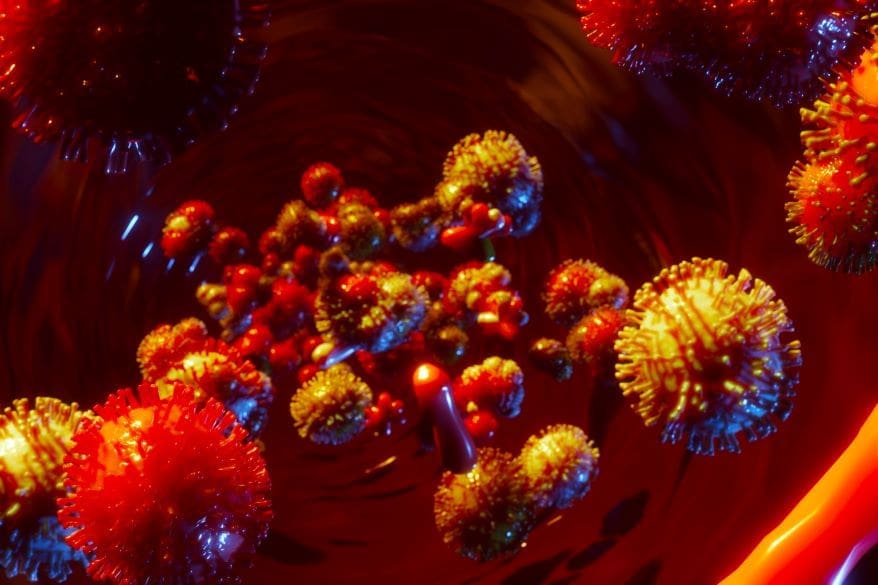
At the present time, one of the scariest problems in medicine is not a new virus. It is a silent, invisible army —Nanoparticles for Antibiotic resistance These are germs that have learned to survive our best medicines. Sooner or later, scientists warn, we may run out of working antibiotics. All things considered, finding a new solution is urgent. That is exactly what a team of researchers from Turkey has done. They used tiny particles — smaller than a human hair — and loaded them with chemicals from a plant. The result? A powerful, smart weapon against a dangerous germ called Staphylococcus aureus.
What Is the Big Problem with Superbugs?
To explain, bacteria form something called a biofilm. Think of biofilm as a sticky, protective shield. Bacteria build this shield on surfaces — even inside your body. It helps them hide from antibiotics. As a matter of fact, Nanoparticles for Antibiotic resistance represents a significant challenge in the treatment of infections, with biofilm formation playing a critical role in this resistance.
Also Read: How Glass is Made from Sand, Soda, and Lime
What Did the Researchers Do?
At first, the team collected a plant called Onosma armenum. This is a wild herb that grows in Turkey. After that, they extracted its chemical compounds. They used a high-tech method called liquid chromatography–electrospray ionization tandem mass spectrometry. This tool identifies every chemical in a sample. To illustrate, it works like a detective that lists every ingredient in a recipe.
The most abundant plant chemicals found were:
- Hesperidin — 14,201 µg per gram of extract
- Chlorogenic acid — 4,390 µg per gram of extract
- Rosmarinic acid — 830 µg per gram of extract
What Are Mesoporous Silica Nanoparticles?
Now, to put it another way, imagine tiny sponges. These sponges are so small that millions fit on a single grain of sand. Scientists call them mesoporous silica nanoparticles, or MSNPs. They have many tiny holes inside them, like a sponge. These holes can hold drugs or plant chemicals. MSNPs were synthesized using a modified MCM-41 method and characterized by N₂ adsorption–desorption tests, scanning and transmission electron microscopy, X-ray diffraction, and Fourier-transform infrared spectroscopy.
So the researchers filled these nano-sponges with the plant extract. With this in mind, they now had a tiny delivery vehicle carrying nature’s chemicals directly to the bacteria.
Also Read: AI Sees Atoms Move! Revolutionizing Nanoparticle Imaging
What Were the Results of Nanoparticles for Antibiotic resistance?
The team tested three things against the dangerous germ S. aureus:
- The plant extract alone
- Empty MSNPs (nanoparticles without extract)
- Extract-loaded MSNPs (nanoparticles filled with the plant extract)
The results were impressive. Biofilm inhibition rates were determined as 31.97% (extract), 72.78% (MSNPs), and 76.49% (extract-loaded nanoparticles) at 2× MIC concentration, while biofilm eradication rates were 23.66%, 36.33%, and 42.27%, respectively.
To enumerate the key findings:
- The extract alone destroyed only 31.97% of the biofilm
- Empty nanoparticles destroyed 72.78% of the biofilm
- The plant-loaded nanoparticles destroyed a remarkable 76.49% of the biofilm
Why Does the Controlled Release Matter?
To rephrase it — imagine a medicine that stays inactive in your bloodstream. It only activates when it reaches the infection site. That is what controlled release means. The Nanoparticles for Antibiotic resistance hold the plant chemicals safely. They release them only in the right place. This reduces side effects. As a result, the treatment becomes more precise and powerful.
Why Should You, as a Student, Care?
All in all, this research connects many subjects you study in school. To list some examples:
- Chemistry — identifying plant chemicals and synthesizing nanoparticles
- Biology — understanding how bacteria form biofilms
- Physics — studying how particles behave at the nanoscale
- Engineering — designing nanoparticle delivery systems
- Material Science — characterizing silica structures
Analogous to how engineers design bridges, nanotechnology researchers design molecular-scale structures to solve medical problems. If you love science and want to change the world, this field is wide open for you.
Also Read: How a New Gene Drive System Could Help Fight Antibiotic Resistance
STEM Career Opportunities in Nanoparticles for Antibiotic resistance
Provided that you are thinking about your future, here are some exciting career paths connected to this kind of research. You can learn more about nanotechnology career paths and career options after 12th Science right here on ENTECH Online.
So far, the field of nanomedicine is growing fast. Career options include:
- Pharmaceutical Scientist — designing drug delivery nanoparticles
- Nanotechnology Engineer — building and testing nanoparticle systems
- Microbiologist — studying bacterial behaviour and resistance
- Biochemist — analyzing plant chemicals and their medicinal value
- Materials Scientist — developing advanced silica and nano-materials
- Biomedical Researcher — testing treatments in the lab and in clinics
Up to this point, many of these jobs did not even exist 20 years ago. The world needs more scientists like you to push this work forward.
What Is Next for This Research?
While it may be true that this study is still at the laboratory stage, its findings are very promising. So long as researchers keep testing and refining these Nanoparticles for Antibiotic resistance, clinical trials could follow. At length, this could lead to real medicines for patients with resistant infections.
With attention to the global threat of antimicrobial resistance, studies like this give us hope. After all, the solution to one of medicine’s biggest problems might come from a wild plant — and a tiny sponge.
References:
- Sevim FeyzaErdoğmuş, NilayIsitez, Emre BurakErtuş, CengizSarikurkcu, ChemistryOpen2026, 15, e202500554. https://doi.org/10.1002/open.202500554
- Author
- Latest Posts

I am an inspirational writer and emerging science blogger with a deep-rooted passion for understanding and sharing the wonders of the world around us. My journey began with a Bachelor of Science in Chemistry from AKI’s Poona College of Arts, Commerce and Science, where I developed not only a strong foundation in scientific principles but also a mindset that values curiosity, observation, and critical thinking. Studying chemistry has taught me to approach problems with logic, to look beyond the obvious, and to see patterns where others might only see complexity. These experiences have shaped the way I perceive life and influence the way I express my thoughts, both scientifically and creatively.
I have always believed that knowledge is only as powerful as the way it is shared. This belief has guided me to create content that bridges the gap between science and everyday life. I aim to simplify complex scientific ideas so they become approachable, relatable, and engaging for everyone—whether someone has a formal background in science or is simply curious about the world. Science, in my view, is not confined to textbooks and laboratories; it is a way of thinking, understanding, and connecting with the world around us. By making science accessible, I hope to inspire curiosity, ignite learning, and encourage people to see the beauty and relevance of scientific discovery in their daily lives.
Alongside my love for science, I am deeply passionate about motivational writing. I believe words carry the power to transform perspectives, encourage self-reflection, and inspire action. By combining analytical thinking with creativity, I create content that is intellectually stimulating yet emotionally resonant. Whether I am breaking down a chemical concept, exploring a scientific phenomenon, or crafting motivational narratives, my goal is to communicate ideas in a way that is clear, meaningful, and impactful.
Through my work, I strive to empower my readers—not just by helping them understand the science around them, but by inspiring them to grow, learn, and realize their full potential. Every article, post, or story I write reflects my commitment to turning knowledge into inspiration. I want to spark curiosity, encourage self-improvement, and show that learning and personal growth are deeply connected. For me, writing is not just a craft; it is a way to touch minds, connect hearts, and make ideas come alive in a way that truly resonates.