Decision-making has shifted from being purely human-driven to a hybrid process in which algorithmic intelligence augments human judgment.
AI Decision Support Systems: How Smart Systems Support Human Choices?
Introduction: AI Decision Support Systems
Artificial Intelligence (AI) has evolved from a computational tool for automation into a sophisticated analytical framework for examining human decision-making and consumer behaviour. Contemporary AI systems process large-scale behavioural data – such as search patterns, purchase histories, mobility traces, and interaction logs – to model consumer preferences, predict choices, and infer latent motivations across digital contexts.
This article conceptualizes the AI Decision Support System as a framework that both interprets and influences consumer choices, highlighting how decision authority is distributed between humans and algorithms. The objective is to elucidate the roles of trust in technology, decision delegation, and perceived human agency in AI-enabled consumer analysis, while outlining how these constructs inform emerging professional pathways at the intersection of artificial intelligence, decision science, and consumer research.
INTELLIGENT DECISION SYSTEMS AND CONSUMER ANALYTICS
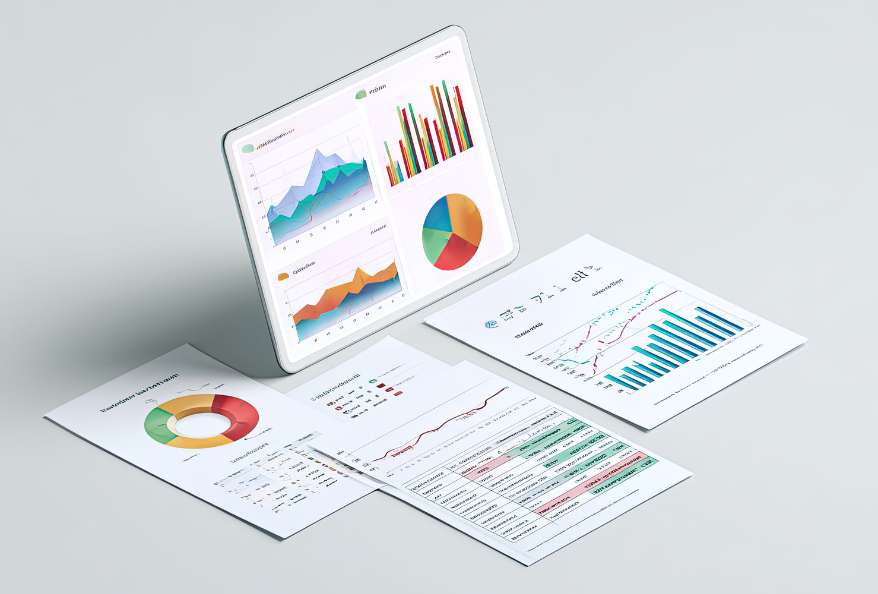
Human–AI Collaborative Decision-Making
Decision-making has historically been grounded in individual cognition, social influence, and experiential learning, with consumers relying on personal heuristics, peer advice, and repeated trial-and-error to arrive at choices. The proliferation of artificial intelligence has fundamentally transformed this process by enabling decisions to be informed by large-scale, real-time behavioural data. Contemporary AI systems are capable of processing vast and heterogeneous data sources—such as browsing behaviour, transaction histories, geolocation patterns, sentiment signals, and physiological indicators—to detect latent structures in consumer preferences and predict future choices with increasing precision. As a result, decision-making has shifted from being purely human-driven to a hybrid process in which algorithmic intelligence augments human judgment.
AI Decision Support Systems
Within this hybrid framework, AI does not function as a replacement for human decision-making but as a decision-support and decision-shaping system. By generating personalized recommendations, forecasting outcomes, and automating low-involvement or repetitive decisions, AI reduces cognitive load while enhancing decision quality. In online retail environments, for instance, recommendation algorithms dynamically adapt product assortments and pricing in response to individual consumer behaviour. In travel and mobility platforms, AI systems optimize itineraries, demand forecasting, and capacity allocation in real time. In healthcare and wellness applications, AI-driven systems analyze behavioural and biometric data to support personalized interventions related to physical activity, sleep, and preventive care. What makes these applications particularly compelling is their adaptive nature: AI systems continuously learn from consumer responses, thereby refining both predictions and interventions over time.
Balancing Algorithmic Efficiency and Human Agency
Central to the effectiveness of AI-driven decision systems is the role of trust and decision delegation. Consumers are more inclined to rely on algorithmic recommendations when AI systems are perceived as competent, transparent, and aligned with user interests. Importantly, even as consumers delegate certain decision components to AI, they seek to preserve a sense of autonomy or perceived agency. This perceived agency—the belief that one retains meaningful control over final outcomes—plays a critical role in determining satisfaction, acceptance, and long-term engagement with AI-enabled platforms. For practitioners, designing AI systems that balance efficiency with user agency is therefore a central strategic challenge. Understanding consumer behaviour is essential within this context because AI systems derive their predictive power from behavioural regularities and psychological patterns embedded in data. Without a robust conceptual grounding in how consumers form preferences, evaluate alternatives, and respond to influence, AI risks becoming a purely technical solution detached from human realities.
Marketing and Analytics Professionals
For marketing practitioners, AI-driven decision systems provide unprecedented opportunities to move beyond aggregate segmentation toward real-time, individualized engagement. Marketers can identify micro-moments of decisions, tailor consumer intent, and optimize customer journeys. This shift enables marketing to become more anticipatory, adaptive, and outcome-oriented.It may be cautiously suggested that e-commerce platforms, marketing and business consultancies, and information technology firms may integrate behavioural science with advanced analytics to support strategic decisions at scale, demonstrating the growing demand for professionals who can bridge AI capabilities with consumer insight.
For aspiring AI practitioners, this convergence of artificial intelligence and consumer behaviour represents a particularly compelling domain. It offers opportunities to work at the intersection of data science, psychology, and strategic decision-making, where technical expertise must be complemented by an understanding of human judgment and ethical responsibility. As AI continues to permeate everyday decisions, professionals who can design systems that are not only intelligent but also human-centered will play a critical role in shaping the future of digital markets and consumer experiences.
Educational Opportunities in AI Decision Support System
Artificial intelligence, marketing analytics, and consumer psychology can be integrated through both formal and experiential learning. In the AI domain, beyond traditional science and management programs, specialized courses in reinforcement learning for human–AI interaction, computational behavioural modeling, explainable AI, and affective computing provide insights into how algorithms can predict, influence, and adapt to human decisions. Students can also engage with research labs focusing on human-in-the-loop AI (IBM), decision support systems, and adaptive recommendation engines, which simulate real-world consumer scenarios and emphasize ethical, transparent AI design. Technical proficiency is enhanced by hands-on exposure to advanced tools such as PyTorch for deep learning, TensorFlow Extended for production-level pipelines, NLP frameworks for sentiment and intent analysis, and causal inference libraries for understanding behaviour-driven outcomes.
Marketing analytics programs focus on predictive consumer journey mapping, multi-touch attribution, and real-time engagement optimization, combining statistical rigor with AI-driven insights. Practical training often includes proprietary datasets or industry collaborations, enabling students to convert behavioural data into actionable strategies. Consumer psychology, through digital experience labs, neuromarketing, and emotion-driven decision analysis, helps students understand the cognitive and affective drivers of choice, ensuring AI interventions remain human-centered and ethically responsible.
This convergence of AI, analytics, and behavioural science forms a cutting-edge foundation for careers in strategy, consulting, and applied consumer intelligence.
AI Decision Support System: Career Path

The career landscape for professionals in AI-driven decision systems is rapidly expanding across sectors such as technology, healthcare, finance, travel, and e-commerce, reflecting the increasing demand for expertise at the intersection of artificial intelligence, consumer behaviour, and strategic decision-making. Entry-level roles include AI Analyst, Data Analyst, Junior Machine Learning Engineer, and Business Intelligence Associate, where professionals gain experience in predictive modeling, behavioural data analysis, and decision-support applications. With experience, career progression can lead to positions such as AI Product Manager, Decision Scientist, Human–AI Interaction Designer, AI Ethics Consultant, or Research Scientist, combining technical proficiency with insights into human decision-making. Practitioners design systems that enhance human choices, ensure algorithmic fairness, and study human–AI interaction. Funded research opportunities span smart healthcare, personalized education, ethical AI, and sustainable tourism. Leading employers include global technology firms, healthcare and travel platforms, consultancies, research institutes, and government organizations. This field offers globally relevant, high-impact careers for professionals bridging AI and human behaviour.
AI Decision Support System: Conclusion
To build a career in AI as a decision partner, students should follow a structured, actionable strategy that balances learning, practice, and exposure. The career plan in AI-supported consumer decision systems can be organized into three progressive tiers: Foundation (Learning), Hands-On Practice, and Exposure & Application.
Tier 1 – Foundation (Learning)
Key Reads:
AI fundamentals, Human–AI Interaction, Consumer Psychology, Decision Science, AI Ethics
Relevant Degrees:
- B.Tech / B.E. in Artificial Intelligence, Computer Science, Data Science
- B.Sc. in Cognitive Science, Statistics, Mathematics
- M.Tech / M.Sc. in AI, Machine Learning, Data Analytics
- MBA specialization in Business Analytics
Courses / Certifications:
- Online MOOCs,
- AI bootcamps,
- coding academies,
- professional certifications
Technical Skills:
- Python,
- R,
- SQL,
- TensorFlow,
- PyTorch,
- Excel,
- decision-support systems
Conceptual & Analytical Skills:
- Data analysis,
- problem-solving,
- human–AI interaction,
- ethical reasoning
Tier 2 – Hands-On Practice
DIY Projects:
- Recommendation engines,
- chatbots,
- predictive models,
- analytics dashboards
Portfolio Building:
- Document projects,
- GitHub repositories,
- case studies
Competitions:
- Hackathons,
- AI challenges,
- science fairs.
Tier 3 – Exposure & Application
Visits:
- Labs, startups,
- universities,
- research centers
Internships / Sponsored Projects:
- Industry collaboration,
- research projects
Networking:
- Webinars,
- workshops,
- mentorships
Human-Centered Skills:
- Ethics,
- empathy,
- analytical thinking
Additionally, to stay updated with the latest developments in STEM research, visit ENTECH Online. Basically, this is our digital magazine for science, technology, engineering, and mathematics. Further, at ENTECH Online, you’ll find a wealth of information.
Reference:
- https://doi.org/10.1016/j.sasc.2025.200397
- https://link.springer.com/article/10.1007/s10660-025-10063-7
- Author
- Latest Posts

Dr. Harsha Sheelam (PhD) is a scholar and practitioner specializing in marketing and strategy. Her first stream of research advances theoretical and practical understanding in the domain of consumer behaviour, emphasising on consumer well-being. Her second research stream integrates perspectives from marketing and strategy. She has published papers and book chapters recognised by the Indian Council for Social Science Research (ICSSR), Scopus, Web of Science, UGC, and ABDC. She holds a Bachelor’s and Master’s degree in Business Administration, and a Doctorate (PhD) in Marketing & Strategy.
In addition to her academic contributions, Dr. Sheelam has authored numerous editorials on topics ranging from sustainable innovation and AI to economic policy, business strategy and education. Notable publications include “How metropolitan wealth is skewing national inflation” “Is Biomimicry Key to India’s Sustainable Future?”, “Materialising Maritime Vision by 2030”, “Parallel Universe: Women, Policies and Growth in Manufacturing Sector”, “What’s the Right Way of Adapting AI?”, “Waste-to-Resource industry: Best CSR option to create wealth”, and “It’s not STEM, it’s ESTEEM” among others. She serves as a visiting faculty member at Pondicherry University, Port Blair, Andaman and Nicobar Islands, India, and consults on digital brand experience for an Island tourism brand.
LinkedIn: https://www.linkedin.com/in/harshasheelam/
Email: [email protected]