Discover AI-driven pharmacy practice and medication management the strategic integration of Artificial Intelligence (AI) ..
AI-Driven Pharmacy and Intelligent Medication Management

AI-Driven Pharmacy
Think of Artificial Intelligence (AI) as a super-powered assistant for pharmacists that never gets tired. Instead of pharmacists spending all their time on repetitive tasks like sorting pills or double-checking paperwork, AI uses smart “learning” programs to handle the heavy lifting. This technology can predict which medicines will work best for a specific person, catch dangerous drug combinations before they happen, and make sure patients get their treatments faster. It’s moving pharmacy care away from a “one-size-fits-all” approach to a high-tech system that is safer, more accurate, and focused on the unique needs of every patient.
From Manual to Machine Learning
Traditional pharmacy relies on manual checks and rigid software. AI uses algorithms that learn from vast amounts of health data. This means the system gets smarter over time, identifying patterns in patient health that a human might miss.
Personalized Medicine
AI analyzes a patient’s genetic makeup and medical history to suggest the exact dose and type of medication that will be most effective for them. This reduces trial-and-error in prescribing.
Predictive Analytics
By looking at data, AI can predict which patients are at high risk of missing their doses or experiencing side effects. This allows pharmacists to step in early and provide extra support.
Automated Workflows
AI-driven systems handle inventory, billing, and even high-speed pill dispensing. This frees up pharmacists to spend more time talking to patients and providing direct clinical care.
Enhanced Precision
Humans can make mistakes during long shifts. AI maintains 100% precision in checking drug-to-drug interactions and dosages, significantly reducing the chances of medication errors that could harm patients.
Also read :Haloalkanes and Haloarenes
Practical Usage
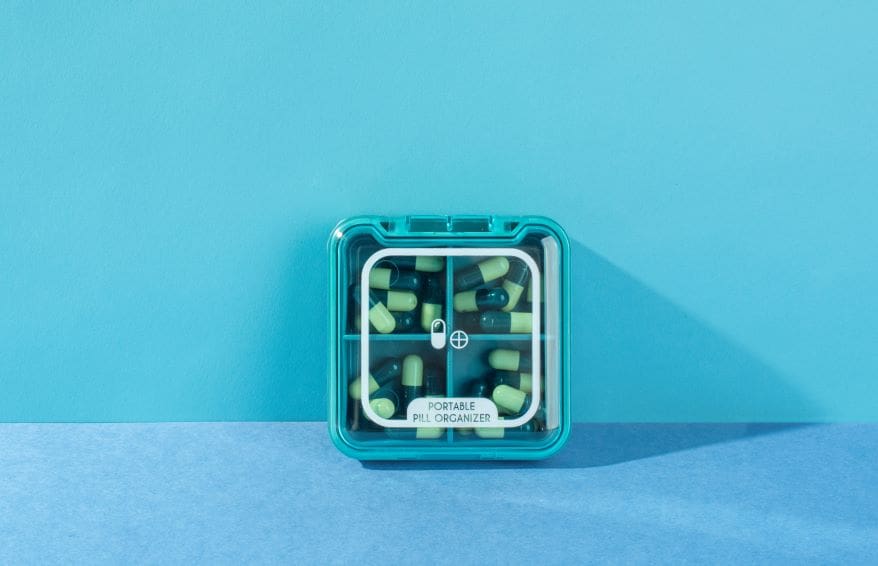
AI innovations have several immediate applications that affect daily life for both patients and healthcare providers:
Medication Adherence of AI-Driven Pharmacy Practice & Medication Management: Tools like smart pillboxes with sensors and mobile apps (e.g., Ai Cure) use facial recognition to confirm patients have swallowed their medication, which is vital for managing chronic conditions.
Patient Support: Chatbots such as “Vik” provide 24/7 educational content and reminders for breast cancer patients, while platforms like Quit Coach offer tailored support for smoking cessation.
Pharmacy Operations: Moreover, Robotic dispensers (like Fred AID or TUG) automate the retrieval and packaging of drugs, reducing human error and wait times.
Lifestyle Management: AI-driven tools can generate both personalized diet plans and nutritional interventions based on a patient’s unique medical history and genetic makeup.
Commercialization Prospectus
While many AI applications are already commercially available, the widespread adoption of standardized AI frameworks is a progressive journey. Systems like the Medi mat robot and LEAFIO inventory management of AI in Pharmacy are already in use in various hospital and retail settings. The International Pharmaceutical Federation (FIP) formally adopted a comprehensive Statement of Policy on AI in pharmacy in August 2025. Signalling a global push toward commercial and clinical standardization. Broader implementation is aligned with the 2030 Agenda for Sustainable Development. Aiming for a fully digitally enabled pharmaceutical workforce within the next decade.
Educational and Career Opportunities
As AI redefines the industry, students can pursue several emerging career paths that combine pharmaceutical expertise with data science:
Pharmacy Informatics: A growing specialization focusing on the integration of data and technology to improve medication safety.
AI Trainers and Algorithm Auditors: Professionals who teach AI in pharmacy systems. How to handle therapeutic nuances and monitor them to ensure they remain unbiased and safe.
Medical Data Science Liaisons: A role that bridges the gap between clinical pharmacy and complex data analysis.
Pharmacogenomics Researchers: Students can specialize in using AI in pharmacy to analyse genetic data to predict how individuals will respond to specific drugs. A core component of precision medicine.
Digital Transformation Leads: As a result, Leaders who manage the transition from manual to AI in pharmacy workflows in healthcare settings.
The integration of AI in pharmacy is like a GPS for a driver; it does not replace the driver (the pharmacist) but provides vast data and real-time insights to find the safest and most efficient route for the passenger (the patient). Broader implementation is aligned with the 2030 Agenda for Sustainable Development, aiming for a fully digitally enabled pharmaceutical workforce within the next decade.
Additionally, to stay updated with the latest developments in STEM research, visit ENTECH Online.
Reference
Alam, A., Shah, S. S., Rabbani, S. A., & El-Tanani, M. (2025). The Role of Artificial Intelligence in Pharmacy Practice and Patient Care: Innovations and Implications. Bio Med Informatics, 5(4), 65. https://doi.org/10.3390/biomedinformatics5040065
Disclaimer: We do not intend this article/blog post to provide professional, technical, or medical advice. Therefore, please consult a healthcare professional before making any changes to your diet or lifestyle. In fact, we use AI-generated images for illustration and decoration. Their accuracy, quality, and appropriateness can differ. So, users should avoid making decisions or assumptions based only on the text and images.
- Author
- Latest Posts

I am an inspirational writer and emerging science blogger with a deep-rooted passion for understanding and sharing the wonders of the world around us. My journey began with a Bachelor of Science in Chemistry from AKI’s Poona College of Arts, Commerce and Science, where I developed not only a strong foundation in scientific principles but also a mindset that values curiosity, observation, and critical thinking. Studying chemistry has taught me to approach problems with logic, to look beyond the obvious, and to see patterns where others might only see complexity. These experiences have shaped the way I perceive life and influence the way I express my thoughts, both scientifically and creatively.
I have always believed that knowledge is only as powerful as the way it is shared. This belief has guided me to create content that bridges the gap between science and everyday life. I aim to simplify complex scientific ideas so they become approachable, relatable, and engaging for everyone—whether someone has a formal background in science or is simply curious about the world. Science, in my view, is not confined to textbooks and laboratories; it is a way of thinking, understanding, and connecting with the world around us. By making science accessible, I hope to inspire curiosity, ignite learning, and encourage people to see the beauty and relevance of scientific discovery in their daily lives.
Alongside my love for science, I am deeply passionate about motivational writing. I believe words carry the power to transform perspectives, encourage self-reflection, and inspire action. By combining analytical thinking with creativity, I create content that is intellectually stimulating yet emotionally resonant. Whether I am breaking down a chemical concept, exploring a scientific phenomenon, or crafting motivational narratives, my goal is to communicate ideas in a way that is clear, meaningful, and impactful.
Through my work, I strive to empower my readers—not just by helping them understand the science around them, but by inspiring them to grow, learn, and realize their full potential. Every article, post, or story I write reflects my commitment to turning knowledge into inspiration. I want to spark curiosity, encourage self-improvement, and show that learning and personal growth are deeply connected. For me, writing is not just a craft; it is a way to touch minds, connect hearts, and make ideas come alive in a way that truly resonates.