This study examined how extrafloral nectaries (EFNs) on Senna mexicana var. chapmanii influence arthropod communities in a semi-natural field setting in southern Florida.
Ant-Plant Mutualisms Mediated by Extrafloral Nectaries
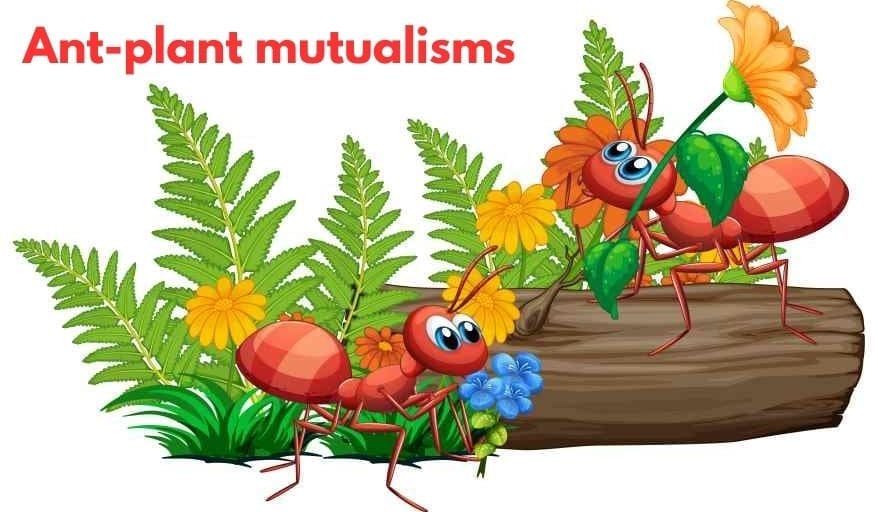
Ant-plant mutualisms are key ecological interactions in which plants provide resources to ants in exchange for protection against herbivores. This study examined how extrafloral nectaries (EFNs) on Senna mexicana var. chapmanii influence arthropod communities in a semi-natural field setting in southern Florida. Researchers manipulated ant access and EFN availability, monitoring insect populations over six months. Results showed that ants significantly reduced late-instar caterpillar herbivores, demonstrating a defensive benefit to the plant. However, ant presence also reduced numbers of other predatory arthropods, revealing ecological trade-offs. Overall, EFN-mediated ant attendance decreased herbivory while reshaping the broader arthropod community structure.
key Takeaways
- EFNs, for instance, secrete sugar-rich nectar on leaves and stems. Consequently, this attracts ants, which then defend plants from herbivores. Thus, these structures enable protective mutualisms and Ant-plant mutualisms, enhancing plant survival through indirect defense strategies.
- For instance, plants manipulate ant partners via EFN chemistry and secretion rates, favoring mutualistic over parasitic ants through competition-based screening.
- Research shows larger EFNs boost nectar production post-herbivory, drawing dominant protective ants while minimizing costs.
- Extrafloral nectar–ant interactions, as part of Ant-plant mutualisms, can boost photosynthesis by reducing herbivory. Moreover, they diminish pathogen pressure. Additionally, outcomes vary with environmental context, meaning benefits to plant survival and reproduction are conditional rather than universal. Consequently, plants experience context-dependent gains in fitness.
Experimental Investigation of Ant-Plant Mutualisms and Their Ecological Dynamics
The sources describe an experimental investigation into fundamental ecological interactions involving plants, ants, and herbivores, not a marketable product or consumer-ready innovation. This work centers on Ant-plant mutualisms and their ecological dynamics.
Also read: The Importance of Biology in Understanding Life
Hands-On Applications
The findings from basic research on Extrafloral Nectaries (EFNs) and Ant-plant mutualisms offer valuable insights, particularly in agricultural and ecological contexts. These could inspire practical applications like enhanced pest control.
Everyday Benefits
Natural pest control via EFNs attracts ants as bodyguards, removing pierid caterpillars from Senna chapmanii. Ant exclusion boosts spiders/wasps but raises virus risks from midges.
Biotechnological and Commercial Applications in Agriculture and Pharmacology
The 2015 study reveals ant-plant mutualisms with biotech potential, Commercial paths: 1) Biocontrol via EFN-attracted ants; 2) Crop yield boosts; 3) Inducible defenses; 4) Neuroactive metabolites for pharma.
Upcoming investigation
Future EFN-ant plant mutualism research targets flowering dynamics, ant foraging, and defense costs Key areas: ants’ impact on S. chapmanii fitness; colony-level studies; fire ant nest clustering; caterpillar secretions; midge virus transmission; and ecological trade-offs in multi-partner systems.
Conclusion
The study demonstrates that ants attracted to extrafloral nectaries on Senna mexicana var. chapmanii provide a measurable defensive benefit by reducing herbivore (especially caterpillar) damage, confirming key roles of ant-plant mutualisms in plant defense. Although ant presence altered the broader arthropod community by suppressing some non-ant predators, plants benefited overall from ant attendance. These results highlight the complex ecological dynamics of facultative ant-plant mutualisms and their importance in shaping multitrophic interactions.
FAQs
What are extrafloral nectaries (EFNs) in plant-insect interactions?
EFNs are nectar-secreting structures on leaves or stems that attract ants, providing food in exchange for protection against herbivores in ant-plant mutualisms.
How do plants benefit from ant-plant mutualisms via EFNs?
Ants patrol plants, reducing herbivory and pathogens; mutualistic ants boost photosynthesis and leaf health compared to parasitic ones.
What research highlights EFN-mediated partner manipulation?
Studies show plants increase EFN secretion post-herbivory to favor protective dominant ants, creating positive feedback for better defense outcomes
Additionally, to stay updated with the latest developments in STEM research, visit ENTECH Online.
Reference
Koptur, S., Jones, I. M., & Peña, J. E. (2015). The influence of host plant extrafloral nectaries on multitrophic interactions: an experimental investigation. PLoS ONE, 10(9), e0138157. https://doi.org/10.1371/journal.pone.0138157
- Author
- Latest Posts

I completed my Master of Science from the University of Allahabad in 2017 with a strong academic background in life sciences and chemistry. My specialization included Molecular Biology, Microbiology, Genetics, Plant Breeding, Phycology, Paleobotany, and Bioinformatics, along with Organic Chemistry, Inorganic Chemistry, and Physical Chemistry. This multidisciplinary training provided me with a comprehensive understanding of biological systems and analytical scientific approaches.
After completing my postgraduate studies, I gained valuable professional experience in both the education and social development sectors. I worked at A.M. Oxford Public School, where I was actively involved in guiding students toward academic excellence. In this role, I focused on creating an engaging learning environment, encouraging critical thinking, and nurturing students’ curiosity for scientific learning. My experience as an educator strengthened my communication, mentoring, and classroom management skills.
In addition to my teaching experience, I worked with Jeevan Jagriti Foundation, where I contributed to community-based initiatives aimed at improving educational access and awareness among underprivileged sections of society. Through this work, I participated in programs designed to support social development and promote the value of education in marginalized communities.
These professional experiences helped me develop strong interpersonal, leadership, and organizational skills while reinforcing my commitment to education and community service.