Arctic Overturning Circulation drives water mass transformation, heat exchange, and global climate regulation.
Water Transformation, Transport Pathways, and Timescales in the Arctic Overturning System
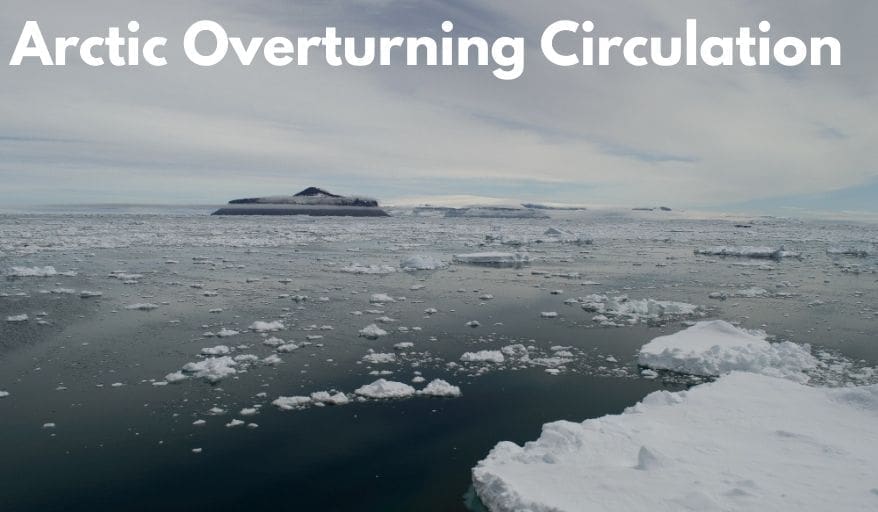
Arctic overturning circulation, a vital ocean current system, is disrupted amid a big problem scientists just found in our oceans: large areas are losing oxygen. This process, called ocean deoxygenation, is driven by climate change and pollution. Fish and crabs need oxygen to breathe, so without it, they must move or die. Researchers recently tested new sensors to track this change, and their findings help us protect marine life.
Key Careers in Oceanography
- Physical Oceanographer
- Chemical Oceanographer
- Biological Oceanographer (Marine Biologist)
- Geological Oceanographer (Marine Geologist)
- Climate Oceanographer
Advancing Deep-Ocean Oxygen Measurements in the Arctic Overturning Circulation
Prior to this study, measuring oxygen deep down was hard. Ships are very expensive to run. They also cannot stay in one spot for long. Scientists now use autonomous underwater vehicles. These robots swim on their own for months. They carry optical sensors to measure water chemistry. At the present time, these robots provide the best data.
So as to improve accuracy, researchers tested a new calibration method. They compared robot data to ship-based samples. While this may be true, the robots proved to be very reliable. They can reach depths of two kilometers. This is vital for oceanography students to understand. You can learn more about STEM careers in marine tech.
Why Does Oxygen Matter?
To explain, low oxygen creates dead zones. These zones harm fisheries and local economies. At the same time, the ocean absorbs heat from the atmosphere. Warm water holds less gas than cold water. As a result, the oxygen levels drop as the planet warms. This study focused on the North Atlantic. It is a key area for carbon storage.
In fact, tracking these levels helps predict future weather. To point out, every second breath you take comes from the sea. With this in mind, we must monitor ocean health closely. Technology is the only way to do this at scale. All in all, we need more engineers to build these tools.
Career Paths in Marine Engineering
Are you interested in robotics or environmental science? This field needs your help. To illustrate, you could design the next generation of undersea drones. So far, we have only mapped a small part of the ocean. To list, careers include marine biology, data science, and sensor engineering.
Provided that you like math and nature, this is for you. In similar fashion, coding is now vital for earth sciences. At this time, demand for green tech jobs is growing fast. To sum up, your skills can help save the planet. Check out these science projects to get started.
The Role of Global Data
By and large, science is a global effort. This paper used data from the Argo program. This program uses thousands of floating sensors. In reality, no single nation can do this alone. To that end, scientists share data across borders. So long as we cooperate, we can solve big problems.
What’s more, this data is free for everyone. At length, this allows students to do their own research. All things considered, the transparency of open-access science is great. Summing up, the ocean is changing quickly. As has been noted, we must act now to study it.
What the Future Holds
After all, the ocean regulates our entire climate. Vis a vis the land, the sea is much larger. With attention to detail, scientists found specific oxygen trends. To rephrase it, some areas are losing air faster than others. At any rate, the new sensors work well.
In short, the study confirms our tech is getting better. To be sure, there is still much to learn. After that, we must reduce carbon emissions. To this end, technology and policy must work together. At last, we have the tools to see the invisible.
A Call to Young Scientists
Seeing that you are the future, stay curious. As an illustration, simple questions lead to big discoveries. By all means, look into oceanic research programs. With this intention, you can make a real difference. In conclusion, the sea is calling for new experts.
To repeat, the study shows that innovation is key. So that we can protect nature, we must measure it. This time, the results are very clear. To put it differently, our blue planet needs a checkup. In the end, science gives us hope for the future.
Additionally, to stay updated with the latest developments in STEM research, visit ENTECH Online.
Reference
Dörr, J., Mans, C., Årthun, M., Döös, K., Evans, D. G., & He, Y. (2026). The Arctic overturning circulation: transformations, pathways and timescales. Ocean Science, 22(1), 565–585. https://doi.org/10.5194/os-22-565-2026
- Author
- Latest Posts
I completed my Master of Science from the University of Allahabad in 2017 with a strong academic background in life sciences and chemistry. My specialization included Molecular Biology, Microbiology, Genetics, Plant Breeding, Phycology, Paleobotany, and Bioinformatics, along with Organic Chemistry, Inorganic Chemistry, and Physical Chemistry. This multidisciplinary training provided me with a comprehensive understanding of biological systems and analytical scientific approaches.
After completing my postgraduate studies, I gained valuable professional experience in both the education and social development sectors. I worked at A.M. Oxford Public School, where I was actively involved in guiding students toward academic excellence. In this role, I focused on creating an engaging learning environment, encouraging critical thinking, and nurturing students’ curiosity for scientific learning. My experience as an educator strengthened my communication, mentoring, and classroom management skills.
In addition to my teaching experience, I worked with Jeevan Jagriti Foundation, where I contributed to community-based initiatives aimed at improving educational access and awareness among underprivileged sections of society. Through this work, I participated in programs designed to support social development and promote the value of education in marginalized communities.
These professional experiences helped me develop strong interpersonal, leadership, and organizational skills while reinforcing my commitment to education and community service.