Exploring the Role of a Mechatronics Engineer: A Guide for High Schoolers
Mechatronics is a multidisciplinary field that integrates various fields to create innovative solutions.
Exploring the Role of a Mechatronics Engineer: A Guide for High Schoolers
Mechatronics Engineering is an interdisciplinary branch of engineering that combines mechanical engineering, electronics, computer science and control systems. It focuses on designing and developing intelligent machines and products that can sense their surroundings, process information and perform specific actions.
Many modern technologies depend on mechatronics. Industrial robots, automated production lines, smart appliances, electric vehicle systems and medical equipment all use combinations of mechanical components, electronic circuits, sensors and software.
Unlike traditional engineering disciplines that may focus on one area, mechatronics brings different technologies together during the design process. This integrated approach helps engineers develop products that are more precise, adaptable and efficient.
As industries adopt robotics, artificial intelligence and smart manufacturing, mechatronics engineering is becoming increasingly important. At ENTECH STEM Magazine, explore the concepts, applications and innovations behind this exciting engineering discipline.
Mechatronics engineering combines several technical fields to develop systems that can perform complex tasks through coordinated hardware and software.
Mechanical engineering provides the physical foundation of a mechatronic system. It includes the design of structures, mechanisms, gears, linkages and moving components.
Engineers study how forces, motion and mechanical properties affect system performance. They also consider material selection, strength, friction and reliability when designing machines.
For example, a robotic arm requires carefully designed joints and mechanical links to move accurately and perform its intended tasks.
Electronic and electrical components allow mechatronic systems to receive signals, process information and control physical devices.
Circuits, power supplies, motor drivers and electronic interfaces help connect sensors and actuators with control hardware. These components are essential for coordinating the different parts of an intelligent machine.
Sensors detect changes in the surrounding environment or within a machine. They can measure physical quantities such as temperature, pressure, position, speed, distance and force.
A transducer converts a physical quantity into a measurable signal. This information allows a controller to understand what is happening inside a system and decide whether an adjustment is needed.
For example, a distance sensor can help a robot detect an object, while a temperature sensor can monitor the operating conditions of equipment.
Actuators convert control signals into physical actions. They may produce movement, force or another change in a system.
Electric motors, servo motors, stepper motors, hydraulic actuators and pneumatic actuators are common examples. Motion control systems regulate how these components move, including their speed, direction and position.
Microcontrollers are compact computing devices used to control specific functions within electronic products and machines. They process information from sensors and generate commands for connected components.
Embedded systems combine hardware and software to perform dedicated tasks. They are widely used in robots, appliances, automotive systems and industrial equipment.
Programming and communication technologies allow these systems to coordinate different operations and respond to changing conditions.
Control systems regulate how machines and processes behave. An open-loop system operates without using feedback about its output, while a closed-loop system measures its performance and adjusts its operation based on the difference between the desired and actual results.
Proportional-Integral-Derivative (PID) controllers are commonly used in applications that require accurate control of temperature, speed, position or other variables.
Mechatronics engineering has applications across manufacturing, transportation, healthcare, agriculture and consumer technology.
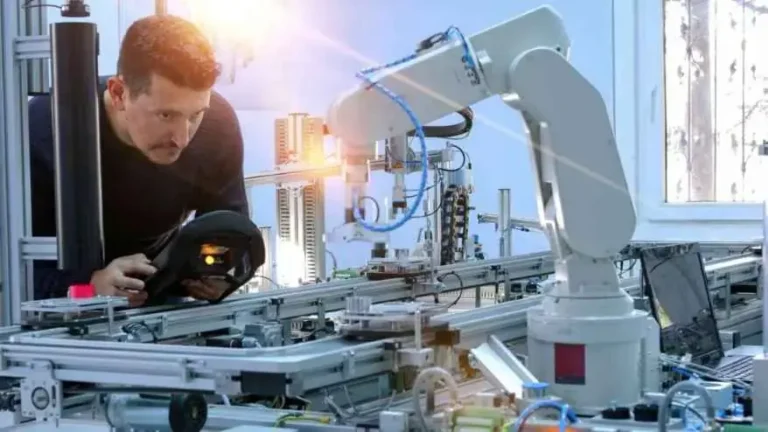
Industrial robots combine mechanical structures, motors, sensors and computer-based controllers. They can perform repetitive tasks such as assembly, material handling, inspection and packaging.
Mechatronics engineers help integrate these components so that robotic systems can perform their intended functions accurately and consistently.
Automation also uses programmable controllers, sensors and connected machinery to coordinate production activities.
Modern vehicles use many mechatronic systems. Examples include anti-lock braking systems, electronic stability control, automatic transmission controls and electronic steering assistance.
Electric vehicles also depend on electric motors, power electronics, battery monitoring and thermal management systems. These technologies combine mechanical, electrical and computing principles.
Everyday products increasingly contain intelligent electronic and mechanical components. Washing machines, automatic doors, cameras, printers and smart appliances use sensors and controllers to perform specific functions.
Mechatronics helps engineers develop products that can respond to user inputs and changing operating conditions.
Medical equipment often combines mechanical movement, electronic measurement and computer-based control. Examples include automated laboratory instruments, rehabilitation equipment, patient monitoring systems and robotic-assisted medical devices.
Mechatronics engineers contribute to the design of systems that require accurate movement, reliable measurements and coordinated operation.
Aircraft and other transportation systems use sensors, actuators and control technologies to monitor and regulate mechanical functions.
Mechatronics principles are applied in flight-control components, automated inspection systems, navigation equipment and other integrated technologies.
Modern manufacturing facilities increasingly use connected machines, automated inspection systems and computer-controlled production equipment.
Mechatronics engineers help integrate mechanical equipment with electronics, software and control systems. This supports more flexible production processes and better monitoring of manufacturing operations.
Developments in computing, sensing and automation are creating new possibilities for mechatronic systems.
Artificial intelligence allows machines to analyse information and make decisions based on data. When combined with sensors, actuators and control systems, AI can support robots that respond more effectively to changing environments.
Applications include machine vision, automated inspection, intelligent manufacturing and adaptive systems.
The Internet of Things connects physical devices through digital networks. In industrial environments, connected sensors and machines can share information about equipment conditions and operating performance.
Mechatronics engineers help integrate the sensing hardware, embedded systems and communication technologies needed for connected products and industrial equipment.
A digital twin is a digital representation of a physical machine, product or process. It can use operational data to help engineers understand performance and evaluate possible changes.
Simulation tools also allow engineers to test mechanical designs, control strategies and system behaviour before building physical prototypes.
Collaborative robots, often called cobots, are designed to work alongside people in suitable industrial environments. They can support tasks such as assembly, handling and inspection.
Their development requires the integration of mechanical design, sensing, motion control and software. Engineers also consider system reliability and appropriate safety measures.
Autonomous systems use sensors, computing and control technologies to perform tasks with varying levels of human supervision.
Examples include mobile robots, automated guided vehicles and intelligent industrial equipment. Mechatronics provides many of the hardware and control foundations required to develop these systems.
Mechatronics engineering may interest students who enjoy mathematics, physics, electronics, programming, robotics and practical problem-solving. It is particularly suitable for learners who want to understand how different engineering disciplines work together.
Undergraduate programmes commonly cover subjects such as engineering mechanics, electrical circuits, electronic devices, sensors and transducers, microcontrollers, embedded systems, control theory, robotics and automation. Students also learn programming, system modelling and computer-aided design.
Laboratory sessions and engineering projects provide opportunities to build and test integrated systems. These activities help students understand how mechanical components, electronic circuits and software work together.
Graduates can explore career opportunities in several areas, including:
Mechatronics professionals may work in manufacturing, automotive technology, aerospace, healthcare equipment, robotics, industrial automation and consumer electronics.
Mechatronics engineering brings together several engineering disciplines to create machines and products that can sense, process information and respond to their surroundings. It helps explain how robots move, how automated factories operate and how everyday products become increasingly intelligent.
Whether you are exploring engineering branches, learning about robotics or considering a future career in automation, mechatronics offers an opportunity to discover the connections between mechanical systems, electronics and computing.
ENTECH STEM Magazine brings together educational articles, expert insights and technology-related content to help students explore science, technology, engineering and mathematics. Explore our mechatronics engineering resources to discover the ideas and innovations shaping the future of intelligent machines and automation.