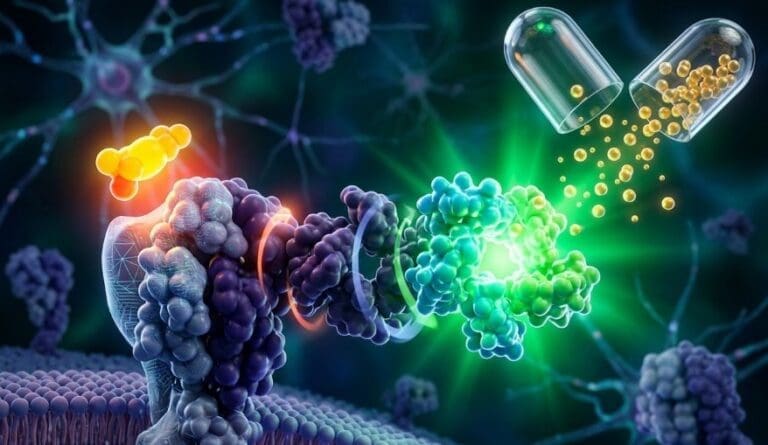
Artificial Allosteric Proteins Turn Cells into Tiny AI Computers
The team created this molecular devices to live inside the body.
Artificial Allosteric Proteins Turn Cells into Tiny AI Computers
Synthetic Biology is an interdisciplinary field that combines biology, engineering, genetics, chemistry, and computational science to design, construct, and modify biological systems. It applies engineering principles to living organisms and biological components to develop new functions, improve existing processes, and create useful products.
Traditional biology focuses largely on understanding how living systems work. Synthetic Biology takes this understanding further by exploring how scientists can design or redesign biological systems for specific purposes. For example, researchers investigate ways to use microorganisms to produce useful chemicals, develop biological materials, improve agricultural processes, and support medical research.
Advances in DNA synthesis, genetic engineering, automation, and computational modelling have expanded the possibilities of this field. As a result, Synthetic Biology is becoming an important area of research across healthcare, agriculture, manufacturing, and environmental science.
At ENTECH STEM Magazine, this category explores the science, technologies, applications, and innovations shaping Synthetic Biology.
Synthetic Biology applies engineering concepts to biological systems. It involves designing biological components, combining them into larger systems, and modifying existing organisms or cellular processes to achieve specific functions.
These biological components may include DNA sequences, proteins, cells, and molecular pathways. Researchers study how these components interact and use scientific models to understand how changes may influence the behaviour of a biological system.
One important approach is the Design-Build-Test-Learn (DBTL) cycle. It provides a structured framework for developing and improving biological designs:
This iterative approach connects biological research with engineering, automation, and computational modelling.
Synthetic Biology includes several interconnected areas of research and technology.
Genetic engineering is an important tool within Synthetic Biology. It involves modifying genetic material to introduce, remove, or change particular characteristics in an organism.
Synthetic Biology extends this approach by considering how multiple biological components and genetic elements can work together as a coordinated system.
Researchers investigate how genetic information influences cellular functions and how biological systems can be designed for useful applications.
DNA synthesis allows researchers to produce designed DNA sequences for scientific and biotechnology applications.
Synthetic Biology uses designed genetic components as part of broader biological systems. These components can include sequences involved in regulating gene expression and supporting particular cellular functions.
Researchers also investigate how biological components can be characterised and organised into systems that behave in more predictable ways.
Synthetic Genomics focuses on the design, synthesis, and study of large-scale genetic material, including extensive portions of genomes.
It contributes to research into genome organisation, biological function, and the relationship between genetic information and cellular behaviour.
This area connects Synthetic Biology with genomics, molecular biology, and computational biology.
Metabolic Engineering involves modifying cellular metabolic pathways to influence how organisms produce or use particular substances.
It has important applications in industrial biotechnology, where researchers study biological production systems for chemicals, enzymes, materials, and other useful products.
Synthetic Biology can complement metabolic engineering by applying systematic design and modelling approaches to biological pathways.
Cell-free systems allow researchers to investigate biological processes outside intact living cells. These systems use selected cellular components, such as enzymes, ribosomes, and other molecular machinery, to carry out specific biological functions.
They are useful in research involving protein production, molecular analysis, and the development of biological technologies.
Cell-free approaches also provide alternative platforms for studying biological reactions without relying on complete living-cell systems.
Computational tools help researchers model biological systems, analyse genetic information, and evaluate possible designs.
Artificial intelligence and machine learning are increasingly being explored for analysing biological datasets, predicting molecular properties, and supporting research decisions.
These technologies can help connect biological experiments with data-driven design and automation.
Synthetic Biology has potential applications across several industries and research areas.
Healthcare and medicine: Researchers investigate synthetic biological systems for developing medical products, studying disease processes, and exploring new therapeutic approaches. The field also contributes to research involving advanced biological medicines and cell-based technologies.
Agriculture: Synthetic Biology can support research into plant characteristics, agricultural microorganisms, crop resilience, and biological approaches to improving agricultural productivity.
Industrial biotechnology: Engineered biological systems can be investigated for producing enzymes, chemicals, materials, and other industrial products. These applications connect Synthetic Biology with fermentation technology and bioprocess engineering.
Environmental science: Researchers explore biological systems that may help monitor environmental conditions, support pollution management, and contribute to resource recovery.
Food technology: Synthetic Biology supports research into alternative production methods for selected food ingredients, proteins, enzymes, and other food-related products.
Biological materials: Scientists are investigating biological systems for producing materials with useful properties. These developments may contribute to research in textiles, packaging, construction materials, and other manufacturing applications.
Synthetic Biology overlaps with several scientific and technological disciplines. However, each field has a different focus.
These fields often work together. For example, a biotechnology research project may combine computational modelling, genetic analysis, metabolic engineering, and bioprocess development.
Synthetic Biology offers significant opportunities, but it also presents scientific, technical, ethical, and regulatory challenges.
One major challenge is the complexity of living systems. Biological components do not always behave exactly as computational models predict. Interactions between genes, proteins, cells, and environmental conditions can produce unexpected results.
Researchers must also consider the stability, reliability, and reproducibility of engineered biological systems. Moving from laboratory research to large-scale manufacturing introduces additional challenges involving process consistency, quality control, and cost.
Biosafety and biosecurity are equally important considerations. Research and industrial applications require appropriate risk assessment, responsible oversight, and safeguards to protect people and the environment. Ethical questions involving genetic modification, environmental release, and equitable access also require careful consideration.
Future developments may include more advanced computational modelling, AI-assisted biological design, improved measurement technologies, automated research platforms, and more efficient biomanufacturing systems.
These developments could strengthen the connection between biology, engineering, and digital technologies while expanding the range of potential applications.
Synthetic Biology demonstrates how engineering principles can be applied to living systems to address scientific, industrial, and environmental challenges. It also creates opportunities for students interested in biotechnology, genetic engineering, molecular biology, bioinformatics, and biomedical engineering.
Explore ENTECH STEM Magazine for articles on Synthetic Biology, biological system design, engineered cells, biomanufacturing, and emerging technologies shaping the future of biotechnology.