The field of agricultural science is currently witnessing a significant shift toward the valorization of agro-industrial waste.
Valorization of Cocoa Waste: A Study of CCN-51 Innovation and Bioactive Microcapsules
Advancing agricultural science through the valorization of cocoa waste is a study of CCN-51 innovation and bioactive microcapsules. The field of agricultural science is currently witnessing a significant shift toward the valorization of agro-industrial waste through the encapsulation of bioactive compounds. To explain the core of this advancement, it is necessary to look at innovation as the strategic development of high-productivity crops and the refinement of extraction technologies. In this case, Theobroma cacao serves as a primary subject, specifically the CCN-51 variety. Which was develop to ensure disease tolerance and exceptional yields. What’s more, the modern innovator is represents by researchers who apply chemical engineering principles to protect unstable phytonutrients. At first, these compounds were often discard; however, at the present time, they are being transforms into high-value nutraceuticals.
García-Intriago, E. N., Pincay-Pilay, D. A., Pincay-Pilay, M. M., Morales-Paredes, C. A., Santos-Fálconez, M. C., Palacios-Revelo, J. G., Pérez-Almeida, I. B., & Cedeño-Palacios, C. A. have conducted study and published it under the title “Development of Cocoa (Theobroma cacao L.) CCN-51 Microcapsules with Antioxidant and Antimicrobial Properties” in January 2026.
ENTECH STEM Magazine has included this research in its list of the Top 10 STEM Discoveries and Innovations of 2026.
Seeing that the cocoa husk constitutes a major portion of the fruit’s weigh. Its potential as a source of antioxidants is immense. Although this may be true, these compounds are highly sensitive to environmental factors such as light and heat. To list the methods uses to combat this, researchers employ microencapsulation techniques such as spray drying and freeze-drying. analogous to a protective shield, coating agents like maltodextrin or gum arabic are uses to preserve the biological activity of polyphenols. Prior to this innovation, the bitter taste and instability of pure extracts limited their use. In fact, the microencapsulation process effectively masks these traits while improving bioavailability.
Practical Usage Areas of Valorization of Cocoa Waste
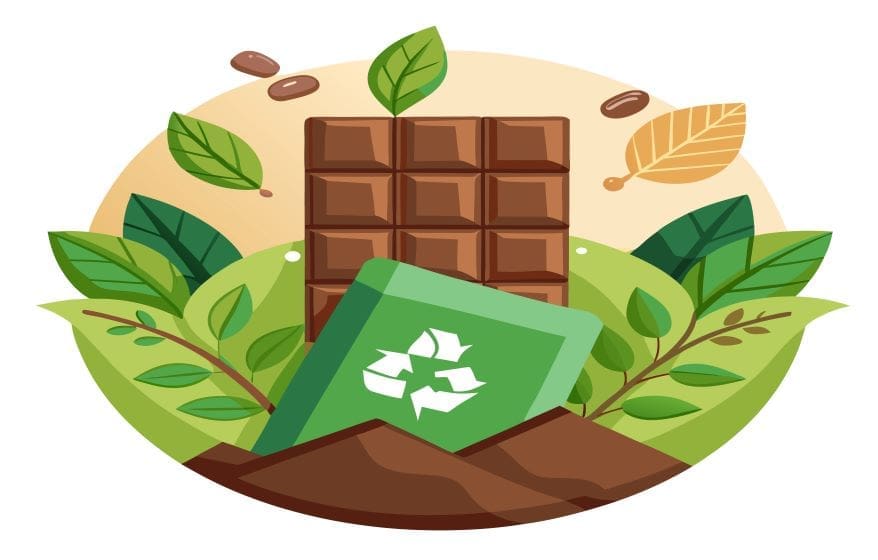
To enumerate the practical usage areas of CCN-51 in day-to-day life, one must look at the food industry and public health. For the purpose of enhancing nutrition, microcapsules are use to create functional chocolate bars. These are enriched with phenolic antioxidants recovered from waste. To put it differently, these products provide health benefits beyond basic nutrition without increasing astringency. What’s more, phenolic compounds from cocoa pod-husks act as natural antimicrobial agents. Which inhibiting pathogens such as Salmonella in fresh artisanal cheese. analogous to commercial preservatives. These natural inhibitors improve food safety while maintaining sensory characteristics.
Commercialization Prospectus
At the present time, the CCN-51 variety is already a dominant force in the global cocoa production chain. Balanced against the success of the bean, the enriched microcapsules are currently in the stage of pilot-scale evaluation and optimization. provided that industrial scalability is achieved, these bioactive platforms will soon enter the global nutraceutical market. In sum, the technical groundwork is laid, and industrial application is the next logical step.
Educational Research and Career Opportunities
To rephrase it, the field of bioprospecting offers vast opportunities for those interested in sustainable development. Students can focus on nano bioengineering for disease prevention or the chemical characterization of other agro-industrial by-products. with this intention, they might investigate the controlled release of compounds in the intestine to maximize health benefits. At any rate, the intersection of microbiology, botany, and food science provides a robust foundation for a career in biotechnology.
To sum up, the transformation of cocoa waste into bioactive microcapsules represents a triumph of modern innovation. as a result of these efforts, the food industry is becoming more sustainable while offering consumers health-promoting products. All in all, the work of the innovator in this field ensures that valuable compounds are no longer loses to the soil, but instead contribute to the well-being of society.
Additionally, to stay updated with the latest developments in STEM research, visit ENTECH Online. Basically, this is our digital magazine for science, technology, engineering, and mathematics. Also, at ENTECH Online, you’ll find a wealth of information.
Reference
García-Intriago, E. N., Pincay-Pilay, D. A., Pincay-Pilay, M. M., Morales-Paredes, C. A., Santos-Fálconez, M. C., Palacios-Revelo, J. G., Pérez-Almeida, I. B., & Cedeño-Palacios, C. A. (2026). Development of Cocoa (Theobroma cacao L.) CCN-51 Microcapsules with Antioxidant and Antimicrobial Properties. Chemistry, 8(2), 13. https://doi.org/10.3390/chemistry8020013
- Author
- Latest Posts

I am an inspirational writer and emerging science blogger with a deep-rooted passion for understanding and sharing the wonders of the world around us. My journey began with a Bachelor of Science in Chemistry from AKI’s Poona College of Arts, Commerce and Science, where I developed not only a strong foundation in scientific principles but also a mindset that values curiosity, observation, and critical thinking. Studying chemistry has taught me to approach problems with logic, to look beyond the obvious, and to see patterns where others might only see complexity. These experiences have shaped the way I perceive life and influence the way I express my thoughts, both scientifically and creatively.
I have always believed that knowledge is only as powerful as the way it is shared. This belief has guided me to create content that bridges the gap between science and everyday life. I aim to simplify complex scientific ideas so they become approachable, relatable, and engaging for everyone—whether someone has a formal background in science or is simply curious about the world. Science, in my view, is not confined to textbooks and laboratories; it is a way of thinking, understanding, and connecting with the world around us. By making science accessible, I hope to inspire curiosity, ignite learning, and encourage people to see the beauty and relevance of scientific discovery in their daily lives.
Alongside my love for science, I am deeply passionate about motivational writing. I believe words carry the power to transform perspectives, encourage self-reflection, and inspire action. By combining analytical thinking with creativity, I create content that is intellectually stimulating yet emotionally resonant. Whether I am breaking down a chemical concept, exploring a scientific phenomenon, or crafting motivational narratives, my goal is to communicate ideas in a way that is clear, meaningful, and impactful.
Through my work, I strive to empower my readers—not just by helping them understand the science around them, but by inspiring them to grow, learn, and realize their full potential. Every article, post, or story I write reflects my commitment to turning knowledge into inspiration. I want to spark curiosity, encourage self-improvement, and show that learning and personal growth are deeply connected. For me, writing is not just a craft; it is a way to touch minds, connect hearts, and make ideas come alive in a way that truly resonates.