Move beyond raw numbers. Master data literacy and the context-challenge-solution model to turn AI insights into powerful data storytelling.
Beyond Numbers: The Art of Data Literacy and Data Storytelling

The year 2026 offers a flood of information. AI tools provide us with endless charts and figures. At the present time, everyone has access to facts. However, facts alone do not change the world. You must know how to explain them. Data literacy is your ability to read the world. Data storytelling is your ability to lead it. To put it another way, data is the engine, but stories are the steering wheel.
Understanding Data Literacy and Data Storytelling
Think of data as a modern language. To illustrate, data tells us what is happening right now. A story explains why those events actually matter. You must see the difference between raw data and actionable insights. Raw data is just a pile of numbers. By comparison, an insight is a spark for action. All in all, you must translate math into meaning.
Why We Need Data Skills Now
Why is this skill so vital for 2030? At this time, every career uses big data. Doctors, artists, and engineers all look at digital trends. Provided that you understand these trends, you will stay ahead. Without these skills, you are just a passenger. With this intention, you must become the driver. Seeing that machines handle the math, you must handle the interpretation.
Why Data Literacy Alone Is Not Enough?
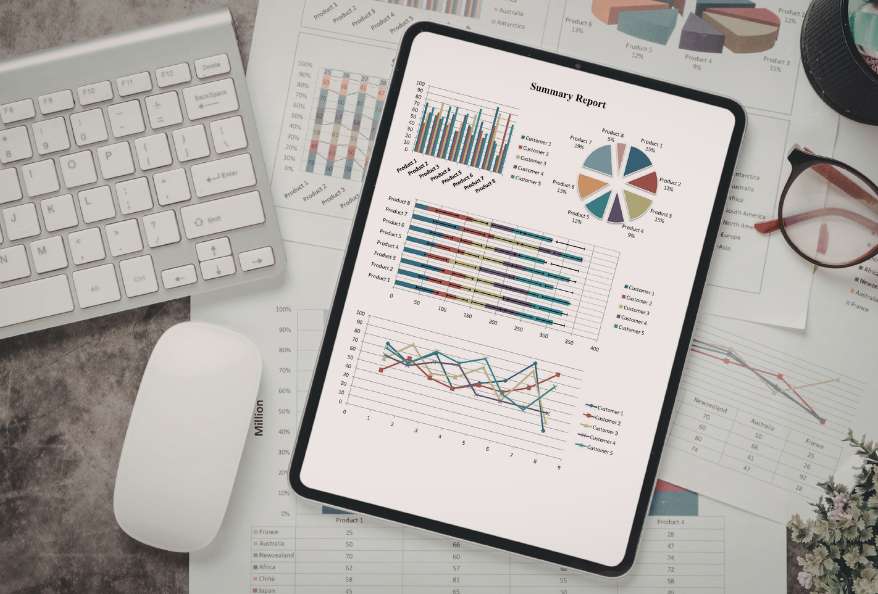
You can read a graph perfectly. While this may be true, can you explain it to a friend? Many students fall into the translation gap. This is the space between a technical report and a human choice. To explain, an AI might show a dip in school energy use. That is a fact. But why did it happen? To say nothing of the cause leaves people confused. You must bridge this gap with a clear voice. Balanced against a computer, your human perspective is your greatest strength.
The Three Pillars of Data Storytelling
To build a great message, you need a solid base. To list, you must master three main parts.
1. The Evidence
This is your raw data. It serves as the foundation of your truth. You must ensure your facts are correct. As a result, people will trust your message. After all, a story without evidence is just a myth.
2. The Visuals
Visuals act as a map for the eyes. Use simple charts or clear infographics. To point out, do not make them too complex. If a chart is messy, the message dies. Analogous to a clear signpost, good data visualization points the way.
3. The Narrative
The narrative is the voice of your project. It leads the audience toward a final conclusion. What’s more, it adds emotion to the logic. While a chart shows a trend, the narrative shows the impact on people. In short, the narrative makes the data stick in the mind.
Building a Narrative Arc with Data

How do you turn a spreadsheet into a speech? Use the Context-Challenge-Solution model. This is a powerful way to structure your thoughts.
Setting the Scene
At first, give the context. What is the current situation? For the purpose of clarity, start with the big picture. This helps your audience get ready for the details.
Showing the Challenge
To enumerate, you must show the problem. What does the data reveal? Perhaps the numbers show a waste of resources. This creates a “challenge” in your story. At this point, your audience wants an answer. In reality, you are creating a logical tension.
Proposing the Fix
At last, use the data to propose a fix. This is the solution. It is the most important part of data storytelling. To put it differently, you show the way forward. You turn a scary problem into a clear plan. With the result that, people feel inspired to help you.
Avoiding the Digital Noise
We live in a world of high-speed noise. To be sure, AI generates too much information. You must learn to filter out the useless parts. This is the study of signal vs. noise. The signal is the truth you need. The noise is just extra fluff that distracts the mind. In due time, you will learn to spot the signal quickly. As an illustration, focus only on data that changes the outcome. All things considered, less is often more.
Your Path to Persuasion
You are now more than a student. You are a communicator. Summing up, data literacy lets you see the truth. Data storytelling lets you share that truth with power. As has been noted, the future belongs to those who speak the language of logic. Together with your creativity, these skills make you unstoppable. To this end, start looking at every chart as a story waiting to be told.
“Data are just summaries of thousands of stories—tell a few of those stories to help make the data meaningful.” — Chip and Dan Heath.
In fact, research shows that stories are more memorable than facts alone. Dykes (2020) explains that stories activate more areas of the human brain. With this in mind, use your steering wheel well. Lead us toward a better 2030.
Additionally, to stay updated with the latest developments in STEM research, visit ENTECH Online. Basically, this is our digital magazine for science, technology, engineering, and mathematics. Further, at ENTECH Online, you’ll find a wealth of information.
Reference:
- Shao, H., Martinez-Maldonado, R., Echeverria, V., Yan, L., & Gasevic, D. (2024). Data Storytelling in Data Visualisation: Does it Enhance the Efficiency and Effectiveness of Information Retrieval and Insights Comprehension? CHI, 1–21. https://doi.org/10.1145/3613904.3643022
- Author
- Latest Posts

Driven by passion for leveraging technology to “Build things worth Building”. I am a Software Engineer with a background in Computer Engineering from Pune University.
Having done multiple internships and volunteering programs throughout my engineering days, I have been deeply involved in the end-to-end development lifecycle, from conceptualization and design to implementation and deployment. I have been a part and also led teams at times to national/international level hackathons. Some of those include Peerlist GenAI Hackathon and NASA Space App challenges.
My educational foundation in Computer Engineering paired with the real world hands-on experience through various ventures provided me with strong knowledge of fundamental technologies.
Continuously seeking opportunities to learn and contribute. I am eager to connect with fellow innovators and contribute to impactful projects.