The researchers compared active learning methods with traditional written examinations to determine which approach better supports student understanding and skill development.
Pharmacy Students’ Views on Development of Patient Counselling Skills
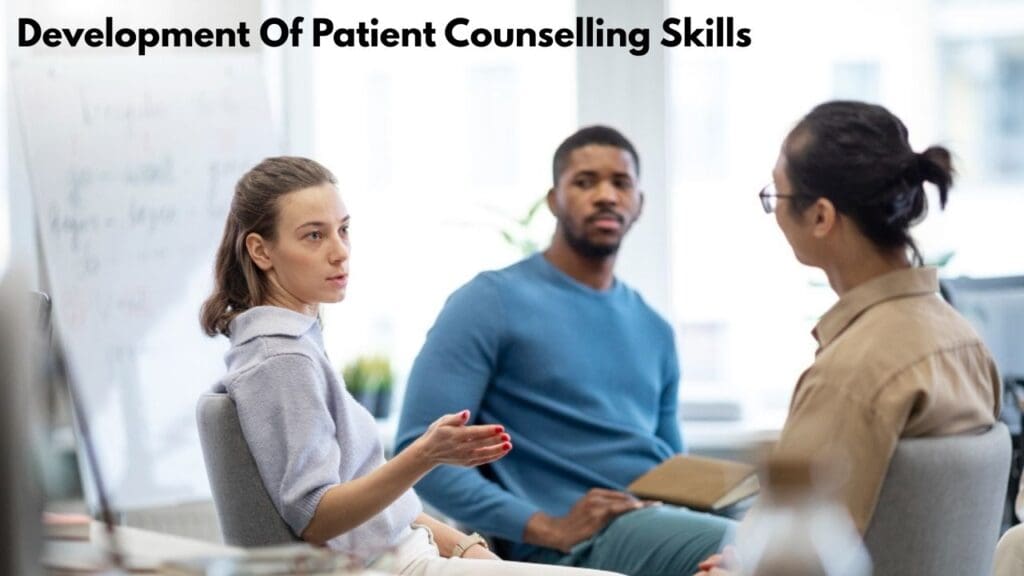
Development of Patient Counselling Skills is becoming an important focus in pharmacy education. Many students find traditional exams very stressful, which can negatively affect their learning experience. As a result, educators are exploring more effective and engaging methods to teach scientific and professional skills. A recent study examined how pharmacy students learn and evaluated different teaching approaches.
The researchers compared active learning methods with traditional written examinations to determine which approach better supports student understanding and skill development. Active learning strategies, such as discussions, practical activities, and feedback sessions, allow students to participate more actively in the learning process. This research provides valuable insights into improving pharmacy education and highlights the importance of adopting teaching methods that enhance both knowledge and practical counselling abilities. Ultimately, these findings help educators identify better ways to train future pharmacists and strengthen their ability to communicate effectively with patients.
Active Learning vs Traditional Tests
Researchers wanted to see how digital tools help in STEM. They looked at a pharmacy course in the United Kingdom. One group of students did a lab-based task. Another group took a standard exam. At first, both groups seemed to learn the same amount. All in all, the results showed something very interesting. Practical work helped students feel more confident.
To explain, active learning involves doing things. Prior to this study, many relied only on textbooks. As a result, students often forgot the data quickly. At the present time, schools want to change this. They want teens to be ready for real jobs. Science careers require more than just memory.
Why Labs Matter for STEM
To list the benefits, we look at skills. Practical tasks teach problem-solving and teamwork. Take the case of making a new medicine. A scientist must work with others in a lab. By comparison, an exam is a solo task. So as to succeed, you need hands-on experience. With this in mind, universities are updating their curriculum.
To enumerate, labs help you understand chemical reactions. What’s more, you learn how to use high-tech equipment. In this case, students used digital software to track data. So far, the feedback from students is very positive. Although this may be true, exams still have a place. At any rate, the mix of both seems best.
The Future of Pharmacy Education
At this point, you might think about your career. Pharmacy is a great STEM field for teens. To point out, it is not just about pills. It involves genetics, chemistry, and robotics. Prior to entering college, you should explore different engineering careers. Analogous to engineering, pharmacy uses logic and math.
In fact, many pharmacists work in research. They design vaccines and life-saving drugs. To put it differently, they are medical engineers. By and large, this job is very stable. At this time, the demand for STEM experts is high. With this purpose in mind, you should study hard sciences.
Choosing Your STEM Path
Summing up, how you learn matters. Provided that you like experiments, pharmacy is a good fit. To rephrase it, look for colleges with lab focus. As an illustration, some schools use virtual reality. At this instant, technology is changing every classroom. Seeing that you are in grade 12, start looking now. You can find STEM education tips online.
All things considered, active learning wins for engagement. In short, it makes science fun. To that end, teachers must balance theory and practice. With the result that, students become better professionals. In due time, you could be the one in the lab. Together with other scientists, you will solve global problems.
Additionally, to stay updated with the latest developments in STEM research, visit ENTECH Online.
Reference
Pace, J., Bartlett, A., Iu, T., & Penm, J. (2026). Pharmacy Students’ Perceptions of Self-Reflection and Peer and Educator Feedback on the development of patient counselling Skills: A Qualitative analysis. Pharmacy, 14(2), 41. https://doi.org/10.3390/pharmacy14020041
Disclaimer: We do not intend this article/blog post to provide professional, technical, or medical advice. Therefore, please consult a healthcare professional before making any changes to your diet or lifestyle. In fact, we use AI-generated images for illustration and decoration. Their accuracy, quality, and appropriateness can differ. So, users should avoid making decisions or assumptions based only on the text and images.
- Author
- Latest Posts

I completed my Master of Science from the University of Allahabad in 2017 with a strong academic background in life sciences and chemistry. My specialization included Molecular Biology, Microbiology, Genetics, Plant Breeding, Phycology, Paleobotany, and Bioinformatics, along with Organic Chemistry, Inorganic Chemistry, and Physical Chemistry. This multidisciplinary training provided me with a comprehensive understanding of biological systems and analytical scientific approaches.
After completing my postgraduate studies, I gained valuable professional experience in both the education and social development sectors. I worked at A.M. Oxford Public School, where I was actively involved in guiding students toward academic excellence. In this role, I focused on creating an engaging learning environment, encouraging critical thinking, and nurturing students’ curiosity for scientific learning. My experience as an educator strengthened my communication, mentoring, and classroom management skills.
In addition to my teaching experience, I worked with Jeevan Jagriti Foundation, where I contributed to community-based initiatives aimed at improving educational access and awareness among underprivileged sections of society. Through this work, I participated in programs designed to support social development and promote the value of education in marginalized communities.
These professional experiences helped me develop strong interpersonal, leadership, and organizational skills while reinforcing my commitment to education and community service.