The presence of hydrogen cyanide can be found throughout the universe, including in the atmospheres of comets, interstellar clouds, and the habitats of planets.
How Electric Fields on Frozen Hydrogen Cyanide Spark the Chemistry of Life
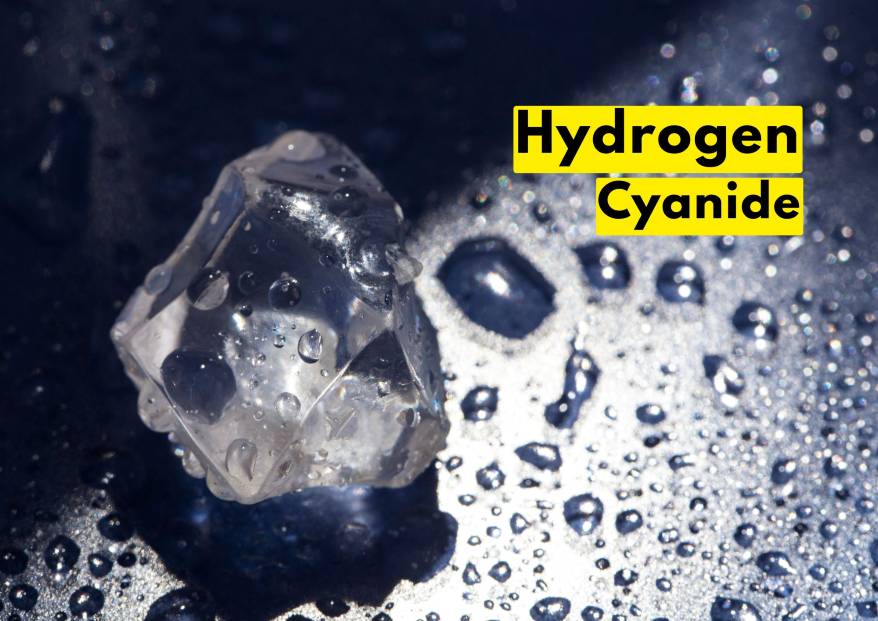
The chemical hydrogen cyanide (HCN) is more than just a simple molecule. It fills icy clouds in space, drifts through planetary atmospheres, and might even be the spark for life’s origin. Recent studies show HCN’s solid form behaves in unusual ways that could affect chemistry on moons like Titan, Saturn’s giant moon. Scientists use powerful quantum tools to predict how HCN crystals form, look, and interact with strong electric fields on their surfaces. These discoveries help us understand chemistry not only here on Earth but also across the solar system.
What Is Hydrogen Cyanide, and Why Does It Matter?
The Role of HCN in Space Chemistry
The presence of hydrogen cyanide can be found throughout the universe, including in the atmospheres of comets, interstellar clouds, and the habitats of planets. HCN is able to accumulate as ice in significant quantities within Titan’s dense atmosphere, and it eventually makes its way to the planet’s surface. Because it exhibits a high degree of reactivity when exposed to cold circumstances. Scientists believe that it plays a significant part in the formation of chemicals that are essential for life.
A Vital Ingredient for Life’s Building Blocks
HCN reacts easily under various conditions to create complex compounds such as amino acids and nucleobases molecules essential to all living organisms. Its abundance makes it a likely candidate as an early chemical in prebiotic reactions occurring before life began.
The Unique Properties of Solid Hydrogen Cyanide
Strange Behaviors of HCN Crystals
Crystals of solid hydrogen cyanide have peculiar characteristics that are not typically found in other types of ice. They exhibit pyroelectricity, which means that when their temperature changes, they have the ability to create electric charges. Additionally, under some circumstances, these crystals have the ability to emit a faint glow and leap, a peculiar behavior that researchers find puzzling.
Shape Is Important: Nanocrystals That Look Like Needles
In the most recent quantum chemical models. It has been demonstrated that HCN may form needle-like structures that are long and thin at the nanoscale. At the very tips of these minuscule formations are surfaces that possess extremely high levels of energy and powerful electric fields. The shape provides an explanation for why solid HCN can occasionally produce patterns similar to cobwebs when these needles become stuck together or break apart.
How Electric Fields Trigger New Chemical Reactions
Chemistry Powered by Crystal Surfaces
Without the need for a significant amount of heat or energy from external sources. The high electric fields that are present at the tips of crystals are able to actively drive chemical processes. One of the most significant reactions that can take place is the transformation of hydrogen cyanide (HCN) into its isomer, hydrogen isocyanide (HNC), which comes with a different atomic arrangement but is almost identical to the original formula.
A Clue to Titan’s Atmospheric Chemistry
As a result of Titan’s extremely frigid temperatures. Which causes processes to slow down; the atmosphere of Titan reveals an unexpectedly high concentration of HNC. It is possible that this pattern might be explained by the strong fields that are present on solid HCN surfaces. These fields make low-energy paths for this transformation available even when the temperature is extremely low.
Specifically, this study demonstrates how minute molecular details significantly affect entire planetary atmospheres and potentially influence the initial stages of life’s essential molecule production.
Additionally, to stay updated with the latest developments in STEM research, visit ENTECH Online. Basically, this is our digital magazine for science, technology, engineering, and mathematics. Further, at ENTECH Online, you’ll find a wealth of information.
Reference
- Cappelletti, M., Sandström, H., & Rahm, M. (2026). Electric fields can assist prebiotic reactivity on hydrogen cyanide surfaces. ACS Central Science. https://doi.org/10.1021/acscentsci.5c01497
- Author
- Latest Posts

I’m a web developer and science writer with a Master’s degree in Computer Applications (MCA) from Pune University.
I work in tech, building websites and staying updated with the latest developments. I also love writing about physics, chemistry, technology, robotics, mathematics, and breakthrough innovations. My passion is breaking down complex scientific topics into simple, easy-to-understand stories.
My goal is to help everyone stay informed about the exciting changes happening in science and technology. I believe understanding science shouldn’t be complicated—it should be accessible to all.