Geological regulation of nitrous oxide plays a key role in climate change discussions, yet it's often overlooked amid talks of cars and factories.
Geological regulation of nitrous oxide emissions in rivers under changing climate conditions
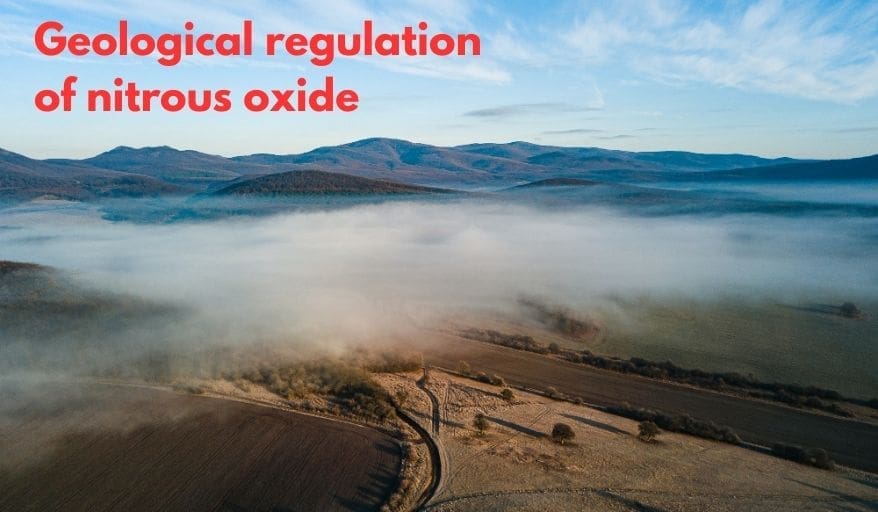
Geological regulation of nitrous oxide plays a key role in climate change discussions, yet it’s often overlooked amid talks of cars and factories. Geological regulation of nitrous oxide involves how Earth’s rock formations influence emissions from rivers worldwide. Geological regulation of nitrous oxide centers on denitrification, a microbial process in river sediments that converts nitrates into this potent gas. Far stronger than carbon dioxide, nitrous oxide traps heat effectively, and new research reveals how geology modulates these emissions, offering fresh insights into global warming.
The Science of River Breath
Geological regulation of nitrous oxide transforms how we view rivers as the planet’s plumbing system, shuttling water and nutrients from land to ocean. Geological regulation of nitrous oxide hinges on bacteria breaking down nitrogen—often from farm fertilizers—into this powerful greenhouse gas. Scientists once assumed all rivers emitted it uniformly, but geological regulation of nitrous oxide proves rock types under riverbeds make a huge difference. Certain rocks fuel bacteria to produce more gas, showing how geological regulation of nitrous oxide fundamentally alters emissions and our understanding of the water cycle.
Prior to this study, we lacked a global map of these risks. The researchers used machine learning to find patterns. They looked at data from thousands of river sites. To illustrate, they found that certain soils hold more nitrogen. This leads to higher emissions into our atmosphere. At the same time, the shape of the riverbed plays a role. Slow water allows more gas to build up and escape. What’s more, the temperature of the water speeds up the bacteria.
Why Geography Matters for the Planet
To explain, different regions have unique types of bedrock. Some rocks are rich in organic carbon. This carbon provides food for the bacteria. As a result, these areas become “hotspots” for gas release. In like manner, areas with heavy farming see more nitrogen runoff. All in all, we must look at the earth beneath the water. This helps us predict future climate trends more accurately. Vis a vis other gases, nitrous oxide stays in the air for a long time. It can damage the ozone layer as well.
Career Paths in Earth Science
Are you interested in the environment and technology? This research combines geology, chemistry, and computer science. You could become a Hydrologist to study water flow. To list, you might also enjoy being a Data Scientist. They use algorithms to solve complex world problems. At this point, the world needs more environmental engineers. They design better ways to manage pollution in our watersheds. To be sure, these careers offer a chance to save the planet.
So far, we are just learning how these systems work. You can start by exploring environmental science careers on our site. What’s more, learning about sustainable engineering is a great first step. In light of this research, these fields are growing fast. At this instant, universities are looking for students like you. You can help create a greener future for everyone.
What Can We Do Now?
So as to fix this, we must manage our land better. We need to use less fertilizer on our crops. To sum up, the study proves that everything is connected. Analogous to a puzzle, every piece of the earth matters. All things considered, we must act now to protect our rivers. So long as we keep learning, we can find solutions. At last, science gives us the tools to make a difference.
Summing up, this paper shows the power of interdisciplinary research. It links the rocks under our feet to the air we breathe. In essence, understanding geological regulation is key to fighting climate change. With this in mind, your future career could involve these exciting discoveries. At any rate, stay curious about the world around you. After all, the next big discovery might be yours.
Additionally, to stay updated with the latest developments in STEM research, visit ENTECH Online. Basically, this is our digital magazine for science, technology, engineering, and mathematics. Also, at ENTECH Online, you’ll find a wealth of information.
Reference
Qi, H., Liu, Y., Wang, H., Pang, Y., Li, J., Ma, X., Wu, L., He, D., & Gan, J. (2026). Geological regulation of nitrous oxide emission risks in rivers globally. Communications Earth & Environment, 7(15). https://doi.org/10.1038/s43247-026-03250-3
- Author
- Latest Posts

I completed my Master of Science from the University of Allahabad in 2017 with a strong academic background in life sciences and chemistry. My specialization included Molecular Biology, Microbiology, Genetics, Plant Breeding, Phycology, Paleobotany, and Bioinformatics, along with Organic Chemistry, Inorganic Chemistry, and Physical Chemistry. This multidisciplinary training provided me with a comprehensive understanding of biological systems and analytical scientific approaches.
After completing my postgraduate studies, I gained valuable professional experience in both the education and social development sectors. I worked at A.M. Oxford Public School, where I was actively involved in guiding students toward academic excellence. In this role, I focused on creating an engaging learning environment, encouraging critical thinking, and nurturing students’ curiosity for scientific learning. My experience as an educator strengthened my communication, mentoring, and classroom management skills.
In addition to my teaching experience, I worked with Jeevan Jagriti Foundation, where I contributed to community-based initiatives aimed at improving educational access and awareness among underprivileged sections of society. Through this work, I participated in programs designed to support social development and promote the value of education in marginalized communities.
These professional experiences helped me develop strong interpersonal, leadership, and organizational skills while reinforcing my commitment to education and community service.