The Hubble Telescope comet breakup reveals a rare cosmic event, offering new insights into comet structure and the origins of our solar system.
Hubble Telescope Comet Breakup Shocks Scientists
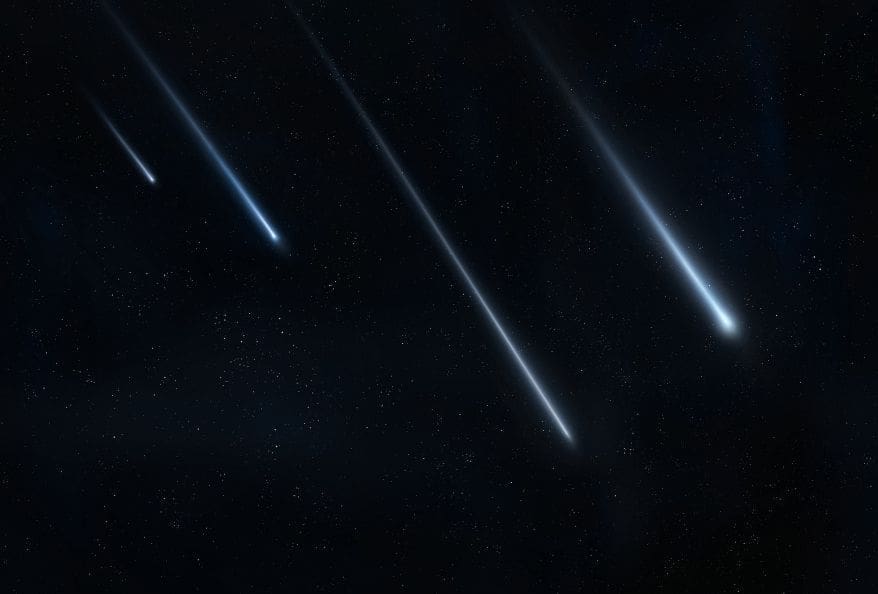
Astronomers have captured a rare and fascinating cosmic event. The Hubble Telescope comet breakup was observed unexpectedly while the telescope was studying a different region of space. As a result, scientists were able to witness a comet fragmenting in real time.
This unexpected discovery highlights how dynamic and unpredictable space can be. At the same time, it shows the importance of advanced telescopes in capturing rare astronomical events.
Why Do Hubble Telescope Comet Objects Break Apart in Space?
At first glance, a comet may seem like a solid rock. However, scientists describe it as a mixture of ice and dust along with gas. Because of this composition, comets react strongly to heat as they travel closer to the Sun.
As temperatures rise, the ice inside the comet begins to sublimate. In other words, it changes directly from solid to gas. Consequently, pressure builds up inside the comet.
When this internal pressure becomes too strong, the comet can no longer hold itself together. Therefore, the Hubble Telescope comet breakup provides direct evidence of this process.
Sublimation Process Behind Hubble Telescope Comet Breakup
To explain further, escaping gas weakens the comet’s structure over time. As cracks form, pieces begin to separate. Eventually, the comet splits into multiple fragments.
Although comets break apart more often than we might think, capturing such an event live is extremely rare. This makes the Hubble Telescope comet breakup especially valuable for researchers.
Role of Heat and Gravity in Hubble Telescope Comet Fragmentation
Heat and Gravity Effects in Hubble Telescope Comet Breakup
Before the breakup, the comet appeared stable. However, sudden exposure to solar heat caused structural stress. To illustrate, it is similar to glass cracking under rapid temperature changes.
In addition to heat, gravity also plays a role. Large planets can exert tidal forces on a comet. As a result, these forces stretch and weaken its structure.
Thermal Stress and Tidal Forces Explained
Thermal stress weakens the outer layers of the comet. Meanwhile, gravitational forces pull it apart from within. Because of this combination, fragmentation becomes more likely.
Each fragment observed in the Hubble Telescope comet breakup offers scientists clues about the comet’s internal composition and history.
What the Hubble Telescope Comet Discovery Means for STEM Students
This discovery is particularly exciting for students interested in STEM fields. After all, studying a Hubble Telescope comet breakup involves physics, engineering, and data analysis.
Moreover, operating space telescopes requires precise calculations and advanced software systems. Therefore, students need strong technical skills to enter this field.
Career Opportunities in Space Science
Students can explore careers in astronomy, aerospace engineering, or data science. At present, programming and analytical thinking are highly valuable skills.
In addition, collaboration is essential. Scientists from around the world work together on missions related to Hubble Telescope comet breakup observations.
Educational Paths for Hubble Telescope Comet Research
Most experts begin with degrees in physics or engineering. In particular, mathematics plays a crucial role.
Skills Needed for Hubble Telescope Comet Studies
- Critical thinking and problem-solving
- Programming and data analysis
- Strong foundation in physics and math
- Team collaboration skills
As research advances, these skills become increasingly important.
New Technology Supporting Hubble Telescope Comet Discoveries
So far, Hubble has been one of the most important tools for space observation. However, newer telescopes like the James Webb Space Telescope are expanding our capabilities.
These advanced systems work alongside Hubble. As a result, scientists gain a deeper and more detailed understanding of cosmic events like the Hubble Telescope comet breakup.
Future of Hubble Telescope Comet Research
All things considered, this discovery is a major step forward in comet research. It allows scientists to study the internal structure of comets more closely.
In other words, researchers can better understand the materials that formed the solar system. With ongoing efforts by NASA and European Space Agency, more such discoveries are expected.
Conclusion
To sum up, the Hubble telescope comet observation reveals how dynamic and unpredictable space can be. One moment a comet is intact, and the next, it breaks into fragments.
Ultimately, such discoveries inspire future scientists. As long as curiosity continues, space exploration will uncover even more mysteries.
Additionally, to stay updated with the latest developments in STEM research, visit ENTECH Online.
References
- European Space Agency. (2026). Hubble captures a gravitational lensing phenomenon. Retrieved from https://esahubble.org/news/heic2606/
- Gianopoulos, A., & Team, N. H. M. (2026, March 18). NASA’s hubble unexpectedly catches comet breaking up – NASA Science. NASA Science. https://science.nasa.gov/missions/hubble/nasas-hubble-unexpectedly-catches-comet-breaking-up/
- Author
- Latest Posts

Kottauppari Venkat Raghava
I am a technology-driven IT graduate with a strong passion for science and innovation. I am fascinated by how innovations like artificial intelligence, robotics, and emerging technologies are shaping our world. I specialize in analyzing complex scientific and technological research and presenting it in a clear, accessible way. My goal is to make science and technology understandable and engaging for students, tech enthusiasts, and professionals alike. By breaking down advanced concepts into simple, insightful narratives, I strive to inspire curiosity, learning, and innovation, helping readers stay informed about the breakthroughs that are shaping the future.