The most difficult thing about open source contribution isn’t coding - it’s dealing with the fear of large repositories.
Making Your First Open Source Contribution: A Beginner’s Guide to Big Project Structures
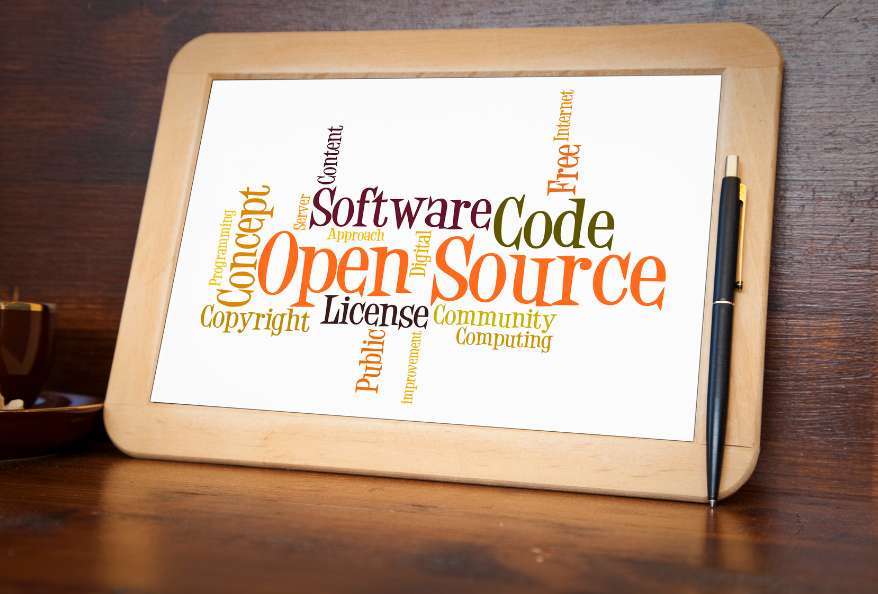
Open source Contribution: Introduction
Open source contribution to projects is a significant achievement for many developers, including new ones. But large codebases with hundreds of folders and files can be intimidating at first sight, which is often the reason why people do not start open source contributions. This is usually not because of the complexity of the code, but because of the confusion about how to contribute to such a large codebase.
The right mindset and a proper approach to exploring a codebase can make it much easier to understand. This article will provide a way to start open source contributions to large projects.
Why Make Open Source Contribution?
Before diving into your first contribution, it’s good to know why open source is worth doing in the first place, especially as a student or young professional.
Open source contributions can help you:
- Acquire hands-on skills by working with production code
- Learn to work together using pull requests, code reviews, and discussions
- Improve your resume because your contributions are public evidence of your work
- Increase your confidence because you will see your code accepted in real-world projects used by others
- Network with developers around the world, including maintainers, mentors, and other contributors
- Some open source projects actually hire contributors full-time
- Some open source projects, such as GSoC and C4GT, provide stipends, while others provide swag and rewards
It doesn’t matter if it’s a small contribution, such as fixing the documentation or a tiny bug. It can be a huge accomplishment.
Why Open Source Code Looks Scary in the Beginning
Most tutorials and personal projects are small, and since you wrote the code yourself, you already know where everything is. Open source projects are very different. They are created by many developers over many years. As the project gets bigger, the code gets naturally organized into modules, layers, and folders.
The issue begins when new developers try to comprehend everything at once. They open random folders, switch between files, and before long, they are lost. This is when a common but incorrect assumption is made: that you have to comprehend the whole repository before you can contribute. This assumption alone prevents many people from ever contributing, even though it is not true.
Finding the Right Project to make Open Source Contrubution
Finding the right project is essential for new contributors. Many times, the problem lies in choosing a project that is too big, inactive, or not suitable for new contributors.
A good project suitable for new contributors should have the following characteristics:
- Proper README and setup documentation
- Active project maintainers who answer issues and pull requests
- A guideline file(like CONTRIBUTING.md) that contains contribution guidelines
- Issues labeled as “good first issue,” “beginner friendly,” or “help wanted”
- A friendly community (GitHub Discussions, Discord, Slack, etc.)
Instead of searching for projects randomly on GitHub, begin with projects that are already beginner-friendly from the following sources:
- The GSoC Organizations Archive (past organizations are still beginner-friendly)
- C4GT organizations, which emphasize mentorship and contributions from beginners
- Open source program repositories such as GSSoC, which list projects participating in the program
Once a project has been identified, start with something small. Documentation improvements, small UI changes, or small bug fixes are the best way to contribute to a project for the first time. The objective is not to tackle the largest problem but to learn how the project works and how the contribution process is handled.
You Don’t Need to Understand Everything
One of the most valuable insights I gained was this: you don’t have to understand the entire repository to begin contributing. You only have to understand the flow you are working on.
If you are fixing a bug, you only have to look at the files that are part of that bug. If you are implementing a small feature, you only have to understand the flow of that feature from input to output. Large repositories are broken up into modular pieces exactly so that you can contribute to one piece without having to understand the rest.
Begin by finding:
- Where the input or request comes into the system
- How it is processed
- Where the final output or result is generated
By focusing on such a small part of the entire system, the cognitive burden is immediately lessened.
Using AI Tools to Navigate Faster in Open Source Contribution
With the help of modern, AI-based tools, you can quickly search a repository. You can use tools such as Cursor or an AI-based editor for your code. These tools are particularly useful when you are learning a new codebase. Instead of searching through dozens of files, you can ask specific questions such as:
- Where is this functionality implemented?
- Which files are responsible for this functionality?
- How is this function called?
While AI won’t replace learning, it is a good guide.
It will allow you to get to the right files faster, and you can focus on learning the logic rather than navigating. This is a massive confidence booster for new learners.
A Better Mindset for First-Time Open Source Contribution

Think of understanding a repository like discovering a new city. You wouldn’t commit every street to memory on the first day. You figure out the routes you have to take, and eventually, the larger picture emerges.
Start with a gentle introduction. Read the README file. Browse the latest issues and pull requests. Pick something small and doable. Every bit that you contribute, no matter how small, helps you understand how the project is structured and how things play out.
Eventually, the repository that loomed large before you will become familiar.
Milestones in Open Source Contribution
Once you begin contributing, it becomes easier to maintain consistency if you have milestones to work towards. Open source has numerous projects and events that you can leverage to motivate yourself and provide a clear roadmap.
Some popular ones are:
- Google Summer of Code (GSoC) – a very reputable international program where students collaborate with open source projects under guidance
- C4GT (Coding for GovTech) – a mentorship-oriented program where contributors collaborate on real-world public digital infrastructure projects
- Hacktoberfest – a beginner-friendly annual event encouraging contributions in October
- GirlScript Summer of Code (GSSoC) – a massive mentorship-oriented open source project with a strong presence of beginners
- Season of Docs – a documentation contribution-focused event (perfect for beginners too)
- Open source projects by communities (various universities and communities of developers have their own projects)
These are not requirements – but they provide you with a purpose, a deadline, and sometimes even mentorship, making the open source contribution and experience much simpler.
Open Source Contribution: Closing Thoughts
The most difficult thing about open source contribution isn’t coding – it’s dealing with the fear of large repositories. But once you understand that you don’t have to understand everything and start to focus only on the flow that affects you, everything will become much easier.
If you’re feeling overwhelmed at this point, don’t worry. I’ve been there too. The difference between people who do open source contribution and those who don’t isn’t talent, but patience and mindset.
Open the repository again, take a smaller step, and give yourself permission to learn slowly. Your first contribution is closer than you think.
Additionally, to stay updated with the latest developments in STEM research, visit ENTECH Online. Basically, this is our digital magazine for science, technology, engineering, and mathematics. Further, at ENTECH Online, you’ll find a wealth of information.
- Author
- Latest Posts

Pushpendra Chandravanshi is a software developer with an interest in open-source development. He was a Google Summer of Code 2023 contributor, where he worked on a JavaScript graph library with a focus on maintainable design and practical use cases. He also participated in Smart India Hackathon 2023 as part of the winning team. Currently, he works as a software engineer at ClearFeed.