Nature-Based Solutions in Urban Regeneration address challenges like the Urban Heat Island (UHI) effect, where urban areas often feel much hotter than the countryside.
Urban Regeneration through Nature-Based Solutions: Methods and Governance
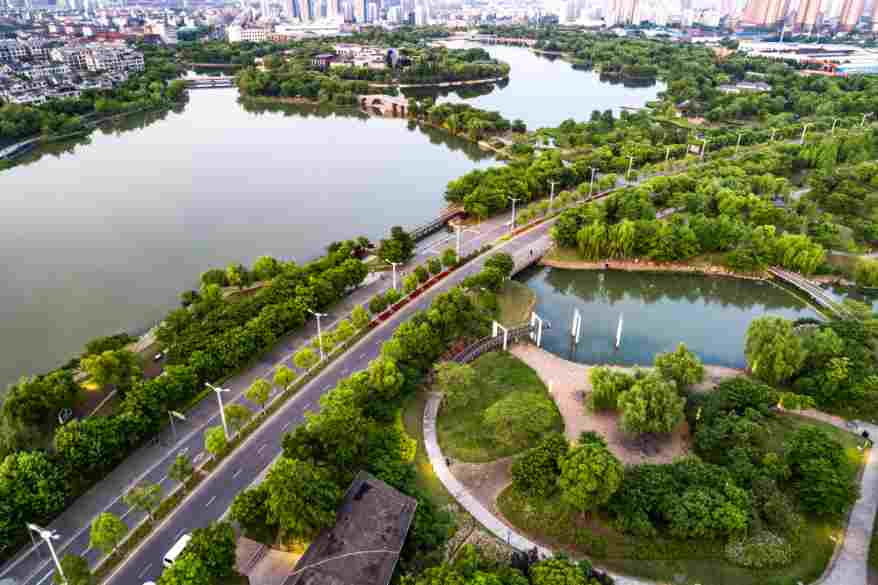
Nature-Based Solutions in Urban Regeneration address challenges like the Urban Heat Island (UHI) effect, where urban areas often feel much hotter than the countryside. Concrete and asphalt trap heat during the day, making cities stay warm late into the night. At the present time, this is a major environmental challenge that affects how we design our streets and parks..
The Science of City Temperatures
Researchers recently studied surface temperatures in Italy. They focused on the city of Padua. The team used satellite data to map the heat. To put it another way, they looked from space. They wanted to see which areas stayed the hottest. As a result, they found clear patterns. High-density buildings recorded the highest temperatures.
Industrial zones also showed extreme thermal stress. At the same time, green spaces stayed much cooler. This is not just about comfort. It is about public health. Hotter cities lead to more energy use for cooling. In like manner, it can cause health issues for residents.
How Satellites Track the Heat
The study used the Landsat 8 satellite. This tool measures infrared radiation from the ground. Scientists then calculate the Land Surface Temperature (LST). After that, they compare it to land cover. Land cover means what is on the ground. To enumerate, this includes grass, trees, water, or pavement.
As can be seen, the data is very precise. The researchers found a strong link. Areas with more vegetation had lower LST values. By comparison, areas with large roofs were very hot. This proves that urban planning needs more nature.
Engineering a Cooler Future
This research is vital for civil engineers. They must design sustainable cities. Some engineers work on cool roofs. These roofs reflect sunlight instead of absorbing it. Others focus on urban forestry. Planting trees is a powerful STEM solution.
If you like physics and ecology, this field is great. You can study climatology or urban design. These careers help save lives. What’s more, they help the planet. You could develop new materials for roads. All in all, the goal is a cooler environment.
Your Career in STEM
Are you curious about satellite technology? You might enjoy a career in Geographic Information Systems (GIS). Experts in GIS use software to solve real-world problems. They help city leaders make smart choices.
To illustrate, many universities offer degrees in Environmental Engineering. Learning about climate change is another key point.
At this instant, the world needs innovators. We need people to solve the heat crisis. You can be one of them. Take the case of these Italian researchers. They turned data into a plan for better cities.
Summary on Nature-Based Solutions in Urban Regeneration
To sum up, the study shows a big gap. Modern construction creates too much heat. We must use more permeable surfaces. We should also protect our urban forests. So far, the data is very clear. Cities must adapt to stay habitable.
With this in mind, look at your own neighborhood. Are there many trees? Or is it mostly parking lots? Your future career could change how we build. By all means, keep asking questions about our world.
Future Prospective
Future prospects of nature-based solutions (NbS) in urban regeneration highlight a transition toward more integrated, adaptive, and participatory planning frameworks. The study emphasizes that future urban development must move beyond isolated green interventions toward systemic incorporation of ecological design, governance innovation, and community engagement. Advancements in digital tools, data-driven planning, and interdisciplinary collaboration are expected to enhance the implementation and monitoring of NbS across diverse urban contexts. Moreover, aligning NbS with climate resilience strategies, biodiversity conservation, and social equity goals will be crucial for long-term sustainability.
Conclusion
The study concludes that nature-based solutions (NbS) offer significant potential to transform urban regeneration by enhancing climate resilience, biodiversity, and social well-being through multifunctional green and blue infrastructure. However, their effectiveness is constrained by fragmented governance, limited policy integration, and risks such as social displacement. While advanced tools like GIS and multi-criteria frameworks support planning and evaluation, they cannot replace the need for inclusive, participatory governance. The paper emphasizes that integrating NbS into strategic policy frameworks, particularly through instruments like Strategic Environmental Assessment, is essential to achieve equitable, resilient, and sustainable urban futures
Additionally, to stay updated with the latest developments in STEM research, visit ENTECH Online.
Reference:
- Russo, A., Baresi, U., & Cheshmehzangi, A. (2026). Nature-Based Solutions in Urban Regeneration: A review of methods, governance, and future directions. Urban Science, 10(3), 130. https://doi.org/10.3390/urbansci10030130
- Author
- Latest Posts

I completed my Master of Science from the University of Allahabad in 2017 with a strong academic background in life sciences and chemistry. My specialization included Molecular Biology, Microbiology, Genetics, Plant Breeding, Phycology, Paleobotany, and Bioinformatics, along with Organic Chemistry, Inorganic Chemistry, and Physical Chemistry. This multidisciplinary training provided me with a comprehensive understanding of biological systems and analytical scientific approaches.
After completing my postgraduate studies, I gained valuable professional experience in both the education and social development sectors. I worked at A.M. Oxford Public School, where I was actively involved in guiding students toward academic excellence. In this role, I focused on creating an engaging learning environment, encouraging critical thinking, and nurturing students’ curiosity for scientific learning. My experience as an educator strengthened my communication, mentoring, and classroom management skills.
In addition to my teaching experience, I worked with Jeevan Jagriti Foundation, where I contributed to community-based initiatives aimed at improving educational access and awareness among underprivileged sections of society. Through this work, I participated in programs designed to support social development and promote the value of education in marginalized communities.
These professional experiences helped me develop strong interpersonal, leadership, and organizational skills while reinforcing my commitment to education and community service.