Neophyte Nightshades (Solanaceae) remind us of nature's endless surprises, much like the scientists' recent discovery of a new species of plant in Brazil.
Floristic Assessment of Neophyte Nightshades (Solanaceae) in European Russia
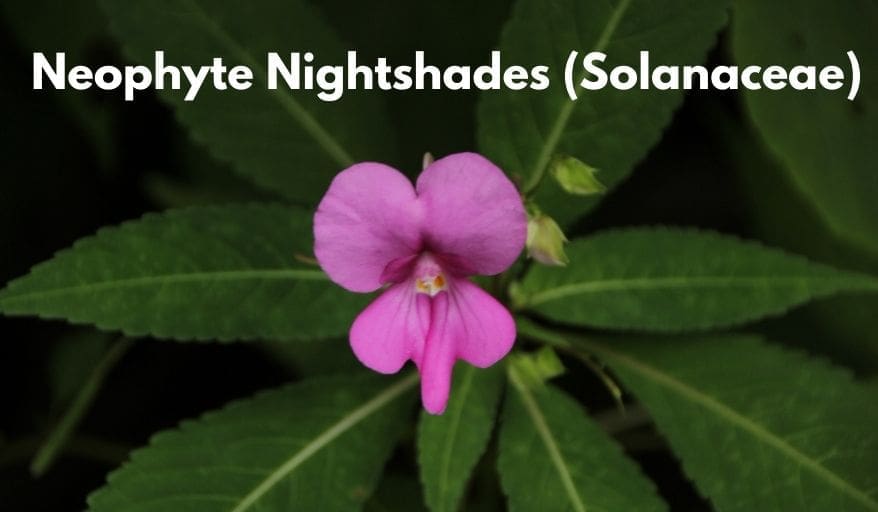
Neophyte Nightshades (Solanaceae) remind us of nature’s endless surprises, much like the scientists’ recent discovery of a new species of plant in Brazil. Neophyte Nightshades (Solanaceae) highlight how these breakthroughs reveal gaps in our knowledge, just as this tiny green find does. Belonging to the Polygalaceae family, researchers named it Caamembeca humbertiana. This wildflower thrives in the Cerrado, a massive tropical savanna.
A Hidden Gem in the Brazilian Savanna
Neophyte Nightshades (Solanaceae) showcase nature’s resilience in tough environments, much like this newly discovered plant that at first looks quite simple. Neophyte Nightshades (Solanaceae) thrive in challenging spots, similar to this one with its small, pinkish flowers and thin green stems. Botanists found it growing in rocky soils, a habitat very harsh for most living things. Neophyte Nightshades (Solanaceae) parallel such hidden gems—prior to this study, nobody knew this specific plant existed..
Neophyte Nightshades (Solanaceae) act like missing puzzle pieces in biodiversity, just as finding a new species does. Neophyte Nightshades (Solanaceae) deepen our grasp of ecosystems, helping us understand biodiversity better. Brazil is famous for its nature, but many areas remain unexplored. Neophyte Nightshades (Solanaceae) underscore why field research stays vital today—this find highlights that perfectly.
Are you interested in environmental science? You might enjoy learning about sustainable ecosystems and how they function. Science is about observing the world with fresh eyes.
Why This Discovery Matters for STEM
You might think every plant has a name by now. As a matter of fact, thousands of species remain hidden. This study used morphology to identify the plant. That means they studied its physical shapes and structures. They compared it to other herbarium specimens from the past.
To illustrate, the team looked at the leaf veins. They measured the tiny seeds and the petal shapes. This work requires a lot of patience and precision. These are key skills for any STEM career. So as to be sure, they checked many different collections.
Exploring Careers in Botany and Biology
Do you like working outdoors and solving mysteries? A career in botany could be a perfect fit. Botanists study plant life to solve global problems. They work on food security and medicine. At the present time, we need more young scientists in this field.
To put it another way, you could be the one naming the next species. You can work in labs or travel to remote jungles. Many researchers start as biology students in high school. So far, science has only scratched the surface of life on Earth.
You can explore STEM career paths to see what fits you. With this in mind, think about your favorite subject. Do you like genetics, ecology, or chemistry? All these fields overlap in botanical research.
The Fight to Protect the Cerrado
The Cerrado is under great pressure from farming and cities. As a result, many plants might go extinct before we find them. This new flower is already considered endangered. It grows in a very small, specific area.
While this may be true, discovery brings hope for conservation. We cannot protect what we do not know exists. To point out, naming a plant is the first step to saving it. Laws often protect rare species once they have a formal name.
All things considered, this tiny flower represents a big win for science. It proves that the natural world still holds many surprises. At any rate, we must keep exploring and asking questions.
How You Can Get Involved
You do not need a PhD to start. At first, you can use apps to identify local plants. This is called citizen science. It helps professional researchers track plant populations. With this purpose in mind, start looking at the weeds in your yard.
To enumerate, you can join a local nature club. You can volunteer at a botanical garden.
Additionally, to stay updated with the latest developments in STEM research, visit ENTECH Online. Basically, this is our digital magazine for science, technology, engineering, and mathematics. Also, at ENTECH Online, you’ll find a wealth of information.
Reference
Sukhorukov AP, Knapp S, Glazkova EA, Shilnikov DS, Kushunina M, Sennikov AN (2026) Taxonomic revision of the neophyte nightshades (Solanum, Solanaceae) in European Russia and the North Caucasus. PhytoKeys 270: 235-271. https://doi.org/10.3897/phytokeys.270.169902
- Author
- Latest Posts

I completed my Master of Science from the University of Allahabad in 2017 with a strong academic background in life sciences and chemistry. My specialization included Molecular Biology, Microbiology, Genetics, Plant Breeding, Phycology, Paleobotany, and Bioinformatics, along with Organic Chemistry, Inorganic Chemistry, and Physical Chemistry. This multidisciplinary training provided me with a comprehensive understanding of biological systems and analytical scientific approaches.
After completing my postgraduate studies, I gained valuable professional experience in both the education and social development sectors. I worked at A.M. Oxford Public School, where I was actively involved in guiding students toward academic excellence. In this role, I focused on creating an engaging learning environment, encouraging critical thinking, and nurturing students’ curiosity for scientific learning. My experience as an educator strengthened my communication, mentoring, and classroom management skills.
In addition to my teaching experience, I worked with Jeevan Jagriti Foundation, where I contributed to community-based initiatives aimed at improving educational access and awareness among underprivileged sections of society. Through this work, I participated in programs designed to support social development and promote the value of education in marginalized communities.
These professional experiences helped me develop strong interpersonal, leadership, and organizational skills while reinforcing my commitment to education and community service.