The current prevailing theory of gravity—Albert Einstein's general relativity—has been revered for its ability to explain phenomena such as black holes and gravitational waves.
Novel Model Suggests Gravity’s Quantum Origins, Challenging Traditional Theories
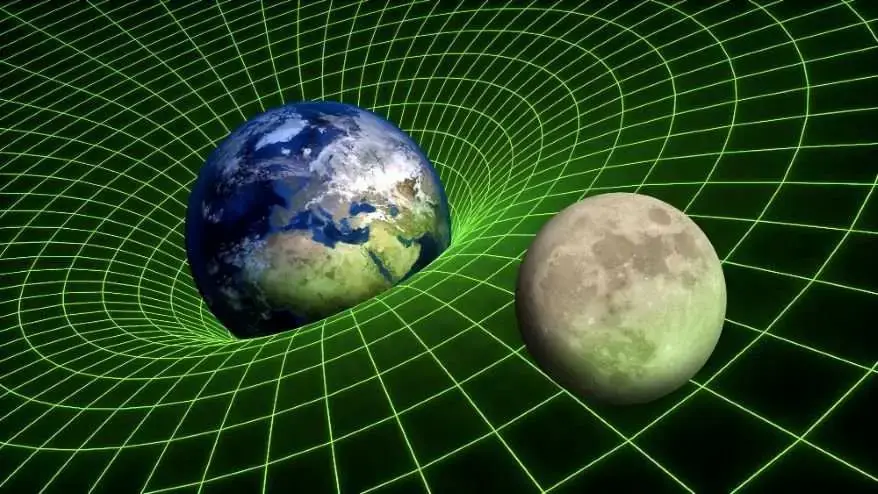
News: Theoretical Model Emerges on the Nature of Gravity
In a groundbreaking development in gravitational physics, a team of researchers has introduced a new theoretical model. It challenges the long-standing notion of gravity being mediated by particles known as gravitons. This innovative perspective posits that gravity may instead arise from quantum interactions within space itself. Led by Manthos Karydas at the Lawrence Berkeley National Laboratory (LBNL) in California, the research offers a fresh approach to understanding one of nature’s fundamental forces.
The current prevailing theory of gravity—Albert Einstein’s general relativity—has been revered for its ability to explain phenomena such as black holes and gravitational waves. However, these complex aspects often lead to peculiar behaviors that differ significantly from common experiences. The research team embarked on this inquiry out of curiosity regarding gravity’s unique characteristics. They attempted to define it through an alternative framework.
The newly proposed model creatively utilizes analogies involving massive objects and thermodynamic principles. Karydas explains that conventional understanding suggests two masses should attract one another through the exchange of theoretical gravitons. However, this model reimagines gravitational attraction as resulting from the quantum states filling the space between them. By envisioning gravity as an entropic force comparable to gas dynamics maneuvering massive pistons, the researchers aim to reproduce established observations relating to gravitation.
“The groundwork is simple: we must create a theoretical model capable of reproducing all observed gravitational phenomena, including stable orbits,”
– Daniel Carney
Impact
This methodological pivot provides new insights into how we comprehend gravitational interactions. It emphasizes an entropic view rooted in quantum mechanics. Moreover, the newly developed equations found within this framework hold profound implications for experimental physics. The research team has laid out specific predictions that can be tested in upcoming laboratory experiments. These aim to investigate crucial questions surrounding quantum entanglement and its relationship with gravity.
As Jacob Taylor from the University of Maryland highlights, “The significant question guiding this exploration is: What practical changes can our theoretical model introduce to observable phenomena?”
The anticipation amongst physicists lies in whether experimental observations will corroborate these theoretical findings or necessitate further refinements to their model. Denys Bondar from Tulane University adds optimism regarding upcoming experimental measurements. These measurements might deepen our understanding of both quantum mechanics and gravity.
This substantial step forward invites scientists across disciplines to reassess current conceptualizations regarding how fundamental forces operate at both cosmological and microscopic levels. As we advance toward practical tests of this new theory, it signifies a momentous opportunity. It allows for reevaluating established views on gravitational interactions within modern physics frameworks.
The advent of experiments based on these predictions stands poised not only to validate or refute existing theories but also encourages emerging dialogues. These discussions are among researchers exploring possible synergies between quantum mechanics and gravitational theories. It is a step that may redefine our comprehension of the universe itself.
Reference
Carney, D., Karydas, M., Scharnhorst, T., Singh, R., & Taylor, J. M. (2025). On the quantum mechanics of entropic forces. arXiv. https://doi.org/10.48550/arXiv.2502.17575
Additionally, to stay updated with the latest developments in STEM research, visit ENTECH Online. This platform offers in-depth resources including articles on complex scientific topics like Newton’s Law of Gravitation. Basically, this is our digital magazine for science, technology, engineering, and mathematics. Furthermore, at ENTECH Online, you’ll find a wealth of information.
- Author
- Latest Posts

Uddhav Thakore is a passionate Physicist with a Master’s degree, specializing in Astrophysics and Quantum Physics. With expertise in Mechanics, Wave Theory, the Standard Model, Engineering Electronics, and Control Systems, Uddhav is dedicated to making complex scientific concepts clear and engaging for a broad audience.