PN junction diode is a basic semiconductor device formed by combining P-type and N-type materials.
PN Junction Diode: A Simple Guide
Estimated reading time: 10 minutes
A PN junction diode is a basic semiconductor device formed by combining P-type and N-type materials. The P-type material contains holes, while the N-type material has electrons. When these materials meet, they create a depletion region at the junction. This region acts as a barrier across the junction, allowing electric current to flow in only one direction.
The PN junction diode’s unique property of one-way current flow sets it apart from other components like resistors, particularly because resistors exhibit linear behavior.
PN Junction Diode: Key Takeaways
- A PN junction diode lets current flow in just one way. This makes it important for changing AC to DC in devices.
- The diode works because of the depletion region. This region forms where P-type and N-type materials meet. It creates a barrier that stops current flow.
- When forward biased, the diode allows current to pass easily. In reverse bias, it stops current, helping with voltage control and signal handling.
- PN junction diodes are used in many ways. They work in rectifiers, voltage controllers, LEDs, and solar panels. This shows how useful they are in electronics.
Structure and Formation of a PN Junction Diode
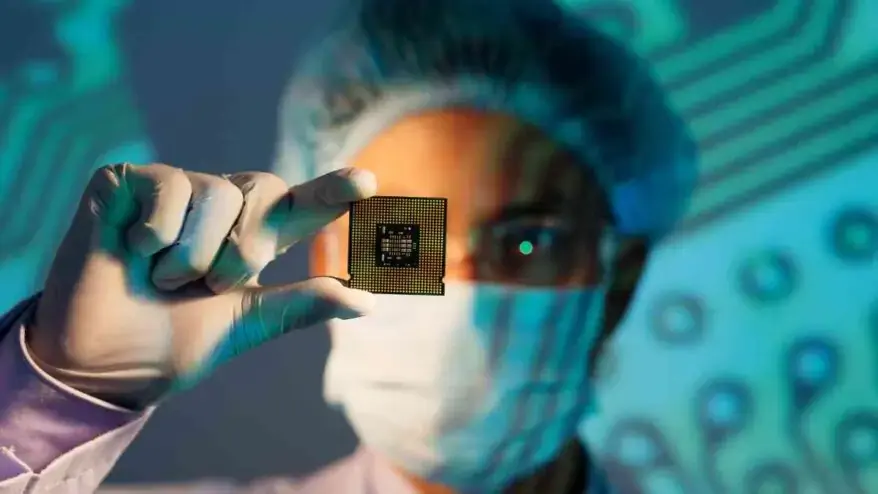
P-Type of diode refers to the different functionalities and structures, such as p-type and n-type semiconductors, and N-Type Semiconductors
Semiconductors are materials with electrical conductivity between conductors and insulators. Specifically, to create P-type and N-type semiconductors, you introduce specific impurities into pure semiconductor materials like silicon. This process is called doping.
- P-Type Semiconductors: These are Doped with elements like boron or aluminum. These p-type and n-type semiconductor materials create a junction that is crucial for diode functionality. from Group III of the periodic table. These elements have fewer valence electrons than silicon, creating “holes” or positive charge carriers.
- N-Type Semiconductors: These are doped with elements like phosphorus or arsenic from Group V. These elements have extra valence electrons, thus introducing free electrons as negative charge carriers.
| Type | Common Materials | Properties |
|---|---|---|
| N-type | Phosphorus | Introduces excess electrons, characterized by an abundance of free electrons, enhancing conductivity. |
| P-type | Boron | Creates holes in the lattice, characterized by positive charge carriers, lower conductivity than N-type. |
Formation of the PN Junction Diode
When you analyse the behaviour of diodes, you will notice their distinct vi characteristics. combine P-type and N-type semiconductors, a PN junction forms. This process involves the movement of charge carriers:
- Electrons from the N-side diffuse into the P-side.
- Holes from the P-side diffuse into the N-side.
- This diffusion exposes positive ion cores on the N-side and negative ion cores on the P-side.
- The movement of electrons and holes creates an electric field at the junction.
PN Junction Diode: Depletion Region and Barrier Potential
At the PN junction, the movement of electrons and holes creates a depletion region. This region lacks free charge carriers because electrons and holes recombine near the junction. The depletion region acts as a barrier, allowing current to flow in only one direction.
The barrier potential forms due to the electric field in the depletion region. Factors like the type of semiconductor material, doping levels, and the width of the depletion region influence this potential.
Working Principles of a PN Junction Diode
Unbiased Condition
When no external voltage is applied to a PN Junction Diode, it remains in an equilibrium state. At this point, we can discuss the types of diodes available.
- The diffusion of charge carriers (electrons and holes) balances the electric field created by the potential barrier.
- This balance results in a depletion layer net zero current flow through the diode.
- The junction achieves a state of “dynamic equilibrium“, where the movement of majority carriers in opposite directions cancels out.
In this condition, consequently, the depletion region remains intact, and the diode does not conduct current.
Forward-Biased Condition
When you apply a forward bias to a PN Junction Diode, the external voltage reduces the potential barrier at the junction. This happens because the positive terminal of the voltage source connects to the P-side, and the negative terminal connects to the N-side. As a result:
- The depletion region becomes thinner, allowing charge carriers to cross the junction more easily.
- The forward voltage cancels the barrier potential, creating a low-resistance path for current flow.
- As the forward voltage increases, the current rises exponentially.
For example, in silicon diodes, the current starts flowing significantly when the forward voltage exceeds 0.7 V. This behaviour is represented mathematically by the equation:
![\[I = I_0 \cdot \exp\left(\frac{qV}{\eta k T}\right)\]](data:image/svg+xml;base64,PHN2ZyB4bWxucz0iaHR0cDovL3d3dy53My5vcmcvMjAwMC9zdmciIHdpZHRoPSIxNTAiIGhlaWdodD0iNDMiIHZpZXdCb3g9IjAgMCAxNTAgNDMiPjxyZWN0IHdpZHRoPSIxMDAlIiBoZWlnaHQ9IjEwMCUiIHN0eWxlPSJmaWxsOiNjZmQ0ZGI7ZmlsbC1vcGFjaXR5OiAwLjE7Ii8+PC9zdmc+ "Rendered by QuickLaTeX.com")
![\[I = I_0 \cdot \exp\left(\frac{qV}{\eta k T}\right)\]](https://b3411452.assetcdn.net/2.0/3411452/wp-content/ql-cache/quicklatex.com-ec4e1a77edfd6d054a8df2c530803571_l3.png?lossy=1&strip=0&webp=1 "Rendered by QuickLaTeX.com")
Here, “I” is the current, “V” is the applied voltage, and other variables represent constants like the charge of an electron and temperature. Forward biasing is the primary mode of operation for diodes in circuits like rectifiers.
Reverse-Biased Condition
In reverse bias, you connect the positive terminal of the voltage source to the N-side and the negative terminal to the P-side. This configuration increases the width of the depletion region, creating a high-impedance path. Consequently:
- The potential barrier grows, preventing the flow of majority carriers in the n-type region.
- Only a small leakage current flows due to minority carriers, typically in the microampere range.
- At higher reverse voltages, the diode may experience breakdown phenomena like avalanche breakdown, which can damage the diode.
Forward Bias Characteristics
In forward bias, the applied voltage reduces the potential barrier at the junction. This allows majority charge carriers to flow across the depletion region. As the voltage increases, the current rises significantly after a certain threshold, illustrating the relationship seen in the vi characteristics.
- The V-I curve for a forward-biased diode is non-linear.
- At low voltages, the current increases gradually.
- The current rises steeply once the forward voltage exceeds approximately 0.7 V for silicon diodes.
This behavior occurs because the forward voltage overcomes the potential barrier, creating a low-resistance path for current. The forward voltage drop (Vf) indicates the point where significant conduction begins. For silicon diodes, this is typically around 0.7 V.
Reverse Bias Characteristics
Under reverse bias, the positive terminal connects to the N-side, and the negative terminal connects to the P-side. This configuration increases the depletion region’s width, blocking the flow of majority carriers.
- A small reverse current, called reverse saturation current, flows due to thermally generated minority carriers.
- This current remains constant and depends on temperature, not the reverse voltage.
- The diode behaves like an insulator, preventing significant current flow.
As the reverse voltage increases, the potential barrier grows, further impeding current flow. The diode remains non-conductive until it reaches the breakdown region.

Breakdown Region
The breakdown region occurs when the reverse voltage exceeds a critical threshold. At this point, the diode conducts a large current, which can damage it if not controlled. Two mechanisms cause breakdown: one at the side of the junction and another due to excessive forward current.
| Breakdown Type | Description | Key Characteristics |
|---|---|---|
| Zener Breakdown | Happens at low reverse voltages due to tunnelling in a thin depletion region. | – Low reverse voltage – Strong electric field in the depletion layer. – Negative temperature coefficient |
| Avalanche Breakdown | Occurs at high reverse voltages due to impact ionization in a wider depletion region. | – High reverse voltage – Positive temperature coefficient – Can handle higher power across the junction. |
Practical Applications of PN Junction Diodes
Rectification in Power Supplies
You often encounter PN junction diodes in rectification circuits, where they convert alternating current (AC) into direct current (DC). This process is essential for powering electronic devices that require a steady DC supply across the junction. The diode’s ability to allow current to flow in one direction while blocking it in the opposite direction makes it ideal for this application.
In a half-wave rectifier, a single diode conducts during the positive half-cycle of the AC waveform, producing a pulsating DC output. However, this method is less efficient. Full-wave rectifiers improve efficiency by utilizing two diodes to rectify both halves of the AC waveform. A bridge rectifier, which uses four diodes in a bridge configuration, eliminates the need for a center-tapped transformer and provides a more consistent DC output.
Signal Demodulation
PN junction diodes play a crucial role in communication systems by facilitating signal demodulation. They extract the original signal from modulated waveforms, such as those used in AM (Amplitude Modulation) or FM (Frequency Modulation) transmissions.
In a demodulation circuit, the diode acts as a rectifier, allowing only the positive part of the modulated signal to pass. This process separates the carrier wave from the original information signal, enabling you to retrieve audio, video, or data signals. Without this functionality, modern communication systems like radios and televisions would not work effectively.
Voltage Regulation
PN junction diodes also help regulate voltage in electronic circuits. When the voltage exceeds a certain threshold, the diode conducts and shunts the excess voltage to the ground, protecting sensitive components. Zener diodes, a special type of p-n junction diode, are specifically designed for this purpose.
Voltage regulation using PN junction diodes is critical for protecting electronic devices from voltage spikes and ensuring stable operation.
Light Emission (LEDs)
Light-emitting diodes (LEDs) are a fascinating application of the p-n junction diode. When you forward bias an LED, it allows electrons from the N-type material and holes from the P-type material to move through the depletion region. As these charge carriers meet, they recombine away from the junction. This recombination process is the key to light emission.
LEDs are highly efficient because they convert electrical energy directly into light without generating much heat. This efficiency makes them ideal for applications like indicator lights, display screens, and even general lighting. You can find LEDs in devices ranging from smartphones to traffic signals.

Temperature Sensors and Solar Cells
PN junction diodes also play a vital role in temperature sensors and solar cells. These devices take advantage of the diode’s sensitivity to light and heat.
- In temperature sensors, the diode detects changes in temperature by measuring variations in its voltage or current. This property makes it useful in applications like climate control systems and industrial monitoring.
- In solar cells, the diode converts sunlight into electricity. When light strikes the PN junction, it excites electrons, creating a flow of current. This process, known as the photovoltaic effect, powers devices ranging from calculators to entire buildings.
The PN junction diode stands as a cornerstone of modern electronics. Indeed, you’ve learned how it operates under unbiased, forward-biased, and reverse-biased conditions across the junction.
These principles enable it to control electric current flow effectively. Furthermore, its applications, from rectification and voltage regulation to optoelectronics and sensors, highlight its versatility.
FAQ
What is the main function of a PN junction diode?
A PN junction diode allows current to flow in one direction while blocking it in the opposite direction. This property makes it essential for rectification, voltage regulation, and signal processing in electronic circuits.
Why does a diode conduct only in forward bias?
In forward bias, the external voltage reduces the depletion region’s barrier potential. As a result, this allows charge carriers (electrons and holes) to cross the junction, enabling current flow. On the other hand, reverse bias increases the barrier, preventing conduction.
How does temperature affect a PN junction diode?
Temperature increases the diode’s reverse saturation current. Higher temperatures generate more minority carriers, leading to a slight rise in leakage current. However, excessive heat can damage the diode, especially when it operates in forward current conditions.
Can a diode handle high reverse voltages?
Most diodes can handle limited reverse voltages. Exceeding this limit causes breakdown, which may damage the diode unless it is a Zener diode, designed to operate safely in the breakdown region.
What is the difference between a regular diode and an LED?
A regular diode controls current flow, while an LED emits light when forward biased. The LED’s material determines the color of the emitted light, making it ideal for displays and indicators.
References:
- The P-N Junction. (n.d.). Retrieved 5 March 2025, from hyperphysics.phy-astr.gsu.edu/hbase/Solids/pnjun.html
Additionally, to stay updated with the latest developments in STEM research, visit ENTECH Online. Basically, this is our digital magazine for science, technology, engineering, and mathematics. Further, at ENTECH Online, you’ll find a wealth of information.
- Author
- Latest Posts

Shreya Satsangi is a passionate Master’s student studying Quantum Technologies at UIMP (Universidad Internacional Menéndez Pelayo), Spain. She has an impressive academic background, holding an undergraduate degree in Physics (Honours) from Dayalbagh Educational Institution, Agra, where she achieved the highest grade in her degree, earning the prestigious Director’s Medal. This recognition is a testament to her strong foundation in physics and her dedication to excellence.
Her interest in the dynamic and fascinating field of quantum science has been a driving force throughout her academic journey. Shreya is particularly captivated by the intersections of quantum physics, quantum computing, and quantum sensing, and is eager to explore the potential of these cutting-edge technologies. She has a deep commitment to understanding how quantum mechanics can be harnessed to revolutionize computing, communication, and sensing, and is excited about the vast implications of quantum research for the future.
Beyond her academic pursuits, Shreya has actively contributed to the scientific community, both in India and internationally. She has worked with organizations such as QuantumGrad, Girls in Quantum, and BeyondResearch, where she has gained valuable hands-on experience and expanded her knowledge of quantum technologies. Through these platforms, she has been involved in organizing various quantum science sessions, aimed at fostering greater understanding and interest in the field of quantum science.
Shreya’s passion for science extends into science communication, where she strives to inspire the next generation of scientists and thinkers. She is an avid writer, having authored numerous blogs on Quantum Technologies on Medium. In her writing, Shreya seeks to simplify complex quantum concepts, making them accessible and engaging for a broader audience. In addition to quantum technologies, she has also written articles on other areas of physics, including electronics and fluid mechanics, further showcasing her versatile interests and ability to communicate complex topics effectively.
Shreya believes in the importance of outreach and engagement in science and works tirelessly to encourage young minds to think scientifically and embrace curiosity. Her work in science communication is driven by her desire to make science more relatable and to inspire others to pursue careers in physics and quantum technologies. She sees science as not just a discipline but a way of thinking, and she is committed to sharing that mindset with others.
Shreya maintains a strong presence on social media platforms, including Instagram, Twitter (X), Bluesky, and LinkedIn, where she shares her insights, engages with fellow researchers, and participates in discussions related to quantum technologies. Through these platforms, she connects with other enthusiasts, students, and professionals in the field, further expanding her network and contributing to the ongoing dialogue about the future of quantum science.
With her solid academic background, hands-on experience, and dedication to science communication, Shreya is poised to make a significant impact in the world of quantum technologies. She is eager to continue exploring the frontiers of quantum research and contributing to the development of new technologies that have the potential to reshape the future.